Explainer: Why has the Bank of England intervened in financial markets?
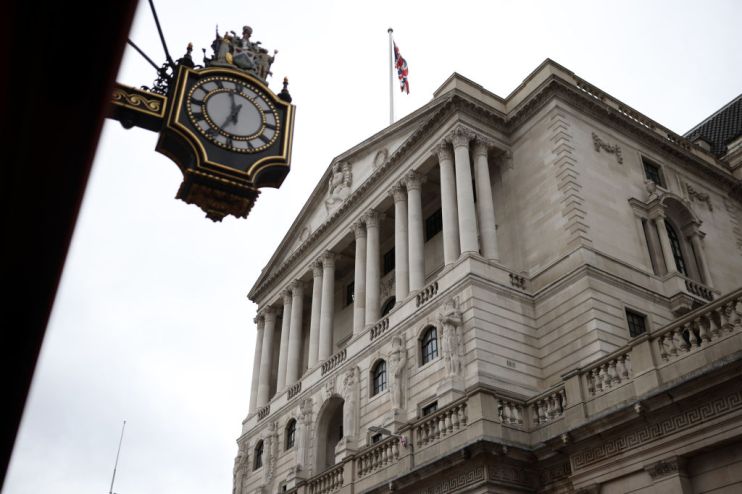
The Bank of England today has stepped into financial markets to try to tame the surge in UK borrowing costs.
This morning, it said it will launch a temporary bond buying programme lasting from today to 14 October.
The package will be unlimited in scale and will target long-dated UK debt. It is similar to the quantitative easing programme launched during the Covid-19 and financial crises.
The emergency intervention has been triggered by several factors.
First – Yields on UK bonds – government debt that is traded on international financial markets – have accelerated rapidly.
This morning, the rate on the 30-year government bond hit its highest level since 1998. The 10-year instrument was also up.
Borrowing costs have been trending higher since chancellor Kwasi Kwarteng’s mini-budget last Friday.
He cut taxes by £45bn, prompting some economists to forecast the government will have to borrow over £400bn more over the next four years than the Office for Budget Responsibility projected last March.
The prospect of the market being flooded with even more government debt has prompted traders to demand a higher return to buy the bonds, forcing borrowing costs higher.
Second – Yields represent the fixed income investors receive for holding bonds as a share of the bond’s value, known as the coupon.
It is similar to the monthly interest income you receive on your savings account.
The coupon is fixed, meaning when bond prices fall, yields rise.
The UK’s largest pension funds hold a large amount of bonds because they offer a sustainable income flow that, in times of market stability, helps them meet their obligations to pensioners.
Managers of defined benefit pension schemes – schemes that guarantee pensioners a fixed retirement income – often enlist the services of something called liability driven investment (LDI) funds to manage their finances.
These funds typically lend out long-dated bonds to maximise returns. Around £1 trillion (yes) of pensioners’ money is invested in long-dated bonds via LDI vehicles.
However, the big drop in bond prices over the past few days has resulted in banks and fund managers demanding LDI funds suddenly stump up cash to back up their investments.
This has sparked a bond market sell-off, forcing yields higher this morning. Because these LDI funds’ assets were funded through borrowing, there was a risk of turmoil in the long-dated UK gilt market spreading to the rest of the financial system and eventually the real economy.
Third – Inflation in the UK has soared to its highest level in 40 years. Prices are up 9.9 per cent over the last year.
That has prompted the Bank of England to hike interest rates from a record low 0.1 per cent to 2.25 per cent, including back to back 50 basis point hikes.
A rise in Bank Rate has pushed UK borrowing costs higher by prompting to ditch bonds that yield lower than the official rate.
Why would a bank hold a government bond when it could park its money with the Bank of England – which is marginally safer – and earn a bigger return?
However, last week’s borrowing and tax cutting splurge has raised the likelihood of the Bank hiking rates far above six per cent.
As a result, traders are pricing in the prospect of official borrowing costs scaling higher.
Will the Bank’s package work? – Immediately, yes.
UK bond yields tanked straight after the announcement. The 30-year gilt lost more than 60 basis points.
However, it may do little to soothe the City’s concerns over the government’s fiscal credibility. It also raises questions over how independent the Bank really is.
The plan for growth has to work to allow the UK fund its trade deficit, budget deficit and support the pound.
Given sterling has shed over 1.5 per cent against the US dollar an hour or so after the Bank’s intervention, investors seem sceptical that the package will work.