Exports have become a political football: We must change the way we look at trade

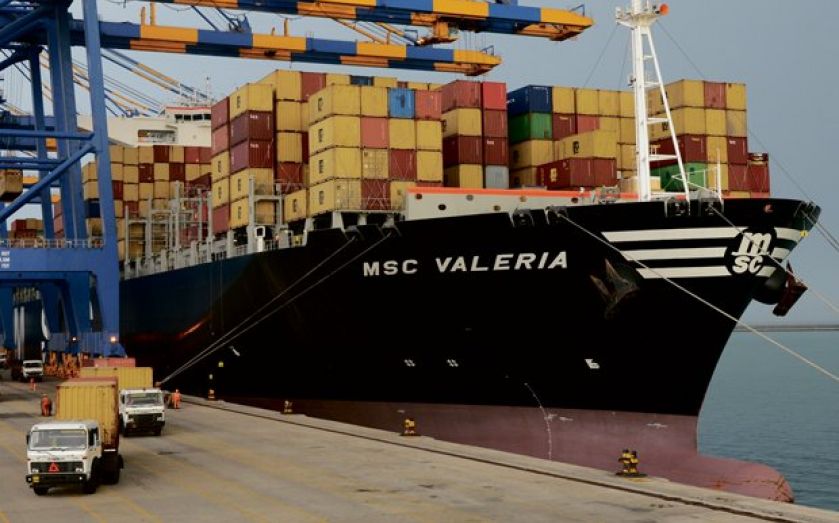
LARGELY missing from the debate surrounding the Autumn Statement was a discussion of exports and the UK’s trade picture more generally. Ed Balls got in a brief ribbing about the supposedly stunted performance of UK exports and the progress to date in achieving the government’s aim of an “export-led recovery”. And the package of help for first-time exporters barely garnered a mention in most of the coverage.
The sum of our approach to trade is to point to Germany’s topline as a gauge of success, and to promptly declare the UK’s comparative position as a failure of government policy. In doing so, we adopt a kind of flawed iceberg method. We see the tip, the headline figure, and ignore the vastly more important critical mass (of data) that lies beneath it. In recent months, this has meant overlooking the rise in our import levels – a welcome post-crisis sign of robust domestic demand – and forgetting that our services exports remain at near-record levels.
Survey data often provides a more nuanced picture of trade patterns than the official monthly statistics. Sometimes it is completely different. The prevailing consensus that UK goods exports are stagnating and declining is not reflected in trends among IoD members. For example, 52 per cent of members who export both intermediate and finished goods have seen their exports rise over the past 12 months, against just 16 per cent who saw a decline and 32 per cent reporting levels staying roughly the same. And more than half of this group said they have plans to expand their business into faster-growing markets.
Interestingly, 65 per cent of members exporting final goods reported that they import component parts for use in their exports. This speaks further to the need to recalibrate the way we view imports. It also indicates that the complexity of global supply chains today means we need to look more carefully at how we measure trade in terms of value added. Many UK manufacturers have started to increase the services share of their operations, and it is questionable whether this is being captured by and reflected in official export statistics.
Further, the tendency to treat something as complex and volatile as our trade balance as a political football, under the control of politicians in the way taxes and spending decisions might be, often skews our understanding of this part of the economy. The coalition is not blameless. While seeking to increase the share of growth derived from exports is a noble aim, the somewhat overly ambitious target of doubling exports to £1 trillion by 2020 puts the chancellor in a cyclical bind.
The responsibility ultimately falls to business to deliver. Businesses export because they see an opportunity to profit and benefit, not simply for the sake of getting the export numbers up. It is a cost-benefit decision which policymakers can encourage, by reducing costs where possible, but a decision that companies must make of their own accord. So policymakers end up applying pressure to businesses, offering subsidies to achieve a target, when control is almost entirely out of their hands.
To some degree, this is understandable, given the extent to which other governments subsidise their exports, leading to what some might consider an artificial race to the top. But many of those who traditionally take up and benefit from export finance have often been the bigger companies. In the US, the wrangling over the future of the Export-Import Bank has highlighted the extent to which huge corporations rely on government-backed finance.
In the Autumn Statement, the chancellor rightly turned his focus to first-time and would-be exporters. This group is crucial to boosting UK exports, and certainly to getting anywhere near the 2020 target. The jump from non-exporter to trading overseas is a far bigger challenge than for those already exporting to move into new markets, both mentally and resource-wise. And while more than half of IoD members currently export, the national average for SMEs engaged in international trade is much lower, at around a quarter. This means that the most significant gains to be made from increasing our exports are from smaller businesses.
The type of support offered by government also matters. Tax relief on export profits would be more ideal than simply throwing grant money around. Trade missions are important, but SMEs have far less time and resources to devote to finding potential customers overseas than their bigger counterparts. So localising insight visits and digitising export support, both a focus of the Autumn Statement, are welcome, practical steps that smaller firms need.
And contrary to what some may think, trade agreements are still relevant to business. In a recent survey, pushing for the EU to pursue more free trade deals came top of the list of government measures which IoD members thought could encourage export expansion. At a time when free trade is increasingly under attack in Europe, it is clear that SMEs need to be at the heart of trade policy in the future.