Fashion giant Zara holds a mirror up to retail disruption

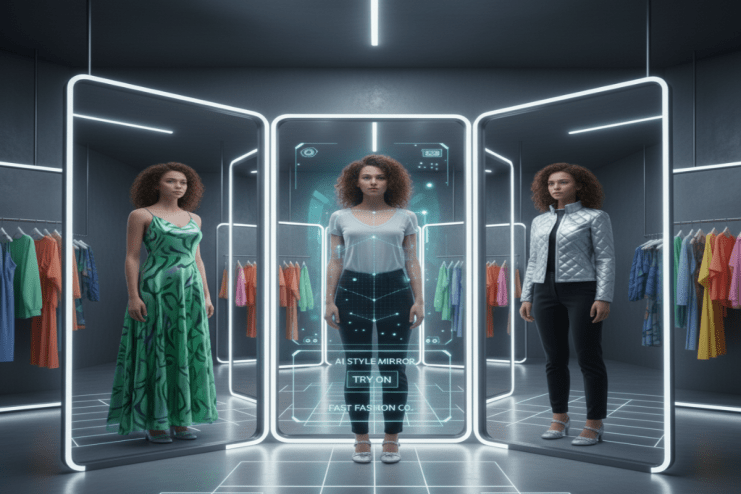
Zara is on a mission to be more digital. From AI generated models, to reduced production timelines, to a new AI-powered virtual try-on feature, the moves point to a wider shift within the sector.
The Spanish retail giant has spent the last few weeks modernising its strategy, fully embracing AI adoption to cut costs and improve efficiency.
Zara is among the first major brands to roll out these kinds of tools, focusing on personalisation and advanced technology.
At a tender time for the retail sector, with pressure on consumer finances, rising inflation for most of 2025 and increased costs of businesses, this shift has garnered mixed opinions on data privacy and the human cost.
It comes as a raft of leading UK retail and hospitality brands shut their stores across the country in the last twelve months, with other high street favourites closing firmly closing their doors for good.
Meanwhile, Morning Wire reported last month that 69 per cent of British retailers are set to invest heavily into AI-driven tech in 2026 to help reduce rising costs.
A report from law firm Eversheds Sutherland predicted that almost three fifths of retail tasks will be automated by AI across core functions, too.
No need for changing rooms
Zara’s most recent move, a virtual, AI-powered fitting room, has given its customers the ability to see how their clothes fit, at home.
By generating an avatar with the help of just two photos – one headshot and a full body picture – Zara is able to mimic the user, showing how items fit both standing and in motion.
More than one item can be selected at a time, also allowing the customer to see how different combinations look together.
When clicking the ‘try on’ button on the app, the user is asked to consent to Zara’s ‘image usage permission’.
“You are interacting with Generative AI. By continuing you accept the legal notice and confirm you understand the privacy policy”, a message from the retailer reads.
A disclaimer appears below: “These images are created with AI. Their appearances and details, including personal characteristics may not reflect reality”.
The move has prompted mixed emotions from its customers, with Instagram comments ranging from those saying they will miss “the real shopping experience”, to another saying: “Am I the only one who thinks this is sad?”.
AI edited models
Elsewhere, earlier on this month, Morning Wire revealed that Zara was using AI to alter images of human models for its e-commerce platforms to cut costs.
Models who had previously worked for the brand had been contacted by the retailer and asked for permission for their photos to be digitally altered to dress them in new clothes.
Two unnamed models told the paper that their pay remained unchanged from that of a standard shoot. Yet Zara would be able to cut costs from production, flights and staff to help with the shoot.
“I was emailed and asked if I was comfortable with my images being used and edited with AI to show different items”, one model told Morning Wire, adding: “But I’ll still be paid the same amount as if I’d travelled for another shoot.”
The retailer responded: “We use artificial intelligence to complement our existing processes”.
“We work collaboratively with our valued models – agreeing any aspect on a mutual basis – and compensate in line with industry best practice”.
This follows the industry heavyweight discreetly shrinking its digital footprint, closing dozens of shops while pouring investment into its online arm.
It also comes as rival retailer H&M publicly announced disclosed plans to create digital AI twins of its real models.
The firm argued that bringing models into the process of digitisation was the best way around the debate, protecting hobs and rights as AI use in retail becomes increasingly unavoidable.
The human cost
Zara has reduced the average production time for e-commerce photos thanks to its digital push.
An eleven day process has been crunched into just under 48 hours since the implementation of the technology, a recent report found.
Not only has this driven the click through rates on its website up 18 per cent, it has declined the costs of shoots by 35 per cent since the tech was implemented.
But what happens to the jobs whose salaries relied on those hours in the studio?
Inevitably, the rate of commissions obtained by creatives, from models, photographers or production teams, will slow down.
This will impact “a whole ecosystem of established professionals as well as early-career fashion photographers trying to get a foothold in the industry”, according to Isabelle Doran, chief executive of Association of Photographers.
With IMF recently predicting that AI will affect 40 per cent of jobs, and LinkedIn reporting that by 2030, 70 per cent of jobs will be transformed due to the technology, this causes concern among creatives about job stability.
And it seems like these roles, those working across the production of e-commerce content like that of Zara’s, lie in the crux of the labour market decline, where AI gains directly turn into mass displacement.