Skip to content
Thursday 20 August 2026London --:--Frankfurt --:--Zurich --:--
NewslettersSearchEN · DE · FR
MorningWire

European business, markets and politics

FTSE 100
10,748.16
+0.04%
DAX
25,983.04
-0.42%
CAC 40
8,453.09
-0.57%
STOXX 50
6,422.06
-0.35%
  • Europe
  • Markets
  • Business
  • Economy
  • Regulation
  • Politics
  • Opinion
More
GermanyFranceEU InstitutionsCompetitionPublic AffairsBankingTechnologyEnergy
  • Germany
  • France
  • Europe
  • Markets
  • Business
  • Economy
  • Regulation
  • Politics
  • Opinion
  • DE
Thursday 29 February 2024 2:26 pm

Fed’s preferred measure of inflation picks up slightly as signs of persistence remain

By: Chris Dorrell

Add as a preferred source on Google
Inflation has fallen sharply across many advanced economies, but central banks have so far been unwilling to cut interest rates while they are not absolutely certain that inflation is under control.

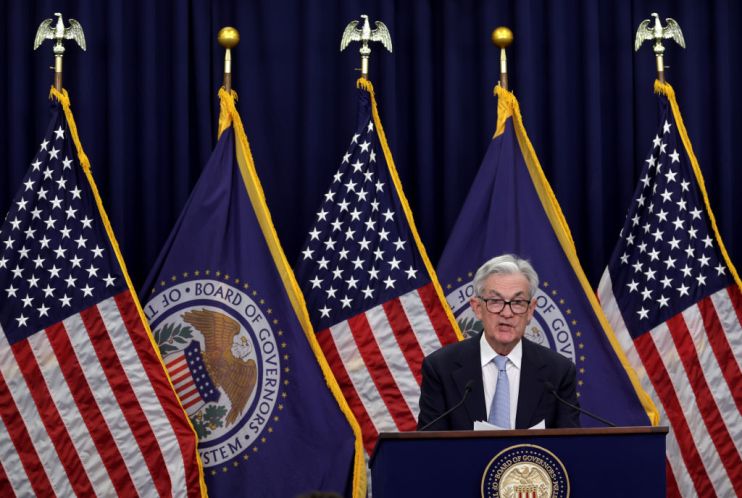
The Fed’s preferred measure of inflation ticked up in January in a sign that the central bank will likely have to delay cutting interest rates for a few more months.

Figures from the Bureau of Economic Analysis showed the core personal consumption expenditure (PCE) index rose 0.4 per cent on the previous month, in line with economists’ expectations but up from 0.1 per cent in December.

The monthly increase reflects the relatively stubborn rate of services prices, which increased 0.6 per cent on the previous month.

On an annual basis, however, core PCE came in at 2.8 per cent, down from 2.9 per cent the month before.

PCE inflation differs from the traditional measure of inflation, the consumer price index (CPI), by including a wider scope of data. CPI uses data from household surveys, while PCE uses data from suppliers, non-profits and the country’s GDP data.

The core measure strips out volatile components such as food and energy. It is closely monitored by the Fed, who consider it to be the most accurate gauge of inflationary pressure in the US.

CPI inflation slowed less than expected in January, falling to 3.1 per cent. Economists had expected it would fall to below three per cent.

“The surge in core PCE prices in January was largely as expected after the hot CPI and PPI reports,” Paul Ashworth, chief North American economist said.

The persistence of inflationary pressures suggests the Fed will hold fire on cutting interest rates until the summer.

At the beginning of the year, investors thought that the Fed would start cutting interest rates in March. However, stubborn inflation, strong growth and a resilient labour market have all contributed to push back the timing of the first rate cuts.

Interest rates stand in a range of 5.25-5.50 per cent, their highest level for 23 years.

The world’s largest economy grew 2.5 per cent last year, a stronger performance than in 2022. Given the strength of the US economy, the Fed can afford to wait until inflation is definitely under control before cutting interest rates.

Read more

As it happened: Miners fuel FTSE 100 recovery; oil jumps as Trump claims Strait of Hormuz

FTSE 100 stocks rise as Brent crude oil prices jump 1.8% to $104.98 amid Strait of Hormuz tensions and Trumps Iran stance

Share this article

  • Facebook
  • X
  • LinkedIn
  • WhatsApp
  • Email

Similarly tagged content:

Sections

  • Markets & Economics

Categories

  • Economics

Related Topics

  • Federal Reserve
  • US interest rates

Trending Articles

  • Jobless Banquet: Youth unemployment surge ‘sends Neets to KFC’

  • City law firm sues prominent Emirati business family

  • Amanda Blanc has worked her magic at Aviva

  • House prices in wealthy London boroughs fall by up to £300,000

  • As it happened: Miners fuel FTSE 100 recovery; oil jumps as Trump claims Strait of Hormuz

More from Morning Wire

  • As it happened: Miners fuel FTSE 100 recovery; oil jumps as Trump claims Strait of Hormuz

    FTSE 100 Live
    FTSE 100 stocks rise as Brent crude oil prices jump 1.8% to $104.98 amid Strait of Hormuz tensions and Trumps Iran stance
  • Inflation leaps to 2.9 per cent in blow to Burnham 

    Economics
    Burnham cityscape showcasing modern architecture, bustling streets, and vibrant community life in a thriving urban setting
  • Soaring energy bills set to fuel inflation spike

    Economics
    Smartphone displaying an energy bill notification with British coins and a banknote nearby.
  • Temporary inflation slowdown set to boost Burnham

    Economics
    Rising inflation graph with increasing percentage symbols, highlighting economic trends and financial market impact
  • Doctors union tops up £1m reserve pot for strikes

    Healthcare
    GettyImages 2246649047: Business professionals discussing strategy at a conference table, highlighting teamwork and collab...
  • Interest rate cut is ‘off the table’, says Bank of England governor

    Economics
    Governor Andrew Bailey has launched a defence of the Federal Reserve's independence.
  • ‘Door is open’ to interest rate hike as inflation fears return

    Economics
    Bank of England headquarters in 2025, showcasing modern architecture and iconic London skyline in the background.
  • ‘False dawn’: June inflation falls to 2.6 per cent but analysts say rises ahead

    Economics
    Till sales growth slowed to 2.7 per cent in the last four weeks
MorningWire

Independent European business, markets and political news for decision-makers.

Morning Briefing

Europe

  • Germany
  • France
  • EU Institutions
  • Europe

Business

  • Markets
  • Business
  • Economy
  • Regulation
  • Competition
  • Public Affairs

Editorial

  • Opinion
  • Editorial Policy
  • Corrections
  • Contact

Company

  • About Morning Wire
  • Privacy Policy
  • Terms of Use
  • Cookie Policy
© 2026 Morning Wire Ltd · Published by Morning Wire Media, Bahnhofstrasse 65, 8001 Zürich, Switzerland
Privacy · Terms · Cookies · Facebook