Skip to content
Tuesday 11 August 2026London --:--Frankfurt --:--Zurich --:--
NewslettersSearchEN · DE
MorningWire

European business, markets and politics

FTSE 100
10,862.50
-0.35%
DAX
26,323.88
0.00%
CAC 40
8,726.03
0.00%
STOXX 50
6,535.62
0.00%
  • Europe
  • Markets
  • Business
  • Economy
  • Technology
  • Politics
  • Opinion
More
GermanyFranceBankingAIEnergyFintechPropertyCapital Markets
  • Germany
  • France
  • Europe
  • Markets
  • Business
  • Economy
  • Technology
  • Politics
  • Opinion
  • DE
Saturday 05 October 2024 6:24 am  |  Updated:  Friday 04 October 2024 3:59 pm

Fiddling with pensions is fine. Changing the overall model is not, though

By: Barry O'Dwyer

Add as a preferred source on Google
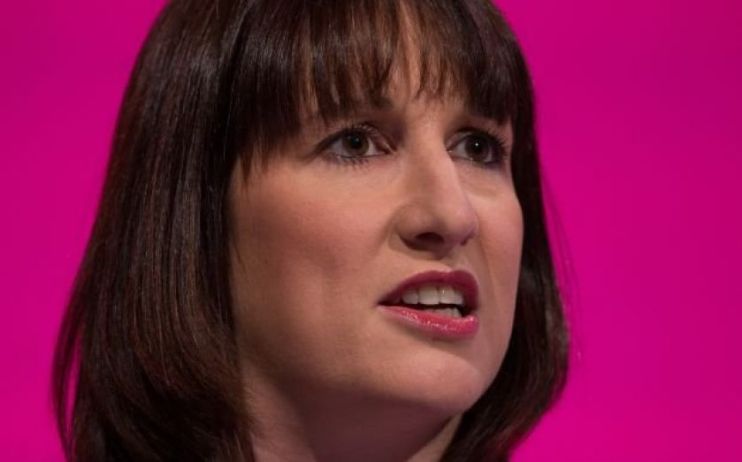
Labour's shadow gchancellor Rachel Reeves
Chancellor Rachel Reeves

Most Chancellors tinker with pensions allowances – but it’s important to remember that none have changed the underpinning model – for good reason

As we approach the Budget on 30 October, speculation is growing – again – as to whether the Chancellor will make changes to the taxation of pensions, alongside the other options available to shore up the nation’s finances.

At an annual net cost of around £50bn, pensions tax relief will certainly merit a post-it note on the flipchart in the Budget meeting room. 

But this time around, there will likely be a bigger post-it note next to that; one that signals the £3 trillion or so of pension investments that could be tilted further towards growth of the UK economy. This may prove a more appealing discussion, and one that could deliver much greater benefits to the balance sheet.

In truth, few Chancellors have left pensions entirely alone, with allowances moving up or down, or removed entirely, as in the case of the Lifetime Allowance. Importantly though, none of those have changed the underpinning model of pensions tax relief.

Taxation of pensions works on the principle of deferred income. People don’t pay tax on income they choose to set aside and save, instead paying the relevant rate of income tax when they access their savings later in life. This ensures people only pay tax on their income once, balancing out tax over their lifetime in return for the public services they need. 

For most people, they will receive 25 per cent of that income tax free, as an incentive for giving up access for many years while the money is invested.

Some people pay less tax in retirement as they move from the higher to basic rate band, but this is commensurate with a drop in income. Conversely, some people pay higher rates of tax in retirement in exchange for accessing large sums from their savings pot in a single tax year.

Read more

IHT pension scramble shows ‘no sign of slowing down’, says Royal London boss 

Royal London shared £181mn with its 2.3m customers in April

These principles underpin the success of automatic enrolment, in that people can be enrolled without consent into workplace pensions on the basis that it is an appropriate savings vehicle for almost everyone. 

Automatic enrolment has been, without doubt, one of the most successful policy innovations in recent decades, transforming the number of employees saving for retirement from a minority to a sizable majority.

It was conceived under a previous Labour government, but largely implemented under a Conservative-led coalition, with the oversight of a Liberal Democrat pensions minister. Cross-party collaboration of this magnitude only persists where a policy carries an unassailable consensus, where everyone agrees with the long-term objective.

If changes were made to tax incentives which raised questions for some employees as to the suitability of saving into a pension, it would risk undermining the very model of automatic enrolment. That could prove to be a major setback in preparing future generations for retirement, and most likely lead to bigger economic challenges in the years ahead.

Any review should respect the coherence and principles of the model for pensions tax relief, and instead consider other options, such as allowances that can easily be changed from year to year, or anomalous exemptions, such as the generous treatment of certain death benefits.

And if we are serious about corralling more pensions money to support economic growth, a stable tax regime will be crucial.

Barry O’Dwyer is CEO of Royal London

Read more

Thames Water faces fresh threat to survival after pensions regulation breach

Thames Water infrastructure with pipes and maintenance workers, highlighting water management efforts in London

Share this article

  • Facebook
  • X
  • LinkedIn
  • WhatsApp
  • Email

Similarly tagged content:

Sections

  • Opinion

Categories

  • Opinion

Related Topics

  • Pensions
  • Tax

Trending Articles

  • Boutique London advisory firm lands £8m funding amid M&A frenzy

  • Silence Therapeutics Announces Proposed Public Offering of $150 Million of American Depositary Shares

  • Point2 Completes $136M Series B Funding with Arm, LB Investment, and Maverick Silicon

  • Top economists shun Burnham over wealth taxes

  • Nottingham Forest owner Marinakis sues Crystal Palace for defamation

More from Morning Wire

  • IHT pension scramble shows ‘no sign of slowing down’, says Royal London boss 

    Investing
    Royal London shared £181mn with its 2.3m customers in April
  • Thames Water faces fresh threat to survival after pensions regulation breach

    Water
    Thames Water infrastructure with pipes and maintenance workers, highlighting water management efforts in London
  • The pensions triple lock is a travesty. Our politicians must fess up

    Opinion
    Young people face the risk of failing to save enough in their pension
  • Royal London hits assets record amid pension push

    Investing
    Royal London shared £181mn with its 2.3m customers in April
  • Pensioners hit with £8bn tax bill after government freezes allowances

    Personal Finance
    City economists have warned that the triple lock pension is unsustainable and unaffordable given the state of the UK's public finances.
  • Rupert Lowe axes pensions triple lock and pledges tax cuts in economic plan

    Politics
    Rupert Lowe, former Southampton FC chairman, smiles while holding files on a city street, wearing a suit and pink tie
  • Ban foreign stocks from Isa wrapper, says top pensions boss

    Investing
    Nicholas Lyons, former Lord Mayor of London, speaking at a podium with microphones, discussing fresh ISA rules.
  • UK debt ‘hits £3 trillion’ milestone

    Economics
    Houses of Parliament in Westminster showcasing historic architecture under a clear sky, central to UK government and politics
MorningWire

Independent European business, markets and political news for decision-makers.

Morning Briefing

Europe

  • Germany
  • France
  • Europe
  • UK & Ireland

Business

  • Markets
  • Banking
  • Technology
  • Energy
  • Property
  • Fintech

Editorial

  • Opinion
  • Editorial Policy
  • Corrections
  • Contact

Company

  • About Morning Wire
  • Privacy Policy
  • Terms of Use
  • Cookie Policy
© 2026 Morning Wire Ltd · Published by Morning Wire Media, Bahnhofstrasse 65, 8001 Zürich, Switzerland
Privacy · Terms · Cookies · Facebook