Filled with HS2 fever? No? Then let’s think up something better

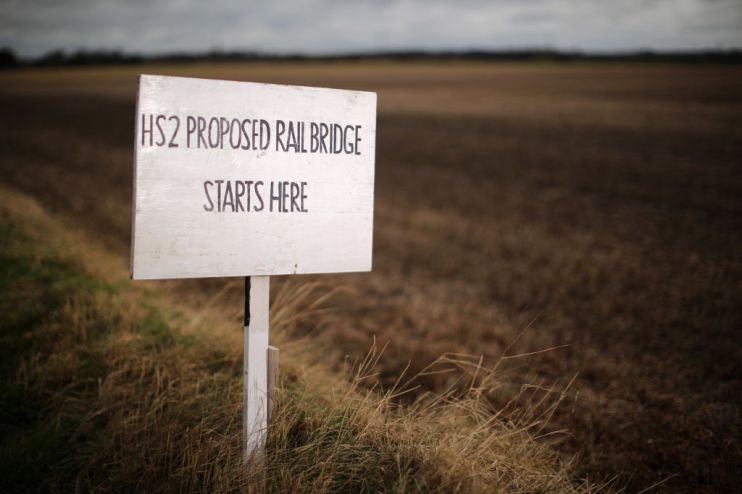
HS2, the unloved child of British infrastructure, looks like a goner.
And while those into trains might spot that there is a review underway, there can be little doubt that this in itself sends a terminal signal to a project that once seemed to offer a glimpse of what a brave new British future might be able to offer.
Fast, modern rolling stock, speeding up journeys, and easing capacity are as important to our national self-esteem as TGV has historically been to France and bullet trains to Japan.
But history is the problem with trains – nineteenth and twentieth century emblems that these days offer iterative and incremental improvements, rather than the game-changing transformation that many had originally hoped for.
There is little doubt that Britain needs infrastructure projects to deliver renewal for its post-Brexit future. But HS2 is struggling to be the answer to that need.
Part of its struggle is that connectivity to London is not the draw it once was.
Ask pretty much any civic leader in our northern cities and they will tell you to look east to west rather than north to south if you want to deliver something truly meaningful. To create the agglomeration effect of well-connected local urban areas matters more than cutting travel time or expanding the commuter belt for the capital.
Saying that, new rolling stock also comes across as an anachronistic priority in a digital age. When the Prime Minister promised a full-fibre nation, it seemed closer than trains to the economic diet required to build a country ready to address the transformational possibilities offered by technology.
The pace of change and adoption of new technologies will, in the coming years, be the making and breaking of nations. And those that establish themselves as global engines for future innovation will be those that have the most to gain.
The government of Singapore has been making huge technology investments, leading one economist to claim that it is “fixated on the knowledge economy and the skillsets needed to participate in it”.
Against that backdrop, the value for money offered by HS2 – currently estimated to cost anything from £56bn to £86bn – is right to be questioned.
And it’s more than a question of utility and value for money. While this is always the driving force for infrastructure investments, there is also another major consideration: what message does it send about us as a people, our ambitions and priorities, our hopes and dreams?
Unleashing “the white heat of technology” was the goal that politicians spoke about in the 1960s. And it was Concorde that came in its wake, with supersonic travel opening the gateway to a new age. Even the name Concorde evoked aspiration. Translating as “harmony” or “union”, it showed collaborative British and French science at its best.
While Concorde was also the dream that ended, few can contest its enduring place in the national mythology and its role in creating a sense that post-War austerity was ending, and that a better future might emerge.
For those that instinctively recoil from Keynesian investment strategies, infrastructure projects are often dismissed as extravagant, wasteful pipe dreams. But that’s not a point of view that carried sway with Victorian or Edwardian Britain. Well over a hundred years later, today’s generations still benefit from the decisions and investments that they made back then.
And that should be the driving goal today: getting the right infrastructure investments rather than nothing at all. Something that is built to last, that will provide immense benefits for the future, and a signal that we are very much in business as a nation.
In a world debating a future driven by electric cars, autonomous vehicles and even flying cars, it is right to reflect on that goal, and ensure that, when delivering the world’s most expensive railway, it is not a cul-de-sac for the nation’s cash.
And our mission, should we choose to accept it, is not just about the future of the way we will move. The opportunities of a 100-year life span and innovating to meet the sustainable development goals all offer clues as to the winning economies of tomorrow, and where we might be well-positioned to place the best bets.
None of this is to underestimate the urgency of delivering against the challenges we face now. We do need a solution to the nation’s decrepit and overcrowded transport infrastructure. But that doesn’t mean that we shouldn’t be questioning the value and values delivered by HS2.
And if it isn’t the right project, despite all the money spent and disruption caused to date, learn the lesson of Spotify’s engineering culture. Fail fast. Learn fast. Improve fast.
We got it right in 2012 and delivered the Olympic moment. We got it right with Concorde and delivered the Concorde moment.
If we cannot imagine future generations speaking as fondly of the HS2 moment, then the search for a new game-changing project must begin again – fast.
Main image credit: Getty