Skip to content
Saturday 8 August 2026London --:--Frankfurt --:--Zurich --:--
NewslettersSearchEN · DE
MorningWire

European business, markets and politics

FTSE 100
10,901.09
+0.31%
DAX
26,319.45
+0.69%
CAC 40
8,714.93
+0.17%
STOXX 50
6,523.86
+0.33%
  • Europe
  • Markets
  • Business
  • Economy
  • Technology
  • Politics
  • Opinion
More
GermanyFranceBankingAIEnergyFintechPropertyCapital Markets
  • Germany
  • France
  • Europe
  • Markets
  • Business
  • Economy
  • Technology
  • Politics
  • Opinion
  • DE
Friday 09 January 2026 5:45 am  |  Updated:  Thursday 08 January 2026 2:54 pm

Fiscal rules are a ‘self-awarded badge of honour’ that ‘make no difference’

By: Mauricio Alencar

Politics and Economics Reporter

Add as a preferred source on Google
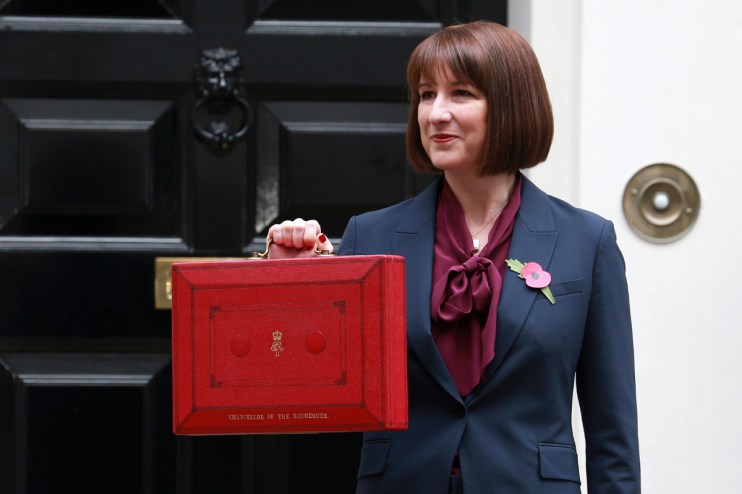
Rachel Reeves speaking at a podium during a business conference, wearing a professional suit, engaging with the audience.
Reeves left just £9.9bn in headroom after her first Budget.

Fiscal rules are “largely ineffective” and fail to impose discipline on public expenditure, a new report has said, bringing into question claims made by UK Chancellors and the International Monetary Fund that a clear list of targets can stabilise public finances. 

Chancellor Rachel Reeves has held up her “iron-clad” fiscal rules, which hinge on changing forecasts made by the Office for Budget Responsibility (OBR), as evidence for her commitment to maintaining control over the public purse. 

But based on analysis from various global economies, Oxford Economics’ emerging markets analyst Yash Adwani said fiscal rules make “no difference” to fiscal outcomes as bond markets were more likely to ”impose fiscal discipline”. 

Adwani also questioned the IMF’s encouragement for countries’ finance ministers to adopt fiscal rules, suggesting that governments had used them as “self-awarded badges of honour” despite overseeing deteriorating economies. 

“Fiscal rules and reputation make no discernible difference to actions or incentives,” the economist, who based his research on 99 countries since 2000, said. 

“More charitably, rules and reputation do have a minor impact on incentivising efforts to reduce primary balances, but this is fully offset by opposing incentives to capitalise on any credibility earned to run more expansionary policies.”

The report also found that countries with a better reputation for meeting fiscal forecasts in the prior three years had severe deteriorations in their primary balances while having more rules did not lead to better performances in public finances. 

Adwani concluded that governments may take more drastic measures to take control over public finances before rules are imposed but would often “relax” after they came into enforcement. 

Read more

Healey announces early Budget

Man in suit and red tie speaking at a podium to an audience in a modern building.

Reeves’ rules face criticism

The report follows criticism of Reeves’ fiscal rules, with unstable public finances leaving the UK with high government borrowing costs. 

The Office for Budget Responsibility (OBR) estimates that debt interest payments will hit £113.7bn this year and £136.6bn by 2030, totalling more than the defence budget. 

Former Bank of England Governor Mervyn King launched an attack on Reeves’ fiscal rules last year in an address to the House of Lords. 

He took aim at the targets being set on a rolling basis, meaning the UK government is tied into forward-looking OBR forecasts rather than having to meet borrowing targets in outruns. 

“The Chancellor of the Exchequer deserves sympathy for the difficult fiscal position which she inherited. But unfortunately her new fiscal rules are flawed.

“Although the OBR discusses risks to the outlook several years ahead, it presents just one precise number to which the chancellor is supposed to respond, and it does so every six months. This is no way to manage public spending.  

“We owe it to our grandchildren to take seriously the challenge of reducing the national debt.”

Some Labour backbenchers, including former transport secretary Louise Haigh, have said fiscal rules have been used as an “economic straitjacket”, adding they had to be re-written to prevent “managed decline dressed up as moderation”. 

Read more

Warning for John Healey as key fiscal target missed

Labour MP John Healey in a professional headshot, likely for news or political profile.

Share this article

  • Facebook
  • X
  • LinkedIn
  • WhatsApp
  • Email

Similarly tagged content:

Sections

  • News

Categories

  • Business
  • Economics

People & Organisations

  • fiscal rules
  • Labour
  • OBR
  • Office for Budget Responsibility (OBR)
  • Oxford Economics
  • Rachel Reeves
  • UK economy
  • UK Government

Trending Articles

  • Why the Loire Valley is about so much more than fairytale castles

  • Why HMRC is huge Premier League transfer window tax headache

  • Thames Water faces fresh threat to survival after pensions regulation breach

  • Back to basics: Sainsbury’s gradual retreat from the British high street

  • Thunder Call set to Strike in Shergar Cup Sprint

More from Morning Wire

  • Healey announces early Budget

    Politics
    Man in suit and red tie speaking at a podium to an audience in a modern building.
  • Warning for John Healey as key fiscal target missed

    Economics
    Labour MP John Healey in a professional headshot, likely for news or political profile.
  • Borrowing costs jump after Burnham ‘fiscal flexibility’ remarks

    Economics
    Andy Burnham smiling at a public event, wearing a suit and tie, representing positive leadership and community engagement.
  • Investors ‘may be less than impressed’ by John Healey’s £9bn borrowing plans 

    Economics
    Man in suit and red tie speaking at a podium to an audience in a modern building.
  • Tax rises ‘guaranteed’ as Healey faces £22bn black hole from Burnham spending plans

    Economics
    Chancellor John Healey smiling, wearing a navy suit, white shirt, and red tie.
  • OECD sounds alarm on pension triple lock in challenge to Burnham

    Economics
    Andy Burnham discussing AI advancements at a business conference podium with delegates in the background
  • Andy Burnham pledges ‘cost £63bn’ – and tax ideas could backfire

    Politics
    Andy Burnham smiling in a bus drivers seat, wearing glasses and a suit, addressing transport pledges.
  • Voters expect Burnham to hike taxes

    Politics
    Andy Burnham discussing capital gains tax increase during a press conference, highlighting potential economic impacts
MorningWire

Independent European business, markets and political news for decision-makers.

Morning Briefing

Europe

  • Germany
  • France
  • Europe
  • UK & Ireland

Business

  • Markets
  • Banking
  • Technology
  • Energy
  • Property
  • Fintech

Editorial

  • Opinion
  • Editorial Policy
  • Corrections
  • Contact

Company

  • About Morning Wire
  • Privacy Policy
  • Terms of Use
  • Cookie Policy
© 2026 Morning Wire Ltd · Published by Morning Wire Media, Bahnhofstrasse 65, 8001 Zürich, Switzerland
Privacy · Terms · Cookies · Facebook