Football needs spending caps, open auctions for players and fairer distribution of revenues or an increasingly narrow group of clubs will prosper

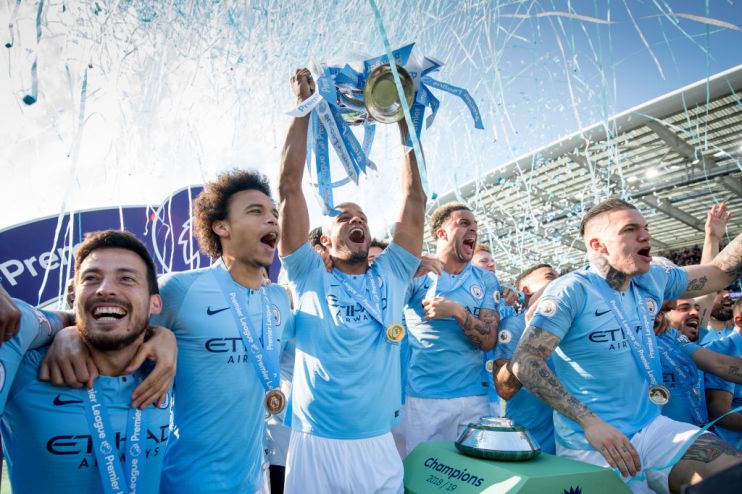
As memories of a tumultuous 2018-19 season fade, it is tempting to believe all is well with the beautiful game.
Scratch the surface, though, and it is apparent that football faces formidable challenges as market forces tighten their grip on its evolution.
From the growing influence of a small number of global super clubs to the operation of a transfer and loan system that no longer achieves its primary objectives, a fundamental regulatory reset is needed if the domestic and European game is to fulfil its sporting and commercial potential.
Read more: How private investment is transforming sport
To achieve this reset, the authorities must be empowered to introduce new measures to enhance competitiveness, improve transparency and promote more solidarity in relation to talent distribution and financial rewards at all levels of the game.
Fifa has established a task force to examine regulatory matters and the governing body should be applauded for trying to tackle some of the key issues as part of a package of reforms to the transfer and player status framework.
Regulating agents
Fifa has proposed a clearing house for agent payments and transactions.
This should be introduced without delay. Greater transparency in money flows in and around football is vital for its integrity.
A ban on clubs paying player agent fees in cases of dual representation – when the agent represents both player and club in the same transaction – is also under discussion.
Such a ban would help limit excessive agent fees as players would be less likely to pay such sums for representation.
However, Fifa seems more inclined towards introducing a cap on agent fees as a percentage of the transaction itself.

The cap may be vulnerable to legal challenge not least because it is somewhat arbitrary and likely to be difficult to enforce.
If dual representation is to continue, then clubs should not pay the agent fees. The player should pick up the cost and there should be rigorous enforcement to avoid work-arounds such as clubs paying the player a higher salary to defray the cost of paying the agent.
The transfer system
Fifa’s proposed reforms include a long-overdue limit to the number of players a club may loan out.
The reforms should eventually avoid the current stockpiling of players by bigger clubs and refocus the system on player development rather than financial gain.
But more radical solutions should also be considered. Although logistically challenging, an open auction process for players should be on the table.
This would avoid the “gatekeeper problem”, where it appears some players are only being made available to certain clubs due to their representation.
The current system only works for the leading clubs and agents. A more open approach needs to be identified which genuinely creates a fair market for players.
This would boost transparency, lead to a fairer distribution of playing talent and generate significant public interest.
Cost controls
Cost controls are clearly needed in domestic and European football, but Financial Fair Play is not the answer in its current form.
FFP measures tend to be based on turnover and this locks in the economic advantage of major clubs, skewing competitive balance further.
It also precludes new entrants challenging the established elite via accelerated investment.
A hard cap on salaries, fees and related player spend should be applied to all clubs to create a truly level playing field.
Wealth distribution
Finally, the revenues generated from European competition must be more equally distributed amongst a wider group of clubs in domestic leagues and not disproportionately awarded to those who qualify for Europe.
If not, national leagues will continue to be dominated by the same clubs, as increasingly will the latter stages of the Champions League and Europa League.
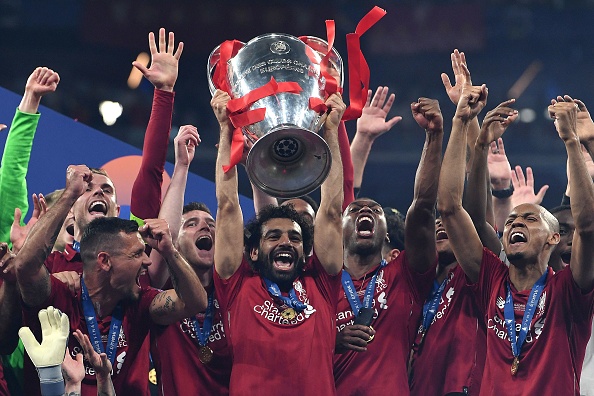
Each of these potential solutions may impact on the current interests of stakeholders and generate legal challenges, but in the absence of radical policies and cooperation between the football authorities and relevant judicial institutions an increasingly narrow group of clubs will prosper.
It is ironic that to deal with the inequality and lack of competitiveness, some are suggesting the answer is to create a more closed European Super League to ensure the same big clubs qualify. In other words, to pull up the drawbridge.
Read more: After a successful World Cup, where now for women’s football?
A more enlightened, innovative approach is needed to redirect the game in these disruptive times.
The football authorities at national, European and international level must work together to create a new financial and regulatory framework to safeguard the future of the game and the European judicial institutions should, as in the US, recognise the unique approach required to sustain competitive sport.
Fundamental change is urgently needed to deliver a more balanced, competitive and sustainable future for the beautiful game.
Darren Bailey is a consultant at law firm Charles Russell Speechlys.
Main image credit: Getty.