Gaza’s Hidden Treasures Return to Paris in New Exhibition
The Institut du Monde Arabe opens ‘Rescued treasures from Gaza’, displaying 87 artefacts that have been stored in Geneva for almost two decades and highlighting the cultural loss caused by recent conflict.
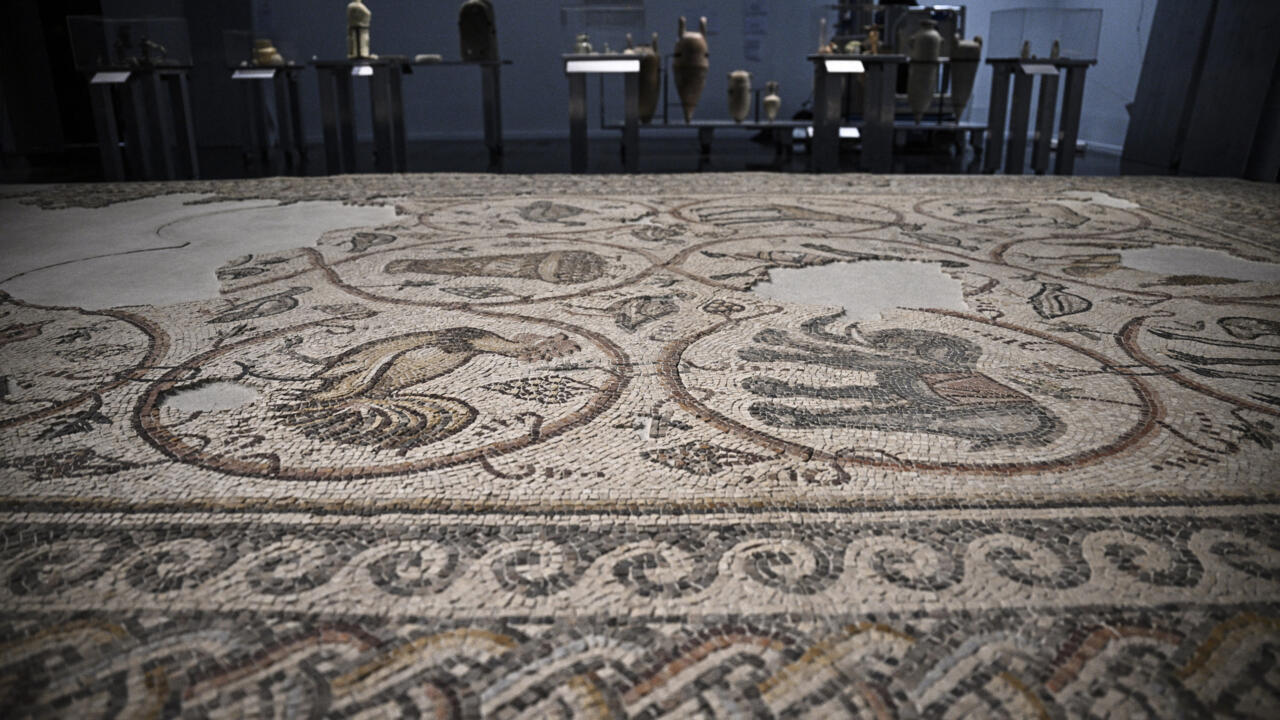
The Institut du Monde Arabe in Paris has opened an exhibition titled Rescued treasures from Gaza, showcasing 87 archaeological objects that originated in the Gaza Strip. The display covers a span of five thousand years, ending in the nineteenth century, and includes terracotta wine amphoras, a Byzantine mosaic floor, Roman oil lamps and a marble figure of Aphrodite recovered from the sea by a Palestinian fisherman.
The objects were shipped to Switzerland in 2006 for an exhibition opened by Palestinian President Mahmoud Abbas and were intended to form the core of a planned archaeological museum in Gaza. A blockade imposed by Israel and Egypt in 2007 forced the artefacts to remain in a secure storage area at the Museum of Art and History in Geneva, where they have stayed for almost twenty years.
Curator Béatrice Blandin explained that the pieces have been awaiting permission to be returned to Palestine and noted that, paradoxically, keeping part of the private collection of construction entrepreneur Jawdat Khoudary in a distant facility has ensured its survival. More than half of the objects in Geneva came from Khoudary’s collection, which he built over three decades by salvaging artefacts uncovered during building projects. Khoudary’s mansion and private museum in Gaza City have been destroyed, and many items there were buried or lost in the rubble.
Cultural resistance and heritage loss
Curator Elodie Bouffard described the exhibition as a form of cultural resistance that furthers the institute’s mission to restore Palestinian history and dignity. She linked the display to the institute’s earlier show of contemporary Palestinian art, which was interrupted by the outbreak of war in October 2023 and saw several featured artists killed before the exhibition closed.
UNESCO has confirmed that since October 2023, ninety‑four cultural sites in Gaza have been damaged, including twelve religious structures and seven archaeological locations. The ancient Greek port of Anthedon, long excavated by French archaeologist Jean‑Baptiste Humbert, has been heavily bombed and bulldozed. Humbert estimates that Israeli air strikes have eliminated half of the heritage that survived earlier damage from urban expansion. The twelfth‑century al‑Omari mosque and the thirteenth‑century al‑Basha palace, a site associated with Napoleon, have also been destroyed.
Gaza’s archaeological layers, ranging from the Bronze Age through the Ottoman period, have suffered damage from successive wars and rapid construction. Because the territory is isolated, artefacts kept abroad now serve as the main tangible evidence of its history. The wine amphoras, shaped like artillery shells, once transported Gaza wine to distant markets such as England, illustrating the region’s historic role as a trade hub under Persian, Greek and Roman rule.
The exhibition is scheduled to remain open until 5 November 2025. Organisers have expressed hope that the artefacts will eventually be transferred to Gaza so that the Palestinian population can access and value their heritage.


