French football’s financial crisis: Why Ligue 1’s €3bn deal with Mediapro collapsed and what it means for the Premier League

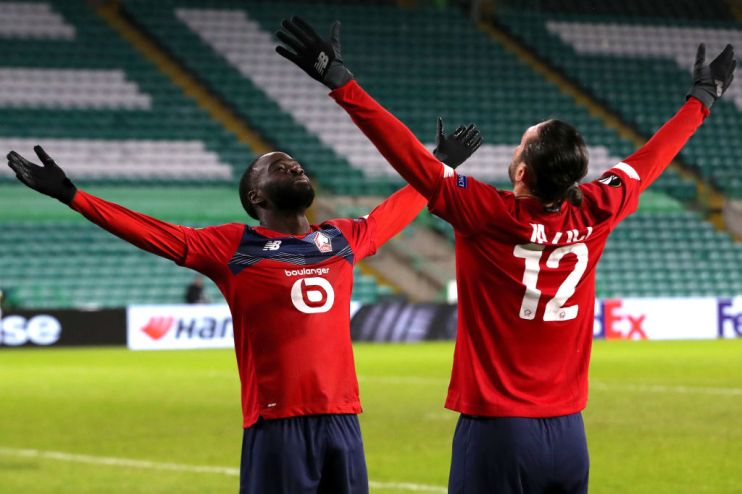
Lille OSC are flying high in Ligue 1, into the latter stages of the Europa League — and €125m in debt.
This season, financial turmoil off the pitch is tainting the French football club’s on-field success.
Last month, Lille’s major creditors JP Morgan and Elliott Management forced the club’s embattled owner Gerard Lopez to sell up to a hedge fund led by former banker Maarten Petermann.
But Lille are far from the only French club facing financial difficulties.
The early cancellation of the pandemic-affected 2019-20 Ligue 1 season coupled with the catastrophic recent collapse of a broadcasting deal worth €3.25bn has severely dented the income of all French top-flight clubs.
This month, many French teams may be unable to resist low-ball offers for their top talent. That could be good news for English Premier League clubs, who could bolster their ranks by going discount shopping in Ligue 1.
Why the Ligue 1 Mediapro deal collapsed
French football’s current woes began in April 2020, when then-prime minister Edouard Philippe announced the cancellation of all sporting events until September due to the coronavirus pandemic.
That meant that Ligue 1 clubs were unable to finish their seasons and did not receive significant broadcasting revenue.
At the time, Lyon president Jean-Michel Aulas condemned the early cancellation of Ligue 1, which he said meant French clubs lost “€700m to €900m” of potential revenue.
The subsequent collapse of a broadcasting deal between Ligue 1 and the Barcelona-based multimedia group Mediapro has further added to French clubs’ financial woes.
In 2018, Mediapro agreed to pay €814m a year to acquire the domestic TV rights to France’s top two divisions, Ligue 1 and Ligue 2, until 2024.
Mediapro then set up a new subscription sports channel called Téléfoot, and charged consumers €25 per month to watch Ligue 1, Ligue 2, and non-exclusive European Champions League and Europa League matches.
How Ligue 1 missed Serie A’s warning
Téléfoot needed 4m subscribers to make a profit at this price point. Only 600,000 signed up to the pay TV channel.
In October and December, Mediapro failed to pay two instalments, worth €172m and €153m respectively, to Ligue 1. That led to the deal’s collapse.
Mediapro argues that it has been unable to make payments due to the adverse financial effects of the pandemic. Ligues 1 and 2 will now have to find a new broadcast partner.
“The deal went wrong because of classic overpromising and then a failure to deliver as well as a lack of due diligence on Ligue 1’s side,” says Minal Modha, a sport analyst and consumer lead at the data and market research firm Ampere Analysis.
Italy’s top-flight division Serie A previously rejected Mediapro’s bid for its TV rights from 2018 to 2021, because Mediapro was unable to provide greater financial guarantees.
“It seems that Ligue 1 did not heed this warning,” says Modha.
The collapse of the agreement between Ligue 1 and Mediapro has left clubs like Lille without income from broadcasting for the time being.
French clubs have received limited matchday income since March due to restrictions on the number of fans allowed in stadiums.
What could this mean for the Premier League?
Despite potential Brexit roadblocks affecting some transfer business, Premier League clubs will be excited by the prospect of signing Ligue 1 players such as Stade de Reims’ Boulaye Dia and Lille’s Zeki Çelik on the cheap.
But top European leagues can learn lessons from the collapse of the deal between Ligue 1 and Mediapro.
“Leagues and their administrators will often go for the highest bid on the table rather than properly doing their due diligence on suppliers and making sure there is a comprehensive legal agreement in place,” says Simon Leaf, head of sport at the law firm Mishcon de Reya.
“This definitely serves as a warning to rights holders that sometimes it may be better to stick with trusted historic partners rather than what may look like the highest offer on the table.”
English football is now 18 years removed from its own Mediapro moment. In 2002, a £315m deal between ITV Digital and the English Football League fell apart as the former entered administration.
Fourteen Football League clubs were forced into administration in the four years following ITV Digital’s collapse.

The Premier League has not been immune from difficulties in the pandemic and last year terminated its £523m partnership with the Chinese broadcast partner PPTV over unpaid instalments.
The impact was nothing compared to Ligue 1’s, however. Money lost from the collapse of the PPTV deal equates to around six per cent of the Premier League’s total three-year broadcast income of £9.2bn.
Some of those losses will be mitigated further, meanwhile, by the league signing a contract with a new Chinese broadcast partner, Tencent.
Falling broadcast revenue looms for European football
Last year, there were warning signs that top European leagues were seeing their broadcast revenue plateau or dip in value.
“In Western Europe, 2020 saw TV advertising revenue down by 17 per cent which will undoubtedly have an impact on broadcasters who traditionally buy the rights,” says Modha.
“We’ve seen in the previous cycle that the Premier League’s domestic rights values remained flat and the [German] Bundesliga’s saw a drop. It’s hard to see how against the backdrop of a pandemic they’ll be able to increase these values.”
However, proper due diligence can usually prevent the financial ruin Ligue 1 is currently facing, even in the adverse conditions of a global pandemic.
“The more this happens, the more all sides are waking up to the fact there does need to be a proper legal agreement in place,” says Leaf.
“The pandemic has shown the importance of having proper mechanisms that dictate when payment should and shouldn’t be made.”