A fresh face in No10 should find some policy rather than campaign slogans

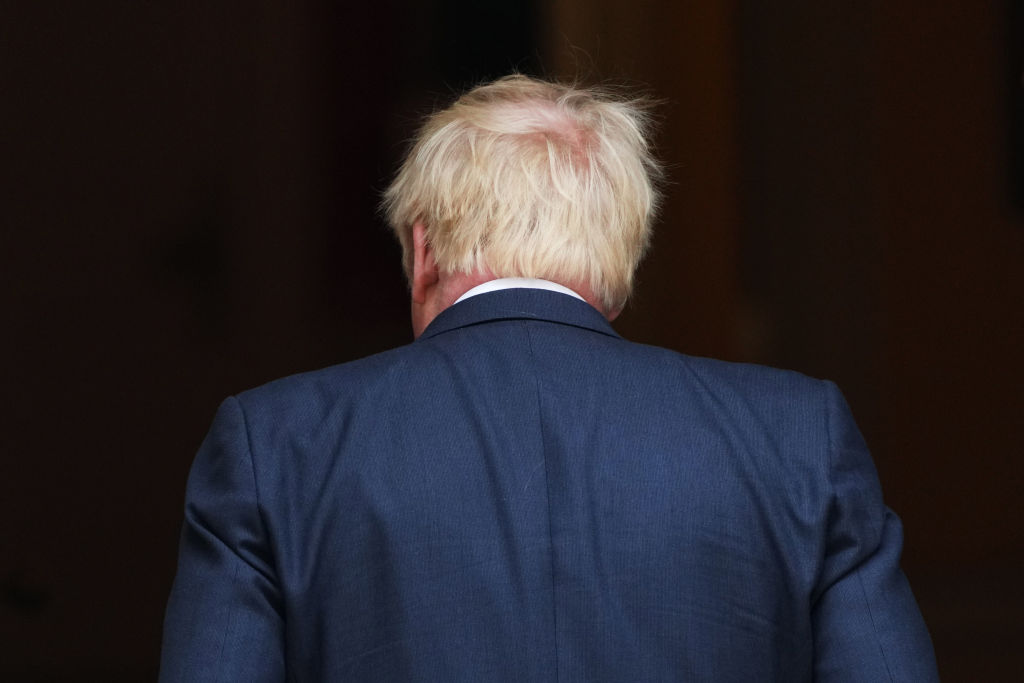
IT IS now received wisdom that modern politics is about personality rather than policy. We are, apparently, in a post-ideological phase where the priority is a leader connecting with the electorate and seeming authentic. How else are we to explain the rise to power of Boris Johnson, a P.G. Wodehouse caricature who was always content with an overhead locker when it came to ideological baggage?
However attractive this theory is, it’s not true. Policy still matters. That, after all, is the business of running schools, hospitals, housing, the emergency services and everything else which touches on voters’ everyday lives. We may be less comfortable talking in philosophical terms now than we were in the 1970s or 1980s, but we have simply found a different language to express the same concepts.
By the autumn, at the latest, we will have a new prime minister. What changes might we expect him or her to make? What policies will be pushed to the foreground, and what might quietly be airbrushed out of history? How much elbow room will a new Conservative leader have, and what would be most effective in signalling a fresh start, drawing a line under the Johnson years?
We can look at this on a micro or macro level. In terms of the former, we might expect the brakes to be applied to the privatisation of Channel 4, for example. This is a project driven partly by dogma—private sector good, public sector bad—and partly by antipathy: the channel makes no secret of its broadly progressive stance and often offers a platform to those who dislike or oppose the current government. The new prime minister might think abandoning it a useful olive branch to the centre ground; it will raise a paltry sum of money and is likely to hobble, rather than empower, Channel 4 in the television market.
By contrast, some early, high-profile tax reductions would be a strong signal that coherent conservatism was back in charge. Johnson was never a committed small-state conservative, happy to open the taps of public spending for electoral gain, and the right wing of the party has been chafing at this. Revising business rates or, more boldly, cutting income tax would reassure pro-business voters that controlling expenditure was back on the agenda.
There are broader issues too. Most obvious is the so-called “culture war”, which some members of the government have been cheerfully stoking for some time. There are important discussions to be had, but it is not the place of government ministers to berate banks for specifying their employees’ pronouns, or attacking signage in National Trust properties. How we live with each other and with our past needs much more light and a good deal less heat.
A new premiership might also be an opportunity to revisit the UK’s new asylum arrangements with Rwanda. This has been a bitterly divisive policy, almost designed to stoke the law-and-order base and enrage centrists and liberals: more importantly, it is not clear that it is either legal or workable. A fresh start might allow the government to “review” this area, and look to more practical ways of controlling illegal immigration at source. The problem will only be effectively addressed by tackling access to boats and fuel, and working closely with allies to police coastal waters effectively. It is no secret relations between Boris Johnson and his counterpart in Paris were tense. A fresh face could help mend some of these old disagreements.
Any prime minister who succeeds a leader of the same party has a difficult balance to strike. It is impossible to repudiate everything that has gone before, but a newcomer will want to signal a change of emphasis. So it was with John Major after Margaret Thatcher and Gordon Brown after Tony Blair. The key to success is understanding that detailed policy and overall narrative must be tackled together, for each feeds the other. We await the autumn to see how the new prime minister presents themself to the world.