Skip to content
Thursday 13 August 2026London --:--Frankfurt --:--Zurich --:--
NewslettersSearchEN · DE
MorningWire

European business, markets and politics

FTSE 100
10,772.67
-0.56%
DAX
26,299.74
-0.12%
CAC 40
8,650.56
-0.28%
STOXX 50
6,545.47
+0.18%
  • Europe
  • Markets
  • Business
  • Economy
  • Technology
  • Politics
  • Opinion
More
GermanyFranceBankingAIEnergyFintechPropertyCapital Markets
  • Germany
  • France
  • Europe
  • Markets
  • Business
  • Economy
  • Technology
  • Politics
  • Opinion
  • DE
Wednesday 05 April 2023 5:15 am  |  Updated:  Wednesday 05 April 2023 11:14 am

From international trade to interest rates, macroeconomics is in yet another tail spin

By: Paul Ormerod

Add as a preferred source on Google
Bank of England Raises Key Interest Rate To 4%
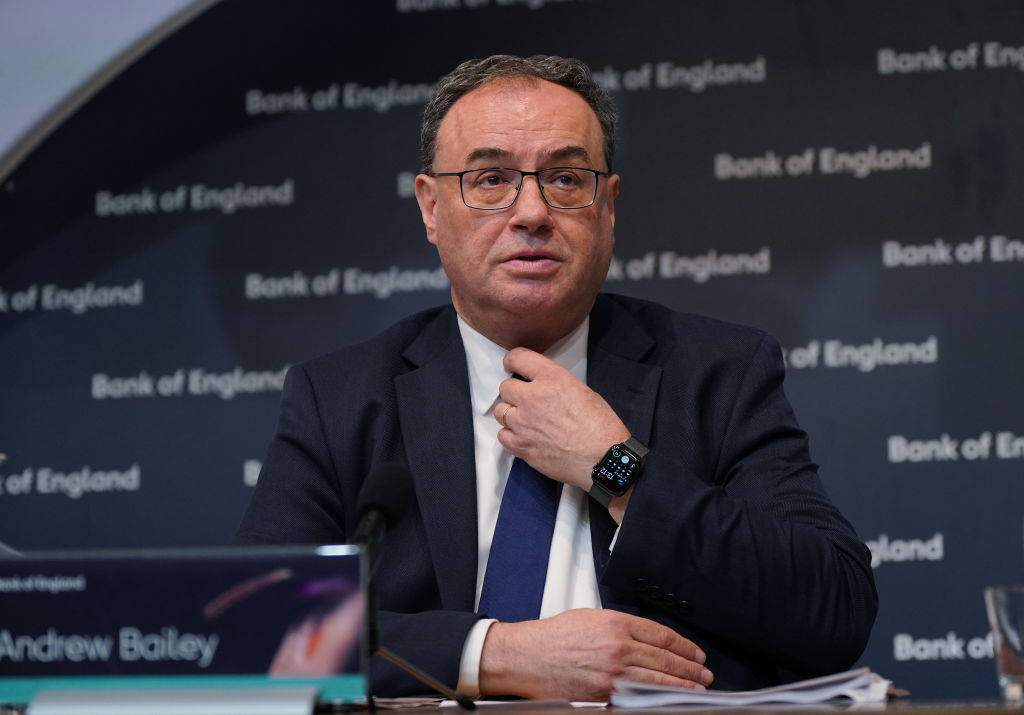
Andrew Bailey, Governor of the Bank of England, during the Bank of England Monetary Policy Report Press Conference, at the Bank of England last month. (Photo by Yui Mok – Pool/Getty Images)

Last week, anti-Brexit campaigners started complaining about the minuscule economic benefit of joining the CPTPP, but almost no one shaking a fist knows a thing about microeconomics, writes Paul Ormerod

Fifty years ago, the Euro area accounted for 30 per cent of the world’s economy. Since then, there has been a steady fall; now, its share of world output has halved.

In contrast, the Asia-Pacific economies have grown much faster. These trends are well established, and this region will increasingly dominate the world economy.

Yet, on the logic of the received wisdom in UK economics, any weakening of our links with the EU is a disaster. In contrast, any recognition given to strengthening our links with the Asia-Pacific region is at best grudging.

Hence the estimate published last week by the Office for Budget Responsibility (OBR). It calculated the new trade deal between the UK and the Comprehensive and Progressive Agreement for Trans-Pacific Partnership (CPTPP) would only add a trivial 0.08 per cent to the size of our economy.

The CPTPP countries do not include Asian giants India and China, but their share of world output is now not much less than that of the EU. Despite this, the models used to estimate these effects churned out a dismally low number.

Truth is, the models used to predict the economy at the macro level are just not very good, to say the least. “Macro” of course means “big”: in economics, the term refers to things such as inflation, the growth of the economy and overall movements in trade.

Because of the media exposure it gets, most people think economics is mainly about macro. But whether it is in theory or in practice, most of economics is carried out at the “micro” level, trying to understand how individuals and companies behave.

Read more

Bank of England to relax capital rules despite warning of economic threats

Bank of England building on Threadneedle Street, London, showcasing its historic architecture and financial significance

Here, economics has made a lot of progress over the past thirty years. Descriptions of behaviour are now much more realistic. There is still a way to go, but this part of the discipline is in good health.

The same cannot be said of macroeconomics. The models are mathematically more sophisticated than the ones which I used when doing economic forecasting in the late 70s and 80s. But their performance is no better.

A stark illustration of this is provided by two of the 2019 Nobel Laureates, Abhijit Banerjee and Esther Duflo, in their book “Good Economics for Hard Times”. They devote a long chapter specifically to international trade.

They note that a number of key propositions in trade theory in economics lack empirical support. Indeed, the evidence even appears to contradict some of them.

Macroeconomics in the UK, whether on the Monetary Policy Committee or in the wide forecasting community, suffers from a problem which Keynes identified in the 1930s when writing about the economic crisis: “A sound banker, alas, is not one who foresees danger and avoids it, but one who, when he is ruined, is ruined in a conventional way along with his fellows, so that no one can really blame him.” What this means is that there’s a real reluctance amongst macroeconomists in the UK to go out on a limb. There are exceptions such as Tim Congdon, the founder of the Institute of International Monetary Research, but groupthink pervades the community.

The Bank of England’s recent record on inflation, for example, has been catastrophically poor. The Treasury’s original Project Fear warning of the consequences of a Leave vote was, according to many, completely wrong.

There is not, unfortunately, a rival set of theories which are scientifically unequivocally superior. But we can start by stopping treating pronouncements from the likes of the OBR as though they were science. A healthy dose of scepticism would prove useful.

Read more

Exclusive: Rugby League monitoring Henry Pollock amid £1m Hearn wage demands

A young man with blonde hair and a dark shirt, clenching his fist and smiling, likely celebrating or cheering.

Share this article

  • Facebook
  • X
  • LinkedIn
  • WhatsApp
  • Email

Similarly tagged content:

Sections

  • Opinion

Categories

  • Opinion

Trending Articles

  • Five-star Mayfair hotel hit with HMRC winding-up petition

  • It’s not just Jason Arday, most of sociology is a scam

  • Revolut takes flight with launch of new airport lounges

  • IT consultant ordered to pay £50,000 after being accused of stealing Soho House members’ personal details

  • As it happened: FTSE 100 falls as Iran and US clash over Strait of Hormuz; Oil stockpiles ‘rapidly depleting’

More from Morning Wire

  • Bank of England to relax capital rules despite warning of economic threats

    Banking
    Bank of England building on Threadneedle Street, London, showcasing its historic architecture and financial significance
  • Exclusive: Rugby League monitoring Henry Pollock amid £1m Hearn wage demands

    Sport Business
    A young man with blonde hair and a dark shirt, clenching his fist and smiling, likely celebrating or cheering.
  • IMF warns Bank of England against cutting interest rates

    Economics
    IMF Chief Kristalina Georgieva issues caution to Bank of England amid economic concerns
  • Bank of England warns Burnham of UK economy’s ‘big issue’

    Economics
    Bank of England Governor Andrew Bailey said the future of interest rates was "more uncertain".
  • How patient can the Bank of England be?

    AD
    Historic Royal Exchange building in London with modern skyscrapers behind, clear blue sky.
  • It’s coming home… Where to watch the England World Cup Quarter Final

    Life&Style
    Breaking news conference with business leaders discussing economic strategies, panelists seated at table with microphones.
  • UK debt ‘hits £3 trillion’ milestone

    Economics
    Houses of Parliament in Westminster showcasing historic architecture under a clear sky, central to UK government and politics
  • Why the Bank of England museum is a one-of-a-kind

    Toast the City
    Gold bar stamped PAMP SA SWITZERLAND on display at the Bank of England Museum, showcasing financial assets.
MorningWire

Independent European business, markets and political news for decision-makers.

Morning Briefing

Europe

  • Germany
  • France
  • Europe
  • UK & Ireland

Business

  • Markets
  • Banking
  • Technology
  • Energy
  • Property
  • Fintech

Editorial

  • Opinion
  • Editorial Policy
  • Corrections
  • Contact

Company

  • About Morning Wire
  • Privacy Policy
  • Terms of Use
  • Cookie Policy
© 2026 Morning Wire Ltd · Published by Morning Wire Media, Bahnhofstrasse 65, 8001 Zürich, Switzerland
Privacy · Terms · Cookies · Facebook