Skip to content
Wednesday 9 September 2026London --:--Frankfurt --:--Zurich --:--
NewslettersSearchEN · DE · FR
MorningWire

European business, markets and politics

FTSE 100
10,670.06
-1.31%
DAX
25,576.45
-1.66%
CAC 40
8,156.67
-1.94%
STOXX 50
6,311.56
-1.58%
  • Europe
  • Markets
  • Business
  • Economy
  • Regulation
  • Politics
  • Opinion
More
GermanyFranceEU InstitutionsCompetitionPublic AffairsBankingTechnologyEnergy
  • Germany
  • France
  • Europe
  • Markets
  • Business
  • Economy
  • Regulation
  • Politics
  • Opinion
  • DE
Wednesday 04 January 2023 12:58 pm  |  Updated:  Wednesday 04 January 2023 12:59 pm

From strikes to the NHS there is plenty going on – but Rishi Sunak is right to put “maths ’til 18” at the top of the agenda

By: Sam Sims

Add as a preferred source on Google
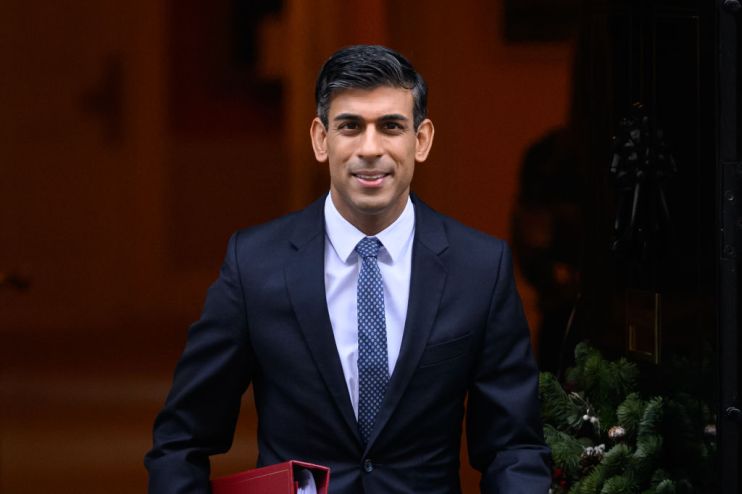
Rishi Sunak has pledged to introduce 'maths 'til 18' in the next Parliament
Sunak has reportedly revived talks with chimpaker Arm

From the NHS’ well documented woes to rail strikes and Brexit, there is much on the government’s plate – but Rishi Sunak is right to put a light on Britain’s poor levels of numeracy, argues Sam Sims, the CEO of charity National Numeracy

When there is so much else on the government’s domestic agenda – spanning from the waves of strikes to the NHS crisis – why is the prime minister Rishi Sunak’s announcement about maths worth taking seriously?

Today, the prime minister set out his intention to introduce compulsory maths for all students up to the age of 18.

While details of the policy have not been revealed, one thing is certain: it is vital that poor numeracy in the UK is addressed. Why? Because half the working age population of the UK (49 per cent) has the expected numeracy levels of a primary school child.  

In recent National Numeracy research, 30 per cent of the UK’s 18- to 24-year-olds said that using maths and numbers made them feel anxious. 

Maths ’til 18 could be part of the answer

Our children are entering adulthood feeling ill-equipped to use numeracy in everyday life, for continuing their studies – whether academic or vocational – getting into work or managing their household finances.

The UK’s numeracy levels are significantly below the average for developed countries, and poor numeracy costs the UK economy as much as £25bn a year in lost earnings.

But will the prime minister’s approach to maths work? The devil is in the detail, of course, so we’ll have to wait and see. What’s for sure is that there are many pressing educational needs, not least the supply of teachers and support for educators to deliver any new kind of numeracy education.

We believe understanding and working with numbers is crucial for everybody, no matter what level of attainment, not just those going on to further study. 

Every child should leave school with the skills and confidence to use maths in everyday life, and an understanding of the value that maths can bring to their lives.

Poor numeracy is undoubtedly holding the UK back. It blights livelihoods, limits social mobility and contributes to pervasive problems from unemployment to poor health and debt.   

Improving numeracy offers benefits right across society, helping people to get on in vital aspects of their lives at a time the UK really needs a skilled and confident population.

But people with low number confidence and numeracy skills need to be supported to feel ready and confident to learn – at any age.  

Read more

Week in Business: Warning lights in the City as another firm quits London for New York

Firms are leaving the London Stock Exchange

Share this article

  • Facebook
  • X
  • LinkedIn
  • WhatsApp
  • Email

Similarly tagged content:

Sections

  • Opinion

Categories

  • Morning Wire Content
  • Opinion
  • Politics

Trending Articles

  • Hedge fund billionaire Chris Rokos joins UK wealth exodus 

  • Tesco and Boots lead 100,000 jobs pledge to tackle Neets crisis

  • Airport chaos latest: Heathrow, London City ‘starting to recover’ after air traffic control failure

  • Five lenders hike mortgage prices as interest rate threat looms

  • As it happened: FTSE 100 dives as oil prices surge past $100 in blow to inflation

More from Morning Wire

  • Andy Burnham is on course to rack up the second highest debt interest bill on record

    Opinion
    UK National Debt Clock showing £3 trillion, with Big Ben and the Union Jack in the background.
  • Jonathan Reynolds’ industrial strategy is straight out of the 60s

    Opinion
    Labour's Jonathan Reynolds unveiled the industrial strategy in June.
  • NHS data counters claims that £330m Palantir deal has led to ‘no improvement’

    Tech
    Brit are seeking financial support from the ‘Bank of Mum and Dad’ to afford private healthcare.
  • How the NHS backlog fuelled a private equity gold rush in UK health market

    Healthcare
    Private health insurance admissions continue to surge
  • Will Westminster learn the right lessons from Scotland’s education disaster?

    Education
    School children
  • Nscale doubles London office space as UK staff grows sixfold

    AI
    2024 was a transformational year for GlobalData.
  • Burnham’s devolution drive could ‘push 90,000 jobs out of London’

    Economics
    In 2022, rolling Tube strikes led to massive queues for crowded buses. (Photo by Chris J Ratcliffe/Getty Images)
  • Leeds NHS Innovation to Accelerate Global Adoption of AI-enabled Pathology for Cancer Diagnostics Through Epredia Partnership

    Business Wire
MorningWire

Independent European business, markets and political news for decision-makers.

Morning Briefing

Europe

  • Germany
  • France
  • EU Institutions
  • Europe

Business

  • Markets
  • Business
  • Economy
  • Regulation
  • Competition
  • Public Affairs

Editorial

  • Opinion
  • Editorial Policy
  • Corrections
  • Contact

Company

  • About Morning Wire
  • Privacy Policy
  • Terms of Use
  • Cookie Policy
© 2026 Morning Wire Ltd · Published by Morning Wire Media, Bahnhofstrasse 65, 8001 Zürich, Switzerland
Privacy · Terms · Cookies · Facebook