From Theresa May to Rory Stewart: The books blowing up parliament this autumn

It would seem that political memoir is in fashion this season. With Guy Fawkes night just behind us, and the long-awaited release of Nadine Dorries’s explosive tell-all account just ahead, we thought it was good timing to look at some of the latest books borne out of Westminster’s halls.
1. ‘The Abuse of Power’ by Theresa May
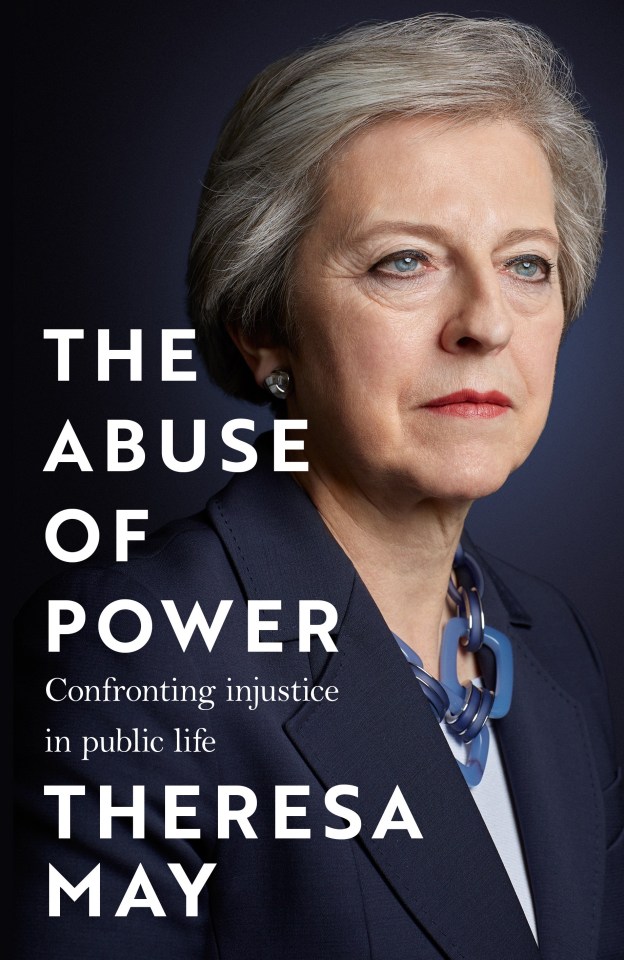
As the spectre of a general election looms over Rishi Sunak, few things could be spookier than a former prime minister releasing a book. But Theresa May’s ‘Abuse of Power’ is not a memoir, laced with thinly veiled criticisms of the current government for journalists to pour over.
May’s break from this sorry tradition is welcome. As is the thread pulling together the separate stories of institutions’ often cruel behaviour: service is the answer, says May.
Reading her book, with its insistence that most MPs are not in fact in it for themselves – at least not at the beginning – but are there for the advancement of others and their constituents, is a somewhat sad reminder of why her premiership failed. Her commitment to service was admirable, as was her inability to “play politics”. But this was also her downfall.
The case studies she presents us with span from those she had direct involvement with, from Hillsborough, Grenfell and Windrush, to modern slavery and the war in Ukraine. Where she is strongest is where she worked on the case. Indeed the chapter covering the Primodos scandal, a form of pregnancy test which led to deformities in children and even miscarriages, is riveting.
Many prove her central thesis that there are often multiple abuses – the mistake and then the subsequent abuses to silence the victims. This becomes less thorough as she examines the political scenes, which she does deftly but now with the eyes of someone away from the shining light of No10 Downing Street or the Home Office.
‘The Abuse of Power’, while not a political memoir in the typical sense, does pay homage to the tradition with careful attempts to explain why May made certain decisions in her premiership. Indeed, she casts the mischief made by certain Brexiteer MPs as an abuse of power in itself. This is tempered by her refreshing attitude that to be an MP is a job like any else.
She tells a story of an argument in the MPs tearooms, where a fellow parliamentarian takes umbrage at the idea being a Member of Parliament is the same as being employed by some organisation or another. “Contrary to the views of many, being elected doesn’t make MPs a breed apart to whom the normal rules of human behaviour in the workplace do no apply,” she writes.
It is this idea of being somehow special and different from the rest which often leads to abuses of power, May suggests throughout the book. Indeed it was this attitude which spurred much of the decision making during the era of lockdown parties, she writes.
Westminster is rife with a conviction of being above the rest. May’s book is a needed tonic from that. It is not a book without a few devilish snipes at her political enemies (notably John Bercow), but it is an enjoyable and fascinating read centred on instances within politics where best practice fell by the wayside.
Reviewed by Sascha O’Sullivan
2. ‘Politics on the Edge’ by Rory Stewart
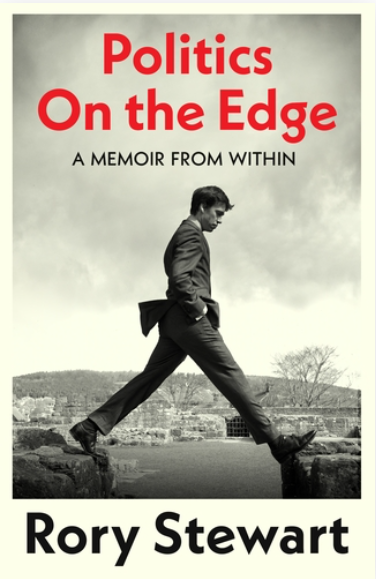
Much has been written about Liz Truss being right to foreground the importance of economic growth. After all, it’s one of Rishi Sunak’s five pledges for 2023. But eagle-eyed readers of Rory Stewart’s engaging new read, ‘Politics on the Edge’, will spot another example of the erstwhile prime minister’s Cassandra-like powers.
On page 156, as Stewart’s boss at the Department for Environment, Food and Rural Affairs, Truss issues the withering summation: “The problem with you Rory, is you try to be interesting… never be interesting.” Problem or not, interestingness, it seems, is at the core, both of Stewart’s self-image and of his passage through the halls of power, in this satisfyingly gossipy tome.
Reminders of his walk through Afghanistan, and his propensity to don wellies to wade in flood water or wander the Scottish borderlands of his Penrith constituency, are abundant.
Throughout, there’s an admirable frankness about what he sees as the decayed state of British politics and the defective nature of the Whitehall system of government. However, his thesis, to me, appeared to be an attempt to set himself above the melee, rather than recognise his own participation.
Pages are replete with criticism of colleagues, of whom he then seems to expect a sense of loyalty toward his own ambitions, to No10 and City Hall. And rows with Boris Johnson over Brexit cast the former mayor of London as the singular villain. Ardent podcast fans won’t thank me, but it’s at least possible to draw a comparison between the former wannabe ‘world king’ and the toddler Rory who named his rocking horse after Alexander the Great’s stallion (Bucephalus, apparently).
But the book is hardly a chore – a chapter on his efforts to reduce violence as prisons minister was a compelling example of the power of the state to change and improve lives. It offers welcome contrast to admittedly rip-roaring tales of Commons antics, high-octane election nights and courtly cabinet intrigue.
Some might say it’s a shame he didn’t quietly and competently continue climbing the ministerial ladder. But ultimately, Stewart has achieved his ambition to “live a life that would feel like a storybook”, as he told the Guardian. And happily for us readers, if you’re looking for a curtain lifter on the arcane and at times obnoxious world of Westminster – seen through the eyes of an apparent outsider – this more than fits the bill.
Reviewed by Jessica Frank-Keyes
‘Code of Conduct’ by Chris Bryant
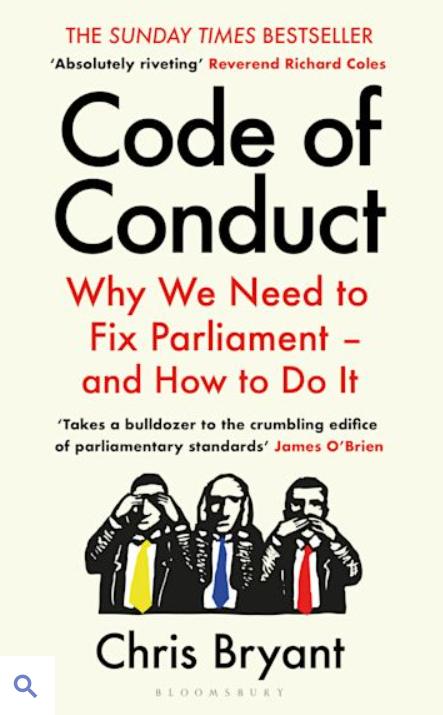
Anyone following politics of late will have heard of Chris Bryant. The former chair of parliament’s Privileges Committee – also known as a Kangaroo Court if you take Boris Johnson’s view on things – from 2020-22, Bryant led the group of MPs in charge of the investigation into Owen Paterson’s infamous breach of lobbying rules, which was to form one of the series of disastrous dominoes that would ultimately overturn Johnson’s premiership.
The slightly self-righteous (he’s a former Anglican priest after all) tone adopted by the MP for Rhondda is largely justified. An (engaged) MP since 2001, Bryant is a certified Westminster nerd. He has already written two hardcore biogrophies on parliament.
‘Code of Conduct’ begins by recounting the many injustices – and let’s not mince words – of wronguns such as Paterson, Pincher and co who covered themselves in muck at the end of Johnson’s reign. This is not without value in itself, but it is a little tiresome for the reader weary of recent political drama.
The book really picks up when it begins its serious analysis of exactly what is ‘broken’ in parliament. Ministers have too much power over what is debated, for example, Bryant argues. They also have strange exemptions to registering financial interests.
Likewise, Bryant draws attention to APPGs, which may seem trivial, almost silly, but are often funded, down the line, by politically motivated persons or groups (Channel 4’s APPG is funded by Channel 4). The rules for lobbying are clearly too opaque – even David Cameron admitted this (pre-Greensill, obviously). Mercifully, Bryant is both qualified and serious enough to propose detailed, convincing fixes – not just bemoan the status quo (see next review).
The question one is left with is this: will Bryant’s Labour Party be willing and able to enforce any of his recommendations when they – probably – come into power next year?
Parliament as a whole comes across as a quasi-bear pit of unregulated sin – despite Bryant’s regular reminders decent members (i.e. him) exist. No company would get away with running itself like this. If politicians are so keen to resonate with business, they would do well to emulate professional conduct.
Reviewed by Lucy Kenningham
‘How Westminster Works… And Why it Doesn’t’ by Ian Dunt
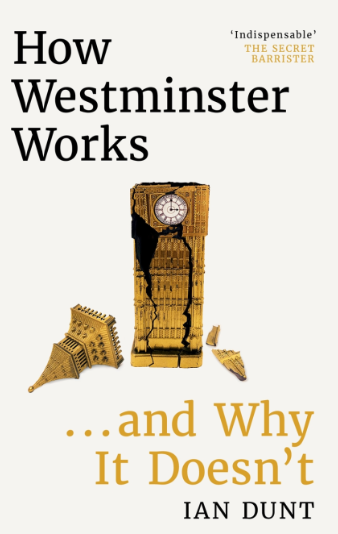
After years of headlines dominated by parliamentary scandals, it is no surprise that political exposes are in vogue. But rather than focus on personalities and court intrigue, political journalist Ian Dunt’s latest book ‘How Westminster Works’ takes the nitty-gritty of political life, from how bills are passed to the churn of the civil service, and shows how the real mucky stuff of political life is often hidden in the details.
As Dunt argues, obfuscation is a primary political tactic – a case in point of the need for this comprehensive but readable guide to Westminster. While each chapter builds on the former, ‘How Westminster Works’ is structured in a way that it can serve as a quasi-compendium to parliament, with individual chapters devoted to each layer of government, from the House of Commons to local voting.
If there was any part of parliament you suspected may be being run sub-optimally, Dunt will happily confirm that for you, perhaps with the exception of the House of Lords, which Dunt argues has bizarrely ended up as one of the most functional parts of parliament. The chapter on the press proves particularly incisive, as we would expect from Dunt, who spent over ten years as the editor of Politics.co.uk.
The chapter on the civil service was perhaps one of the most eye-opening. As Dunt supposes, there is perhaps a tendency – an optimistic one – to believe that while the whims of parliament may be coming and going, the grown-ups at the civil service are keeping things in order. Sadly, this is disproved, though at no fault of civil servants, whose jobs are truly shown to be that of service.
Instead, Dunt exposes how the punishment of expertise has become embedded into the system. Civil servants can often only progress by moving around departments or up into managerial roles, for example, with years of experience in the same role often being looked down upon.
Equally, working under the whims of ministers, who are rarely more qualified to make decisions, forces civil servants to get tactical. Dunt writes about one strategy, where civil servants draw up a list of outlandish suggestions for ministers, with one sensible option included, so as to easily dictate decisions – a method not devoid of risk. Indeed, Liz Truss became known for always choosing the most absurd option, Dunt writes.
As well as examining the big structures that Westminster functions by, Dunt also gives due attention to the individual, and it is this that perhaps makes the book most accessible. A look at the daily schedules of civil servants, councillors and MPs did – dare I say it – give me considerable sympathy for politicians, who, as many of the books on this list rightly credit, are often (certainly not always) in politics for noble reasons.
Indeed, despite the many criticisms levelled, ‘How Westminster Works’ is a largely optimistic book about the future of politics and our power to change it, provided we all start taking a bit more responsibility for it. As Dunt concludes, complacency is a key enabler of the current political state; it is serious but accessible books like this that can help change that.
Reviewed by Anna Moloney