FTSE 100 plunges despite Fed’s coronavirus ‘bazooka’
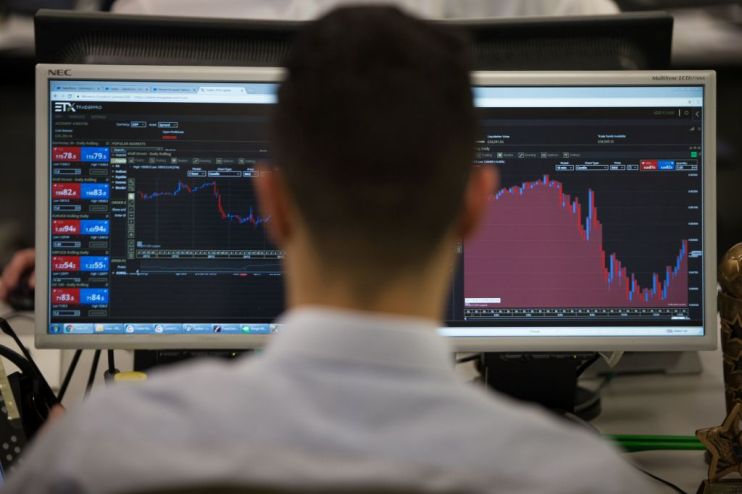
The FTSE 100 has plunged despite the US Federal Reserve slashing interest rates to near zero in an emergency move to curb the fallout of the coronavirus pandemic.
The blue-chip index was last down seven per cent as traders reckoned with the ongoing spread of coronavirus and shrugged off the Fed’s surprise intervention.
Airlines and travel companies led the FTSE 100’s fallers. They have taken a double blow from the pandemic reducing flights and President Donald Trump’s ban on European travelling to the US
Tui, Easyjet and British Airways-owner IAG recorded the biggest drops, plunging 34.4 per cent, 17.1 per cent, and 24 per cent respectively. The FTSE has now fallen more than 30 per cent since its recent high.
Fed’s bombshell intervention makes no splash
In a shock move last night, the US Fed slashed interest rates for the second time in two weeks. The world’s most powerful central bank announced it was cutting rates to a target range of zero to 0.25 per cent — a 100 basis point (one percentage point) cut.
The Fed also introduced a massive package of easing measures aimed at limiting the economic effects of the pandemic. It included cheaper lending to foreign central banks via so-called swap lines, which were crucial during the financial crisis.
But the move only served to deepen some investors’ fears that central banks cannot mitigate the impact of the virus.
“The bazooka was fired in all its might, to which equity futures unfortunately responded with fresh-limit downs,” said Mazars chief economist George Lagarias.
“An 11-year bull run, most of which was based on the Fed’s ability to essentially print growth, has now come to a standstill, if not an outright end.”
Andrew Sheets, chief cross-asset strategist at Morgan Stanley, said: “It is a negative shock to both supply and demand, one that is uniquely difficult for policy-makers to ‘fix’.”
“Low rates don’t solve a shortage of semiconductors if a factory needs to shut down. A tax cut won’t show up as spending if consumers don’t have confidence in the broader public health response.”
European equities and oil plummet
The pan-continental European benchmark Stoxx shed 8.7 per cent, while France’s CAC 40 and Germany’s Dax recorded falls of 10 and 8.6 per cent respectively.
Meanwhile, the Brent crude oil price crashed more than 10 per cent to $30.25 per barrel as fears of a global recession hit commodities. It stood at almost $60 per barrel just under a month ago.
The UK’s FTSE 250, an index of smaller firms, slumped 12.3 per cent.
New Bank of England governor Andrew Bailey today raised the prospect of further moves from Threadneedle Street, following its surprise rate cut last week.
Bailey, who took over from Mark Carney today, said the Bank is “very keen” to avoid long-term damage to the UK economy.
“That’s why you saw prompt action last week, that’s why you will see prompt action again when we need to take it, and the public can be assured of that.”
Yet Deutsche Bank strategist Jim Reid said such moves are “unlikely to prevent more stress in the market”.
Asian markets tumble on weak Chinese data
The all-important data point for investors is the number of coronavirus cases and their location. There have now been almost 170,000 confirmed global infections and 6,509 deaths, the majority in China.
Signs of economic stress have also rattled traders’ nerves. Data out today showed China’s factory production plunged at the sharpest pace in 30 years during the first two months of the year.
Urban investment and retail sales also fell sharply for the first time on record, reinforcing fears that the epidemic may halve China’s growth in the first half.
Asian markets were routed overnight following the dismal data, with the Fed’s emergency move failing to calm investors. Australian shares suffered their worst daily fall on record, as indices across Asia tumbled.