Skip to content
Friday 28 August 2026London --:--Frankfurt --:--Zurich --:--
NewslettersSearchEN · DE · FR
MorningWire

European business, markets and politics

FTSE 100
10,817.00
+0.23%
DAX
26,525.61
+0.60%
CAC 40
8,401.65
+0.98%
STOXX 50
6,472.90
+0.75%
  • Europe
  • Markets
  • Business
  • Economy
  • Regulation
  • Politics
  • Opinion
More
GermanyFranceEU InstitutionsCompetitionPublic AffairsBankingTechnologyEnergy
  • Germany
  • France
  • Europe
  • Markets
  • Business
  • Economy
  • Regulation
  • Politics
  • Opinion
  • DE
Monday 15 August 2022 2:57 pm  |  Updated:  Monday 15 August 2022 3:10 pm

German households braced for heavy levy as country counts cost of Russian squeeze

By: Nicholas Earl

Add as a preferred source on Google
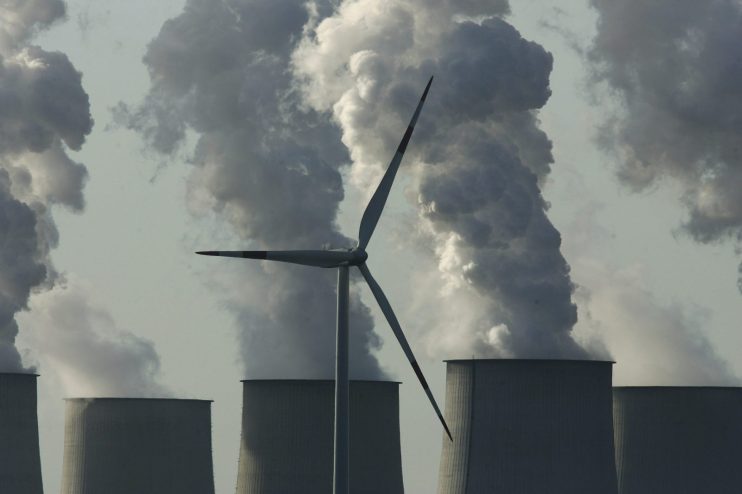
Germany Plans 40 New Coal-Fired Power Plants

German households will suffer the heavy price of a Russian supply squeeze on European gas flows, with energy users set to cough up a further €500 towards a new levy this winter.

This is to fund the country’s plans to replace Russian natural gas and support struggling utilities over the winter.

It will be imposed on top of rising energy bills, with Economy Minister Robert Habeck hoping to distribute the cost of securing alternative supplies evenly among households.

The levy was planned by the German cabinet in a bid to help Uniper and other importers cope with soaring prices amid reduced Russian supply.

Its price has been set at 2.4.19 cents per kilowatt hour (kWh), according to Trading Hub Europe, which will cost the average family of four around €480 this year.

This will be imposed from October 2022, and remain in place until April 2024.

German industry makes up 25 per cent of the country’s overall energy demand, with its government already reaching into the public purse to support Uniper’s €15bn bailout package earlier this year.

German Economy Minister Robert Habeck argued the levy was a consequencec of Russian aggression, typified both by its invasion of Ukraine in February and its retaliation to Western sanctions on its energy supplies.

Habeck said: “The levy is a consequence of Putin’s illegal war of aggression on Ukraine and the artificial energy shortage caused by Russia.”

He also tried to assure households that further relief measures were in the pipeline this winter, after Chancellor Scholz promised an additional relief package at his summer press conference last week. 

However, there are concerns interventions could drive up German inflation, which is already running at an elevated 8.5 per cent.

Read more

Energy price cap rises to three-year high

Smartphone displaying an energy bill, with British pounds and coins beside it, symbolizing rising costs.

This would further increase household energy bills will push the cost of living up further.

Russia has cut gas flows via the Nord Stream pipeline into Germany down to 20 per cent in retaliation to Western sanctions following the country.

Kremlin-backed gas giant Gazprom has blamed faulty and delayed equipment, while the EU considers the move politically motivated.

This has exacerbated ultra-high energy prices and riased fears of supply shortages.

Despite the challenges, Germany has managed to top up its storage supplies to more than 75 per cent last Friday.

This a couple of weeks ahead of its September target.

Germany has 23.3bn cubic metres (cbm) of underground gas storage, a little more than a fifth of the 100 bcm of gas used in 2021.

The next targets are 85 per cent by October and 95 per cent by November, which are embedded in a number of provisions aimed at helping Germany to avoid a gas crisis this winter,

The country is currently at phase two of a three-stage emergency plan formulated after a reduction in gas flows from Russia, its main supplier.

Meanwhile, major cities such as capital Berlin, Munich, Nuremberg and Hanover have brought in energy saving measures.

This includes switching off spotlights and fountains at night, and imposing controls on heating and hot water in municipal buildings and leisure centres.

Read more

Tories say households could save £540 a year by scrapping net zero

Kemi Badenoch speaks, gesturing with hands, while Claire Coutinho listens intently at a table with coffee cups.

Share this article

  • Facebook
  • X
  • LinkedIn
  • WhatsApp
  • Email

Similarly tagged content:

Sections

  • News

Categories

  • Business

Related Topics

  • Energy
  • gas crisis

Trending Articles

  • Pensioners to hand over bank statements in government benefits crackdown

  • Jamie Carragher: HMRC petitions for Sky Sports star to be declared bankrupt

  • Brewdog founder James Watt hits out at ‘total silence’ over new venture

  • Lloyds Bank and Halifax users unable to use app in latest outage

  • Economists urge Bank of England to halt bond sales as borrowing costs climb

More from Morning Wire

  • Energy price cap rises to three-year high

    Energy
    Smartphone displaying an energy bill, with British pounds and coins beside it, symbolizing rising costs.
  • Tories say households could save £540 a year by scrapping net zero

    Energy
    Kemi Badenoch speaks, gesturing with hands, while Claire Coutinho listens intently at a table with coffee cups.
  • Octopus boss Greg Jackson calls for ‘urgent reform’ on energy as bills rise

    Politics
    Octopus Energy, which was founded by Greg Jackson, is to spin-off Kraken. Chris Ratcliffe/Bloomberg via Getty Images
  • ‘Broken promises’: Burnham under fire on cost-of-living plans as energy bills set to surge

    Politics
    Man in glasses and maroon jacket speaking, with out-of-focus figures in the background.
  • Inflation leaps to 2.9 per cent in blow to Burnham 

    Economics
    Burnham cityscape showcasing modern architecture, bustling streets, and vibrant community life in a thriving urban setting
  • Iran war could ‘halt growth’ across UK economy 

    Economics
    Andy Burnham, Mayor of Greater Manchester, in a dark suit and glasses, listening intently at a wooden table.
  • Aldi boss wades into supermarket ‘price-gouging’ row

    Retail
    Giles Hurley, Aldi UK CEO, stands in a supermarket produce aisle with fresh fruits and vegetables.
  • Could a ‘land blocking’ rule change spell danger for Aldi and Lidl?

    Retail
    Lidl supermarket sign with blue, yellow, and red logo against a clear blue sky
MorningWire

Independent European business, markets and political news for decision-makers.

Morning Briefing

Europe

  • Germany
  • France
  • EU Institutions
  • Europe

Business

  • Markets
  • Business
  • Economy
  • Regulation
  • Competition
  • Public Affairs

Editorial

  • Opinion
  • Editorial Policy
  • Corrections
  • Contact

Company

  • About Morning Wire
  • Privacy Policy
  • Terms of Use
  • Cookie Policy
© 2026 Morning Wire Ltd · Published by Morning Wire Media, Bahnhofstrasse 65, 8001 Zürich, Switzerland
Privacy · Terms · Cookies · Facebook