Skip to content
Saturday 22 August 2026London --:--Frankfurt --:--Zurich --:--
NewslettersSearchEN · DE · FR
MorningWire

European business, markets and politics

FTSE 100
10,816.56
+0.64%
DAX
26,136.56
+0.59%
CAC 40
8,484.43
+0.37%
STOXX 50
6,462.22
+0.63%
  • Europe
  • Markets
  • Business
  • Economy
  • Regulation
  • Politics
  • Opinion
More
GermanyFranceEU InstitutionsCompetitionPublic AffairsBankingTechnologyEnergy
  • Germany
  • France
  • Europe
  • Markets
  • Business
  • Economy
  • Regulation
  • Politics
  • Opinion
  • DE
Wednesday 12 June 2019 5:57 pm

Germany and Portugal sell 10-year bonds at lowest ever yields

By: Harry Robertson

Add as a preferred source on Google
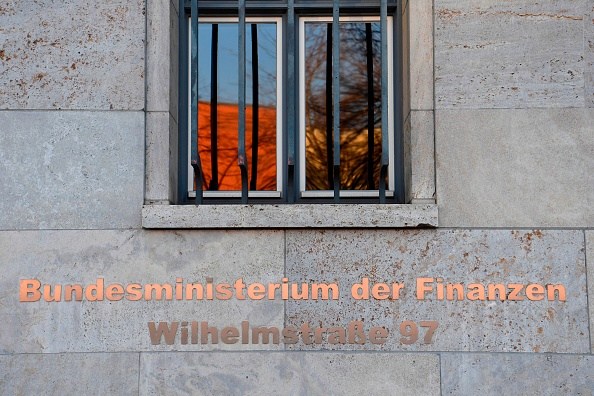
The German Finance Ministry today sold 10-year bonds or Bunds at the lowest ever yield
View of the German Finance ministry building taken in Berlin on February 8, 2018. Merkel's flagship concession to the SPD was the finance ministry, previously a lever of control over the government under balanced-budget champion Wolfgang Schaeuble. One of Schaeuble's top priorities was upholding conservatives' view of German interests in Brussels, pushing for strict adherence to European Union debt and deficit rules and rejecting increased flows of cash between member states. With the ministry falling to the much more pro-EU SPD, "Germany is slipping deeper into responsibility for debts run up in other countries using the euro", business council chief Steiger lamented. / AFP PHOTO / John MACDOUGALL (Photo credit should read JOHN MACDOUGALL/AFP/Getty Images)

Germany today sold medium-term government bonds, or Bunds, at the lowest yield on record as the stalling European economy drove investors towards the safe assets.

Read more: German manufacturing output falls but services push economy to growth

Europe’s biggest economy sold 10-year Bunds – IOUs which will pay out in 10 years time – with a yield of minus 0.24 per cent. It means investors holding them until they mature would lose money.

German 10-year Bund yields dipped below the zero mark for the first time since 2016 at the end of March. The previous record-low was minus 0.11 per cent, seen three years ago.

Hubert de Barochez, markets economist at Capital Economics, said: “The view that central banks are more likely to ease policy than tighten it is driving most safe bond yields down, that includes [US] Treasury yields, Bund yields and yields in the UK as well.”

“We are in an environment where growth is weak, and trade tensions are increasing, so investors are rushing towards safety,” he said.

The European Central Bank (ECB) earlier this month announced that it will keep its main interest rate at the record-low level of zero per cent until at least the middle of 2020. It also said it expected the Eurozone economy to grow just 1.2 per cent in 2019.

Read more

US bond market jitters spark UK economy recession warning

Donald Trump delivering a speech at a podium during a formal event, emphasizing key points to an attentive audience.

Suggestions that the ECB may restart its so-called quantitative easing (QE) bond buying programme have also pushed up bond prices and sent yields tumbling.

The Portuguese government also sold debt at a record-low yield today. It sold €625m worth of 10-year bonds with a yield of 0.64 per cent.

The sale marked the first time Portugal’s 10-year borrowing costs have fallen below one per cent. At the height of the Eurozone crisis in 2012, yields on Portguese 10-year debt rocketed to 17 per cent.

Barochez said Capital Economics expects “the ECB to be restarting QE from next year”. He said: “We also expect it to also lower the deposit rate by 10 basis points before the end of this year”.

Read more: EU slashes its forecast for German growth

The deposit rate is the interest banks earn for leaving money with the ECB. It currently stands at minus 0.4 per cent, a figure designed to encourage banks to lend their excess money.

Read more

As it happened: FTSE 100 climbs as markets digest Bessent buyback

Scott Bessent, a man with gray hair and glasses, wearing a blue suit and striped tie, looking to the side.

Share this article

  • Facebook
  • X
  • LinkedIn
  • WhatsApp
  • Email

Similarly tagged content:

Sections

  • Markets & Economics

Categories

  • Economics

Trending Articles

  • House prices in wealthy London boroughs fall by up to £300,000

  • As it happened: Miners fuel FTSE 100 recovery; oil jumps as Trump claims Strait of Hormuz

  • City law firm sues prominent Emirati business family

  • Amanda Blanc has worked her magic at Aviva

  • As it happened: FTSE 100 rallies after JD Sports drags on blue chips; oil jumps again

More from Morning Wire

  • US bond market jitters spark UK economy recession warning

    Economics
    Donald Trump delivering a speech at a podium during a formal event, emphasizing key points to an attentive audience.
  • As it happened: FTSE 100 climbs as markets digest Bessent buyback

    Markets
    Scott Bessent, a man with gray hair and glasses, wearing a blue suit and striped tie, looking to the side.
  • Investors ‘may be less than impressed’ by John Healey’s £9bn borrowing plans 

    Economics
    Man in suit and red tie speaking at a podium to an audience in a modern building.
  • Inflation leaps to 2.9 per cent in blow to Burnham 

    Economics
    Burnham cityscape showcasing modern architecture, bustling streets, and vibrant community life in a thriving urban setting
  • Investors risk losing life savings with unregulated services, watchdog warns

    Regulation
    The FCA has introduced new proposals to close the financial advice gap.
  • Burnham predicted to raise taxes for ‘fundamental’ cost of living support

    Economics
    Andy Burnham, Mayor of Greater Manchester, in a dark jacket and glasses, standing before a large pile of waste.
  • Emergency government meeting held over high temperature amid ‘strain on public finances’

    Economics
    Aerial view of dry, brown farm fields affected by high temperatures, with a road and farm buildings.
  • As it happened: Miners fuel FTSE 100 recovery; oil jumps as Trump claims Strait of Hormuz

    FTSE 100 Live
    FTSE 100 stocks rise as Brent crude oil prices jump 1.8% to $104.98 amid Strait of Hormuz tensions and Trumps Iran stance
MorningWire

Independent European business, markets and political news for decision-makers.

Morning Briefing

Europe

  • Germany
  • France
  • EU Institutions
  • Europe

Business

  • Markets
  • Business
  • Economy
  • Regulation
  • Competition
  • Public Affairs

Editorial

  • Opinion
  • Editorial Policy
  • Corrections
  • Contact

Company

  • About Morning Wire
  • Privacy Policy
  • Terms of Use
  • Cookie Policy
© 2026 Morning Wire Ltd · Published by Morning Wire Media, Bahnhofstrasse 65, 8001 Zürich, Switzerland
Privacy · Terms · Cookies · Facebook