Germany's political parties: a voter's guide before September state elections
With three state elections weeks away and a record number of new citizens eligible to vote, Morning Wire breaks down the platforms and leaders shaping Germany's political landscape.
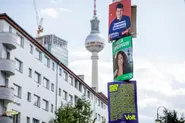
Germans head to the polls in September for three state elections that will test the mood of the country less than a year after the federal government changed hands. Berlin votes on 20 September, the same day as Mecklenburg Western-Pomerania, while Saxony-Anhalt goes a fortnight earlier on 6 September.
All German citizens hold full voting rights at city, state and federal level. EU citizens living in Germany may cast ballots in local elections, which in Berlin includes the district assemblies known as Bezirksverordnetenversammlungen. A surge in naturalisations last year, 39,000 in Berlin alone, means tens of thousands of first-time voters will join the electorate, many of them still learning to distinguish the parties vying for their support.
The Union: CDU and CSU
The centre-right bloc that leads the federal government consists of the Christian Democratic Union (CDU) and its Bavarian sister party, the Christian Social Union (CSU). Together they are known as the Union, represented in graphics by the colour black. The CDU was founded in West Germany after the Second World War and was steered for more than 18 years by Angela Merkel.
Friedrich Merz now heads the CDU and serves as Chancellor, while Markus Söder leads the CSU and governs Bavaria as Minister President. Merz campaigned on a return to what he calls the party's traditional roots, promising a tougher stance on what he terms irregular immigration and opposing the previous government's citizenship reform that introduced dual nationality. Union officials have repeatedly called for restoring an eight-year residency requirement for naturalisation.
In Berlin the party faces a leadership change. Governing Mayor Kai Wegner announced he would not seek re-election after admitting he misled the public about his movements during a major power outage last winter. The CDU's state finance minister, Stefan Evers, will lead the ticket in September.
Social Democrats (SPD)
Germany's oldest surviving party, the Social Democratic Party traces its origins to the 1860s and adopted its current name in 1890. Its colour is red. The SPD built its reputation on opposition to the Nazis, for which it was banned and its members exiled. Today it sits in the federal coalition as the junior partner, advocating fair wages, pensions and social benefits.
The party co-led the previous traffic-light government alongside the Greens and Free Democrats, a coalition that liberalised citizenship rules and encouraged skilled-worker immigration. Since that government collapsed, SPD support has slipped in polls. The party is co-led by Vice Chancellor Lars Klingbeil and Labour Minister Bärbel Bas. In Berlin the top candidate is Steffen Krach.
Alternative for Germany (AfD)
The Alternative for Germany is the newest party in the Bundestag, founded in 2013 and coloured blue in graphics. It began as a Eurosceptic force attacking euro-bailout policy during the debt crisis, then pivoted sharply toward anti-immigration rhetoric after the 2015 refugee influx. The AfD now leads national opinion polls.
Its platform for Saxony-Anhalt includes a deportation offensive that would target Ukrainian refugees, mandatory integration courses for foreign residents and restrictions on religious freedom. On citizenship, the party wants to end birthright nationality and descent-based claims, limiting German passports to those it defines as ethnically German. The national co-leaders are Alice Weidel and Tino Chrupalla; Kristin Brinker heads the Berlin list.
The Left Party (Die Linke)
Formed in 2007 from a merger of left-wing groups from East and West Germany, Die Linke is traditionally shown in purple or pink to distinguish it from the SPD's red. It campaigns for democratic socialism, anti-militarism and a firm cordon sanitaire against the AfD. The party leads recent polling in Berlin, according to the Civey institute.
Die Linke wants voting rights for foreign residents after five years, supports dual citizenship and would scrap the financial thresholds for naturalisation. The federal co-leaders are Luigi Pantisano and Ines Schwerdtner; Elif Eralp is the lead candidate in Berlin.
Alliance 90/The Greens
The Greens emerged from 1970s environmental, anti-nuclear, pacifist and feminist movements. The name reflects the 1993 merger of the West German Green Party with East Germany's Alliance 90. The party sits centre-left, balancing climate policy with social equality, and is represented by the colour green.
The Greens' high-water mark came in 2021 when they entered the traffic-light coalition. Their showing in the last federal election was disappointing, though they still govern in Baden-Württemberg and lead in cities such as Munich. They champion the citizenship reform and skilled-worker immigration. Federal co-leaders are Britta Haßelmann and Katharina Dröge; Werner Graf tops the Berlin slate.
Smaller players
Germany's five-per-cent threshold keeps most minor parties out of parliament. The Free Democrats (FDP), part of the previous federal coalition, have seen support collapse and now sit in only one state government, in Saxony-Anhalt. The left-wing populist BSW, formerly the Sahra Wagenknecht Alliance, participates in state governments in Thuringia and Brandenburg but remains absent from the Bundestag.
For the hundreds of thousands of new voters, the September ballots offer a first chance to shape the direction of states that often set the tone for national politics. The results will reveal whether the centre holds or fragments further.