Shortly before sunset on August 12th, the moon will block between 80 and 90 percent of the sun's light, depending on where in Germany you are.
Germany lies outside the path of totality—which traces a line from Iceland to northern Spain—which means that viewers here will see just a thin crescent of the sun behind the moon's shadow during the eclipse, and that most of the country should notice a distinct dimming of daylight during this time.
Coverage is deepest in the west, with the Rhineland and southwest seeing around 88 to 89 percent of the sun obscured. In Berlin and the northeast coverage will be around 80 percent.
Don't just look up
Despite the eclipse, looking directly at the sun is dangerous at any point, no matter how tempting it may be.

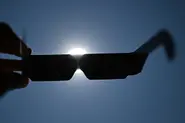
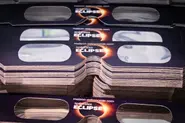
So if you do want to look toward the sun, experts recommend wearing eclipse glasses certified to the DIN EN ISO 12312-2:2015 standard; anything less isn't safe.
The trouble is, demand for these glasses has outstripped supply.
Last week we wrote that certified glasses were available through astronomy retailers, science museums, planetariums and some opticians and pharmacies.
Commentors on social media sites like Reddit suggested trying Fielmann, Apollo and Krass Optik shops specifically. But we've since done some digging and, at least in Berlin, it seems that eclipse viewing glasses (Sonnenfinsternisbrillen) are sold out just about everywhere.
Some opticians are reportedly restocking, so it's worth checking with ones near you, especially if you're outside of a major urban hub where demand will be lower. If you're in a city, though, you may simply be out of luck at this point.
Online retailers like Amazon still have many in stock, but as of Monday, it didn't look like there were options available that would ship before Wednesday afternoon.
Update: On Wednesday afternoon staff at Berlin's Zeiss Planetarium were handing out free pairs of glasses (one per person) for as long as supplies last.
If you do know another spot where readers might find a last-minute pair, let us know in the comments below -- it might just save another reader's evening!

No glasses? Here’s how to watch safely
The good news is that you don't need certified glasses to enjoy the eclipse. There are several low-tech ways to observe it without ever looking directly at the sun.
Observe shadows
This is the simplest option and needs no equipment at all. When sunlight passes through a small gap, it projects the shape of the light source onto whatever surface is behind it. During the eclipse, that means everyday objects with small holes; think colanders, cheese graters or even laced fingers will cast a scattering of crescent-shaped shadows on the ground.
Standing under a leafy tree works too. For this option, just look at the dappled light beneath it and you should see tiny crescents, rather than the usual circular dots.
Pinhole projector
For a slightly more hands-on approach, poke a small hole in one end of a cardboard box with a pin or pen. Face the hole toward the sun, then look at the opposite end of the box to see the sun's image projected there. If the box is big enough, you can put your head inside; otherwise, cut a small viewing slot in the side.
Top tip: make sure you never look through the pinhole itself, only at the projected image. Looking through the hole is just as damaging to your eyes as looking directly at the sun. The Planetarium Berlin has instructions for making a DIY pinhole camera guide out of a Pringles can (in German) if you want a more detailed template.
Mirror projection
If you'd rather share the view with a group, cover a small, flat mirror with paper or cloth, leaving only a small hole in the centre. Angle the mirror so sunlight reflects through that hole and onto a wall or screen. The smaller the hole, the sharper (but dimmer) the image. Get the projection big or crisp enough, and you may even spot sunspots on the sun's surface.
Of course, as with the other methods, never look at the sun via the mirror itself, which is just as damaging as staring at the sun directly. Only at the projected image on the wall.
Bonus tip:
For anyone planning on staying up, the Perseid meteor shower peaks the same night! It’s expected to appear throughout the night. In Berlin, the eclipse runs from roughly 7:15 pm to 8:38 pm local time, peaking at about 8 pm with 80 to 85 percent coverage.
Several institutions, including the Zeiss Großplanetarium in Berlin and the Leibniz Institute for Astrophysics in Potsdam, are hosting public viewing events with telescopes and expert guidance, so keep an eye out for similar events near you.
However you end up watching, glasses, pinhole or shadows, just don't look up without protection. Your retinas will thank you.