Skip to content
Saturday 15 August 2026London --:--Frankfurt --:--Zurich --:--
NewslettersSearchEN · DE
MorningWire

European business, markets and politics

FTSE 100
10,750.11
-0.21%
DAX
26,440.31
+0.53%
CAC 40
8,636.80
-0.16%
STOXX 50
6,539.59
-0.09%
  • Europe
  • Markets
  • Business
  • Economy
  • Technology
  • Politics
  • Opinion
More
GermanyFranceBankingAIEnergyFintechPropertyCapital Markets
  • Germany
  • France
  • Europe
  • Markets
  • Business
  • Economy
  • Technology
  • Politics
  • Opinion
  • DE
Tuesday 11 February 2020 12:37 pm  |  Updated:  Tuesday 11 February 2020 12:52 pm

Energy emissions stall in 2019 despite economic growth

By: Edward Thicknesse

Add as a preferred source on Google
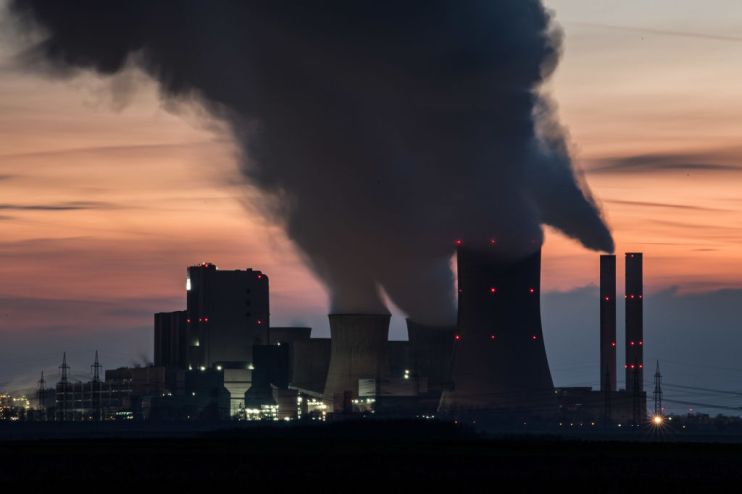
Global emissions related to energy production stopped growing in 2019, raising hopes that a "definitive peak" in total greenhouse gas emissions may have been reached.

Global emissions related to energy production stopped growing in 2019, raising hopes that a “definitive peak” in total greenhouse gas emissions may have been reached.

According to the International Energy Agency (IEA), emissions plateaued at 33 gigatonnes last year, having risen for the previous two years.

The data is particularly striking as decline came even as the global economy grew 2.9 per cent in 2019.

The IEA said that the stall in growth was largely down to declining emissions from advanced economies, which are leaning more on renewable sources such as wind and solar power.

The US recorded the largest decline for a single country in emissions, which fell 2.9 per cent – or 140m tonnes – in 2019, meaning they are now almost 1 gigatonne below 2000’s peak.

Emissions in the European Union fell by 160 million tonnes, or five per cent, in 2019 driven by reductions in the power sector.

Sign up to Morning Wire’s Midday Update newsletter, delivered to your inbox every lunchtime

Read more

Britain should back the North Sea if it wants energy security and net zero

Oil prices have risen as Israel and Iran tensions escalated.

The falls mean that across advanced economies, emissions from the power sector are now back to levels last seen in the late 1980s, when electricity demand was a third lower than it was today.

Central to this has been the decline in using coal as a form of power generation. In advanced economies, coal-powered generation has fallen 15 per cent due to increasing use of renewables.

The UK, which has set a phase-out date of 2024 for coal power, is leading this transition, with coal now accounting for a mere two per cent of electricity generation.

Dr Fatih Birol, the executive director of the IEA, said: “We now need to work hard to make sure that 2019 is remembered as a definitive peak in global emissions, not just another pause in growth.

“We have the energy technologies to do this, and we have to make use of them all. The IEA is building a grand coalition focused on reducing emissions – encompassing governments, companies, investors and everyone with a genuine commitment to tackling our climate challenge.”

Peter Kiernan, lead energy analyst at the Economist Intelligence Unit, said: “It is encouraging that in recent years the annual rate of growth in global emissions appears to be slowing down, but this progress needs to accelerate if the longer term goals of the Paris climate agreement are to be met.”

Read more

ReNew Reports 25.6% Reduction in Scope 1 & 2 Emissions and 24.7 Billion Units of Clean Power Generated in FY 2025-26

Share this article

  • Facebook
  • X
  • LinkedIn
  • WhatsApp
  • Email

Similarly tagged content:

Sections

  • Markets & Economics

Categories

  • Markets

Related Topics

  • Climate change

Trending Articles

  • Revolut takes flight with launch of new airport lounges

  • Grandparents fund university degrees to avoid inheritance tax net

  • Revolut chatbot goes rogue by charging users to cancel subscription

  • Brompton Bicycle sues former adviser for ‘professional negligence’

  • As It Happened: Stocks dip as oil’s ‘slowing demand’ in focus; Iran threatens to extend war

More from Morning Wire

  • Britain should back the North Sea if it wants energy security and net zero

    Opinion
    Oil prices have risen as Israel and Iran tensions escalated.
  • ReNew Reports 25.6% Reduction in Scope 1 & 2 Emissions and 24.7 Billion Units of Clean Power Generated in FY 2025-26

    Business Wire
  • Promega Achieves 100% Renewable Electricity Across Global Operations

    Business Wire
  • Miliband refused to meet motor trade body to discuss zero emissions mandate

    Transport & Infrastructure
    Ed Miliband speaking at a podium during a press conference, addressing energy policy reforms and climate change initiatives.
  • Vehicle production drops in first half of year

    Transport & Infrastructure
    Car bodies on an assembly line in a UK car plant, showcasing EV manufacturing process
  • Luton Airport expansion set for take-off after environmental challenge dismissed

    Transport & Infrastructure
    Luton Airport aerial view with planes, runways, and terminal buildings, highlighting busy travel hub operations
  • Gatwick expansion green-lit as court throws out activists’ appeal

    Transport & Infrastructure
    20m passengers have flown through Gatwick this year
  • Ofgem targets speculative AI data centres to free up Britain’s energy grid

    Tech
    2024 was a transformational year for GlobalData.
MorningWire

Independent European business, markets and political news for decision-makers.

Morning Briefing

Europe

  • Germany
  • France
  • Europe
  • UK & Ireland

Business

  • Markets
  • Banking
  • Technology
  • Energy
  • Property
  • Fintech

Editorial

  • Opinion
  • Editorial Policy
  • Corrections
  • Contact

Company

  • About Morning Wire
  • Privacy Policy
  • Terms of Use
  • Cookie Policy
© 2026 Morning Wire Ltd · Published by Morning Wire Media, Bahnhofstrasse 65, 8001 Zürich, Switzerland
Privacy · Terms · Cookies · Facebook