Skip to content
Sunday 13 September 2026London --:--Frankfurt --:--Zurich --:--
NewslettersSearchEN · DE · FR
MorningWire

European business, markets and politics

FTSE 100
10,650.44
+0.39%
DAX
25,568.56
+0.82%
CAC 40
8,179.77
+0.78%
STOXX 50
6,325.13
+0.90%
  • Europe
  • Markets
  • Business
  • Economy
  • Regulation
  • Politics
  • Opinion
More
GermanyFranceEU InstitutionsCompetitionPublic AffairsBankingTechnologyEnergy
  • Germany
  • France
  • Europe
  • Markets
  • Business
  • Economy
  • Regulation
  • Politics
  • Opinion
  • DE
Tuesday 16 November 2021 6:30 am  |  Updated:  Tuesday 16 November 2021 6:18 pm

A global tax cartel with a minimum corporation rate will undermine Britain

By: Julian Morris

Add as a preferred source on Google
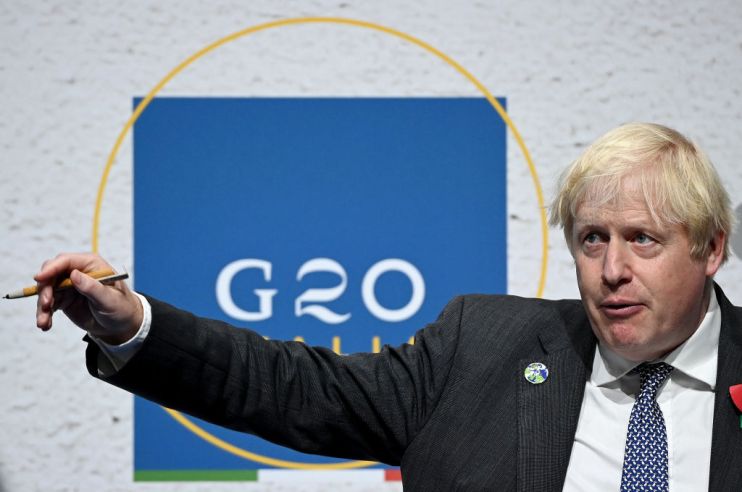
UK Prime Minister Attends The Second Day Of The G20 Summit
ROME, ITALY - OCTOBER 31: British Prime Minister Boris Johnson, holds a press conference at the end of the G20 summit on October 31, 2021 in Rome, Italy. The G20 (or Group of Twenty) is an intergovernmental forum comprising 19 countries plus the European Union. It was founded in 1999 in response to several world economic crises. Italy currently holds the Presidency of the G20 and this year's summit will focus on three broad, interconnected pillars of action: People, Planet, Prosperity. (Photo by Jeff J Mitchell/Getty Images)

FOR the last fortnight, Glasgow has soaked up the attention of the world as we contemplate our future. But only days before, G20 leaders rubber stamped a deal that will determine much of our destiny: a global minimum tax.

Rishi Sunak, who claimed to be squeamish about tax rises in his Budget, called these “seismic tax reforms… a huge prize for the British taxpayer, creating a fairer tax system fit for the 21st century.” This could not be further from the truth.

The new global tax cartel will be hugely damaging to the United Kingdom. It will not only entrench higher taxes but it also risks businesses leaving Britain and costing the Treasury up to £7bn in lost revenues, according to a new report by the Adam Smith Institute. It is also incompatible with key Government policies such as free ports and the super-deduction.

The reforms would change how many large companies are taxed by first creating a new tax on large, multinational companies and would impose a minimum tax of 15 per cent on all multinational companies with annual revenue of over €750m.

Despite spearheading these proposals, the OECD published a study that found corporate taxes are the most damaging major tax to investment and entrepreneurial activity. Indeed, the harm done to economic growth by corporation taxes is a rare issue on which many economists agree.

In developing the two reforms, the OECD has done the bidding of its main sponsor governments, which for years have complained about “harmful competition” from lower-tax jurisdictions. Driving the new tax agreement is a belief that competition has led to a “race to the bottom”.

In reality, tax competition has led to a race to the top, with less harmful forms of tax and more revenue.

Starting about forty years ago, companies in high tax countries realised they could reduce their tax bills by shifting profits to subsidiaries in lower tax countries. Some even changed countries.

Read more

One of Britain’s biggest taxpayers has left – who can replace Rokos?

Chris Rokos, a man with glasses and a beard, smiling in a dark zipped sweater against a grey background.

High-tax countries responded in part by lowering corporation tax rates. Since 1980, average topline corporation tax rates in OECD countries have nearly halved.

The reductions have benefited all companies and, by incentivising more investment, have contributed to higher rates of innovation and economic growth, as well as rising incomes. Meanwhile, corporation tax revenue has remained stable (at around 3 per cent of GDP) since the 1980s while total government revenue has risen on average from about 30 per cent to about 34 per cent of GDP.

The UK has particularly benefited from lower corporate taxes. Britain reduced its main corporation tax rate from 28 per cent in 2010 to 19 per cent in 2017. In that time, even with a lower rate, corporation tax revenues increased (from under 2 per cent of GDP in 2010 to over 2.5 per cent in 2019). This was largely due to increases in business activity, including at subsidiaries of multinational companies. But under the minimum tax proposals we will be giving up the freedom to lower rates in the future.

Last year, Sunak halted the planned reductions in corporation tax. But he has also introduced the temporary super-deduction, which allows companies to deduct up to 130 per cent spending on plant and machinery. According to the Chancellor, this has already stimulated investment, and if anything, should be permanently extended with businesses able to claim the full subsidy.

But this would be incompatible with the global minimum tax. As would the Government’s flagship “free ports” policy because these policies aim to attract investment by allowing companies to, at times, pay less than the new minimum tax.

Instead, the UK is allowing the super-deduction to expire in 2023, raising the corporate tax rate, and implementing the global minimum tax. This will scare away investment, businesses and jobs.

If we are stuck with these proposals, the least we can do is make them better by bringing down the minimum tax rate, allowing for full expensing and exempting a wider array of financial companies.

The Chancellor risks looking like a fool if he stands up and claims to stand for low-taxation with policies that stray so far away from Britain’s national interest.

Read more

The real divide in British politics: fantasists vs realists

Houses of Parliament in Westminster showcasing historic architecture under a clear sky, central to UK government and politics

Share this article

  • Facebook
  • X
  • LinkedIn
  • WhatsApp
  • Email

Similarly tagged content:

Sections

  • Opinion

Categories

  • Opinion
  • Morning Wire Content

Trending Articles

  • Wetherspoon boss: ‘Not up to Burnham’ to choose who is on the high street 

  • Badger Beer maker Hall & Woodhouse doubles profit ahead of tie-up with James May

  • Four interest rate hikes loom despite surprise economic growth

  • Primark sales slip as owner dresses up retailer for demerger

  • Lotus, Porsche and Corvette: the best sports cars to buy in 2026

More from Morning Wire

  • One of Britain’s biggest taxpayers has left – who can replace Rokos?

    Opinion
    Chris Rokos, a man with glasses and a beard, smiling in a dark zipped sweater against a grey background.
  • The real divide in British politics: fantasists vs realists

    Opinion
    Houses of Parliament in Westminster showcasing historic architecture under a clear sky, central to UK government and politics
  • Claridge’s swings to £10m loss as luxury hotel warns on ‘adverse impact’ of tax hikes

    Hospitality
    Claridges Hotel exterior with international flags, including the Union Jack, and a black taxi outside
  • Tax crackdowns means high net worth Brits continue to mull UK exit

    Tax
    An annual property tax would be charged on houses over £500,000
  • Jenrick pledges to raise tax-free personal allowance to £15,000

    Politics
    Robert Jenrick speaking at a press conference, addressing current policy issues, wearing a suit and standing behind a podium
  • Here’s how Britain can woo back the world’s wealthy

    Opinion
    Image of yachts in a marina - the boats have traditionally been the preserve of the super rich
  • Burnham should go on a ‘cost of doing business’ tour

    Economics
    Andy Burnham, Mayor of Greater Manchester, in a dark suit and glasses, listening intently at a wooden table.
  • The tax rumours most worrying my clients

    Opinion
    Monopoly board game with Super Tax space, red dice, and property cards, representing taxation concepts.
MorningWire

Independent European business, markets and political news for decision-makers.

Morning Briefing

Europe

  • Germany
  • France
  • EU Institutions
  • Europe

Business

  • Markets
  • Business
  • Economy
  • Regulation
  • Competition
  • Public Affairs

Editorial

  • Opinion
  • Editorial Policy
  • Corrections
  • Contact

Company

  • About Morning Wire
  • Privacy Policy
  • Terms of Use
  • Cookie Policy
© 2026 Morning Wire Ltd · Published by Morning Wire Media, Bahnhofstrasse 65, 8001 Zürich, Switzerland
Privacy · Terms · Cookies · Facebook