Skip to content
Sunday 13 September 2026London --:--Frankfurt --:--Zurich --:--
NewslettersSearchEN · DE · FR
MorningWire

European business, markets and politics

FTSE 100
10,650.44
+0.39%
DAX
25,568.56
+0.82%
CAC 40
8,179.77
+0.78%
STOXX 50
6,325.13
+0.90%
  • Europe
  • Markets
  • Business
  • Economy
  • Regulation
  • Politics
  • Opinion
More
GermanyFranceEU InstitutionsCompetitionPublic AffairsBankingTechnologyEnergy
  • Germany
  • France
  • Europe
  • Markets
  • Business
  • Economy
  • Regulation
  • Politics
  • Opinion
  • DE
Monday 27 December 2021 10:00 am  |  Updated:  Friday 17 December 2021 1:47 pm

If the government wants to go green, housing accessibility can’t rely on cars

By: Samuel Spencer

Add as a preferred source on Google
Historic City of Bath Considers Congestion Charge
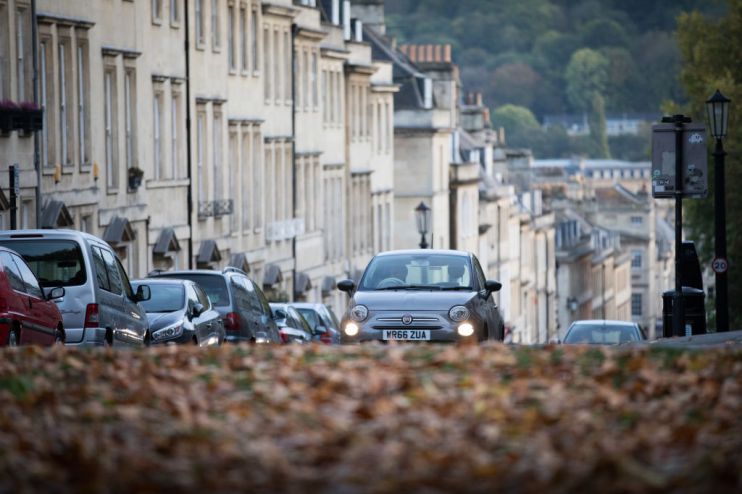
The way we travel across the country is responsible for roughly 27 per cent of the UK’s carbon emissions. (Photo by Matt Cardy/Getty Images)

Between 2015 and 2019, a total of 2,743 new major residential developments were approved in England. It was a record number, with 170,000 homes built in the year ending in June 2019 alone – the highest number for 11 years. The then Housing Secretary Robert Jenrick said it was his mission to “get Britain building.”

How accessible these homes really are is a key question for the housing sector. New developments are easy to access by car, but the average travel times by public transport varies significantly by different regions. In many new developments, travel times to key amenities take so long by public transport or walking that most people inevitably end up relying on cars. 

Nowhere is this difference starker than between London and the rest of England. Travel time to large employment centres, secondary schools and hospital trusts in areas outside of London can take up to an hour, opposed to roughly half that time in the capital. 

This probably won’t come as a surprise to anyone outside of London who has recently travelled to a nearby hospital or town centre. Compared to how long it would take to walk or travel in by public transport, the parking charges suddenly seem worth it. 

If the government wants to build greener communities, hit net zero targets and deliver on its levelling up agenda, it will need to rethink the way we travel to and from these new developments. 

How we move around the country is responsible for roughly 27 per cent of the UK’s carbon emissions. According to the government’s transport decarbonisation strategy, journeys below five miles represented 58 per cent of all private car journeys in 2019.

Encouraging development in areas where walking or using public transport is the easiest option will not only reduce carbon emissions, but also improve local air quality and realise health benefits from active travel. Dependency on cars becomes inevitable when 10.5 per cent of new developments are a 72-minute public transport journey to the nearest town centre and 8.5 per cent of new developments are more than an hour walk to amenities. This just shouldn’t be the case. 

The further people travel for employment, the bigger the issue becomes. Anyone working in a nearby city will face a travel barrier when using public transport, which could force them to rely on their own vehicle. A good job shouldn’t mean that each two-person household requires a two-car garage. 

Placing a greater focus on developing in the best locations possible stands to benefit the government’s levelling up agenda. Prime Minister Boris Johnson has previously declared the need for “a catalytic role for government” in addressing economic inequalities across the UK. The economic aspect is undeniably important, but is not the only opportunity for the government. Its green ambitions were only briefly noted by the Prime Minister and framed through the lens of empowered local governments leading the way. Instead, the government can and should play a stronger role in promoting development where it is accessible and encourage the use of modes of transportation other than cars. 

The promised investments in public transport or active travel initiatives are a welcome starting point, but focusing on reducing the scale problem in the first place will be the more cost-effective, environmentally friendly solution.

After all, this isn’t a problem that’s going to go away. Far from it, many of these issues are reflective of approved developments that are still yet to be built. If left unaddressed, this reliance on car travel is locked in far into the future. While net-zero 2050 may feel distant in 2021, our ability to achieve these ambitions will be determined by what we do today. 

Read more

Burnham to hand mayors power to overrule local councils’ planning decisions

Andy Burnham speaking at a press conference, wearing a suit and tie, addressing current political issues in Manchester.

Share this article

  • Facebook
  • X
  • LinkedIn
  • WhatsApp
  • Email

Similarly tagged content:

Sections

  • Opinion

Categories

  • Opinion

Trending Articles

  • Wetherspoon boss: ‘Not up to Burnham’ to choose who is on the high street 

  • Badger Beer maker Hall & Woodhouse doubles profit ahead of tie-up with James May

  • Four interest rate hikes loom despite surprise economic growth

  • Primark sales slip as owner dresses up retailer for demerger

  • Barclays faces legal scrutiny over role in £90m ‘Ponzi scheme within a Ponzi scheme’

More from Morning Wire

  • Burnham to hand mayors power to overrule local councils’ planning decisions

    Politics
    Andy Burnham speaking at a press conference, wearing a suit and tie, addressing current political issues in Manchester.
  • Let them build homes near stations, but let them be beautiful too

    Opinion
    Two town planners examining a London monorail concept model with buildings and a proposed elevated train line.
  • Housebuilder shares soar on Burnham council housing plans

    Property
    Construction worker on a new house roof, surrounded by scaffolding and building materials, illustrating housebuilding.
  • Mortgage rate hikes cost London homebuyers £35,000

    Property
    Street scene with historic London row houses, parked cars, crosswalk, and a red mailbox under a blue sky
  • House prices fall for first time in three years as borrowing costs weigh on buyers

    Property
    Dense housing on a hillside with traditional brick and white stucco homes, some under construction, surrounded by trees.
  • House prices suffer biggest August slump in eight years 

    Property
    Aerial view of colorful residential houses built on a hillside, nestled among green trees, representing housing markets
  • New Premier League rules could see £11bn invested into new stadiums

    Sport Business
    Architectural rendering of a vibrant, modern urban development surrounding a large football stadium
  • Stamp duty reform is ‘urgent,’ Berkeley tells Burnham

    Property
    Berkeley city skyline at sunset with iconic university buildings and scenic views, highlighting the vibrant urban landscape
MorningWire

Independent European business, markets and political news for decision-makers.

Morning Briefing

Europe

  • Germany
  • France
  • EU Institutions
  • Europe

Business

  • Markets
  • Business
  • Economy
  • Regulation
  • Competition
  • Public Affairs

Editorial

  • Opinion
  • Editorial Policy
  • Corrections
  • Contact

Company

  • About Morning Wire
  • Privacy Policy
  • Terms of Use
  • Cookie Policy
© 2026 Morning Wire Ltd · Published by Morning Wire Media, Bahnhofstrasse 65, 8001 Zürich, Switzerland
Privacy · Terms · Cookies · Facebook