Skip to content
Saturday 12 September 2026London --:--Frankfurt --:--Zurich --:--
NewslettersSearchEN · DE · FR
MorningWire

European business, markets and politics

FTSE 100
10,650.44
+0.39%
DAX
25,568.56
+0.82%
CAC 40
8,179.77
+0.78%
STOXX 50
6,325.13
+0.90%
  • Europe
  • Markets
  • Business
  • Economy
  • Regulation
  • Politics
  • Opinion
More
GermanyFranceEU InstitutionsCompetitionPublic AffairsBankingTechnologyEnergy
  • Germany
  • France
  • Europe
  • Markets
  • Business
  • Economy
  • Regulation
  • Politics
  • Opinion
  • DE
Tuesday 24 May 2022 6:15 am  |  Updated:  Sunday 24 July 2022 12:19 pm

The government should look beyond a windfall tax to see the merit of insulation

By: Nicholas Earl

Add as a preferred source on Google
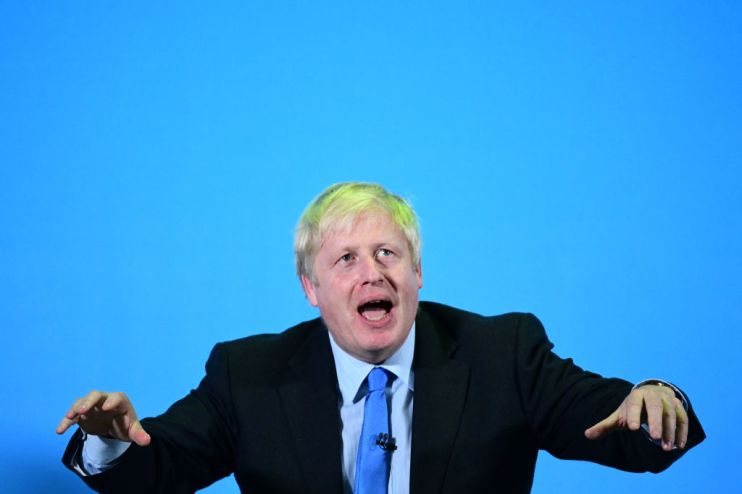
Jeremy Hunt And Boris Johnson Hold Hustings In Colchester
Boris Johnson is under increasing pressure to act to ease the cost of living crisis, and a windfall tax is under consideration. (Photo by Leon Neal/Getty Images)

Labour leader Keir Starmer taunted the prime minister at the dispatch box last week, gloating that a windfall tax – the flagship proposal from the opposition to cut down energy bills – was now “inevitable”.

Such confidence from Starmer is not unearned, as it has been fuelled by a litany of u-turns from Boris Johnson’s government since he took office, from the country’s entire pandemic response to the legal status of buy-one-get-one-free offers for sugar-filled confectionary.

There are now suggestions of a growing rift in Downing Street over the viability of a one-off levy on energy giants such as BP and Shell, which are swimming in record profits powered by soaring oil and gas prices, to ease the cost-of-living crisis facing millions of households.

Johnson is under increasing pressure to act, with the price cap spiking 54 per cent to nearly £2,000 per year last month, and food and petrol prices also skyrocketing with inflation – peaking at a 40-year high of nine per cent.

However, rather than offering more and more temporary relief to consumers, the government should consider meaningful measures that could permanently drive down prices, such as transforming the UK’s ageing, crumbling and heat-escaping housing stock into homes fit for the 21st century.

Earlier this month, EDF Energy revealed 58 per cent of the country’s households only meet the insulation standards from 1976 or earlier.

Its data outlines that installing loft insulation could save £250 per year from people’s energy bills, and that the average semi-detached homeowner could shave £285 a year off their energy bill by upgrading cavity-wall insulation and a further £390 a year by updating solid-wall insulation to prevent heat escaping.

Separately, the Building Back Britain Commission, which consists of chief executives from some of the UK’s biggest housing groups, argued that £200 per year could be saved just from improving a home from an energy performance certificate (EPC) rating of D to C.

Read more

Burnham pledges to tackle ‘cost of business’ as firms fear Budget tax raid

Andy Burnham, Mayor of Greater Manchester, drinks a pint of ale in a pub with people blurred in the background

Meanwhile, less than half of household energy meters are currently defined as smart or advanced according to government statistics.

Insulation will also be key for enhancing the efficiency of heat pumps as the country transitions from boilers to greener energy sources, according to Peter Smith, chief executive of social housing provider Sureserve.

Until properties across the country are properly insulated “it will be difficult to significantly improve the energy efficiency of our housing stock”, he says.

On top of a strategy of improving insulation, there needs to be a shift from traditional gas boilers to renewable sources of energy like air source heat pumps.

Alongside political willpower, there is also a need for clear funding plans, but it’s worth noting the government pledged £9.2bn for energy efficiency measures across schools, homes and hospitals in its 2019 election manifesto for the current Parliament.

The Building Back Britain Commission has calculated that the government could spend £2.3bn per year to make 2.3 million of England’s poorest homes more efficient in a “retrofit revolution”.

Regardless of the merits or faults of a windfall tax, there are meaningful options for the government when it comes to setting an agenda and offering solutions to consumers.

All it would take is for them to honour their manifesto pledges.

Read more

JP Morgan boss issues bank tax warning to John Healey

JPMorgan Chase CEO Jamie Dimon

Share this article

  • Facebook
  • X
  • LinkedIn
  • WhatsApp
  • Email

Similarly tagged content:

Sections

  • Opinion

Categories

  • Opinion

Trending Articles

  • Wetherspoon boss: ‘Not up to Burnham’ to choose who is on the high street 

  • Primark sales slip as owner dresses up retailer for demerger

  • Badger Beer maker Hall & Woodhouse doubles profit ahead of tie-up with James May

  • Crystal Palace owner Blitzer part of £1bn mega stadium redevelopment

  • Barclays faces legal scrutiny over role in £90m ‘Ponzi scheme within a Ponzi scheme’

More from Morning Wire

  • Burnham pledges to tackle ‘cost of business’ as firms fear Budget tax raid

    Politics
    Andy Burnham, Mayor of Greater Manchester, drinks a pint of ale in a pub with people blurred in the background
  • JP Morgan boss issues bank tax warning to John Healey

    Banking
    JPMorgan Chase CEO Jamie Dimon
  • Inflation leaps to 2.9 per cent in blow to Burnham 

    Economics
    Burnham cityscape showcasing modern architecture, bustling streets, and vibrant community life in a thriving urban setting
  • As Sir Keir Starmer quits parliament, will Zack Polanski replace him?

    Politics
    Keir Starmer addressing the media at a press conference, wearing a navy suit, discussing recent political developments.
  • Treasury ‘tells Healey’ to consider tax on banks and oil

    Politics
    Chancellor John Healey smiling, wearing a navy suit, white shirt, and red tie.
  • Jonathan Reynolds’ industrial strategy is straight out of the 60s

    Opinion
    Labour's Jonathan Reynolds unveiled the industrial strategy in June.
  • Big bank bosses on alert as tax noise gets louder under Burnham

    Banking
    Two men, one in a white shirt and red tie, the other in a navy jacket, conversing outdoors.
  • Government to inject millions into electric vehicle firms despite mandate backlash

    Politics
    Car bodies on an assembly line in a UK car plant, showcasing EV manufacturing process
MorningWire

Independent European business, markets and political news for decision-makers.

Morning Briefing

Europe

  • Germany
  • France
  • EU Institutions
  • Europe

Business

  • Markets
  • Business
  • Economy
  • Regulation
  • Competition
  • Public Affairs

Editorial

  • Opinion
  • Editorial Policy
  • Corrections
  • Contact

Company

  • About Morning Wire
  • Privacy Policy
  • Terms of Use
  • Cookie Policy
© 2026 Morning Wire Ltd · Published by Morning Wire Media, Bahnhofstrasse 65, 8001 Zürich, Switzerland
Privacy · Terms · Cookies · Facebook