Government slammed for failing to back onshore wind

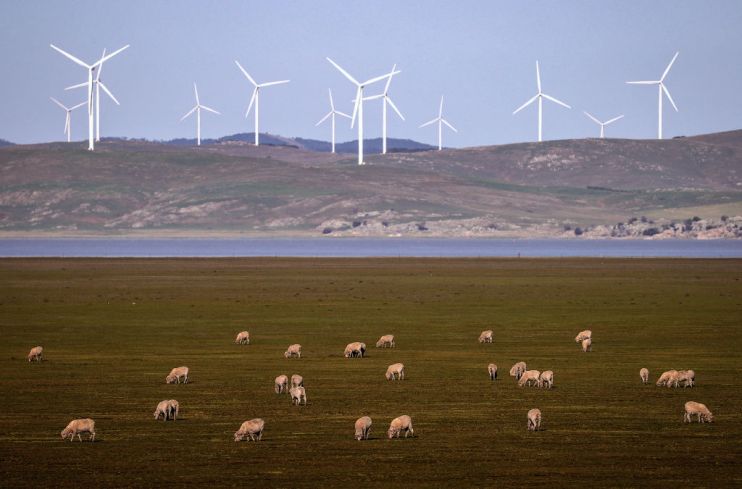
The government’s failure to include onshore wind investment in its energy strategy is a “significant missed opportunity” warned Robert Colvile, director of the Centre for Policy Studies (CPS)
Colvile argued that it was a mistake to turn down a popular policy which could ramp up the UK’s renewable energy generation.
He told City A.M.: “All the evidence is that onshore wind is popular with voters of all types, and could have played a significant role in expanding renewables provision in the near future.”
The long awaited energy strategy – finally published today – aims to ramp up domestic energy generation to ensure secure energy supplies and independence against future market shocks.
Russia’s invasion of Ukraine has also prompted the government to prioritise reducing its reliance on overseas buyers.
This involves ramping up renewables, a historic revival in nuclear power and further North Sea oil and gas exploration.
The plans include boosting offshore wind power from 11 gigawatts (GW) to 50GW by the end of the decade.
However, specific targets for onshore wind were absent from the strategy – despite media reports earlier this month Business Secretary Kwasi Kwarteng wanted to double onshore wind over the same period from 14GW to 30GW.
This would be achieved by reducing the ability of local authorities to reject turbines through planning reforms.
Instead the government has announced it “will be consulting on developing partnerships with a limited number of supportive communities who wish to host new onshore wind infrastructure in return for guaranteed lower energy bills”.
Doubling onshore wind capacity faced opposition from other cabinet members such as Transport Secretary Grant Shapps and Work and Pensions Secretary Therese Coffey.
Morning Wire also understands the idea received negative feedback from the Conservative Party’s political testing across the country.
Onshore wind has historically faced opposition from countryside communities and rural constituencies – which are home to a huge chunk of Tory voters and MPs.
However, latest survey from Octopus Energy Generation published last month suggested 87 per cent of people support having a turbine in their postcode area.
The figures also show that four out of five people would change their energy usage if it was cheaper at certain points of the day.
Nimbyism wins for now despite value of onshore wind
In 2015, then-Prime Minister David Cameron brought in legislation requiring sites to be approved in plans established by residents with local authorities.
While this has given voters more of a say over the establishment of wind farms, it has also significantly held up the construction of hundreds of sites previously approved but still awaiting development.
This is an increasingly painful issue for the UK households, which have suffered a hefty 54 per cent price hike to energy bills this month, taking them to nearly £2,000 per year for average use.
There are growing expectations that the price cap could be further raised this winter – with the latest estimates from Cornwall Insight suggesting another £600 increase in October.
Wholesale prices peaked at an eye-watering £8 per therm last month, and remain historically elevated at £2.34 per therm.
For context, prices were 42p this time last year.
Morgan Schondelmeier, director of operations at the Adam Smith Institute (ASI) also criticised the lack of onshore wind development, describing NIMBYs as the “bane of any successful government.”
Speaking to Morning Wire, she said: “The backlash against onshore wind epitomises the problem the conservative party is currently facing: necessary improvements are being blocked by special interests. Whether its housing, transport, or energy, the government is consistently cut off at the knees by a vocal minority. NIMBYs, in all quarters, are the bane of any successful government – their shortsided interests make it impossible for the long-term planning required for things like housing and energy.”
The director suggest that without onshore wind, “the viability of the entire industry is at risk” and called for “bold action” to create a safe and sustainable energy sector.
Emma Pinchbeck, chief executive of industry body Energy UK was more ambivalent in her response to the lack of targets.
She argued that delivery was just as important as targets, and wanted to see whether the developed partnerships would speed up onshore wind deployment.
Commenting on the value of onshore wind to the UK’s energy sector, she said: “As the cheapest form of generation available and some of the fastest to build, onshore has the potential to make a big contribution to our supply of domestic clean energy. It’s therefore important that the government addresses the existing delays and barriers to help enable this.”
Trade association RenewableUK also considered the lack of details to be a “missed opportunity.”
Director of future electricity systems Barnaby Wharton said: “The industry will work with Government to develop their proposals and we will need more detail on which onshore wind projects offering benefits to local communities might qualify for consent and how they would be selected. But the strategy is clear on the benefits to bill-payers and communities from low-cost onshore wind, so it is a missed opportunity to not make these available more widely to cut bills as quickly as possible”.