Government’s aid investor: Why only the private sector can lift people out of poverty

In 1948, the chair of the Colonial Development Corporation Lord Reith described the newly formed state-backed body’s role as to “do good without losing money”.
Since then it has been through a number of understandable rebrands and rejigs.
It swapped its title for the Commonwealth Development Corporation in 1963, before winning a mandate from government to invest outside the Commonwealth in 1969. And last year it rebranded again, finally landing on the name British International Investment (BII).
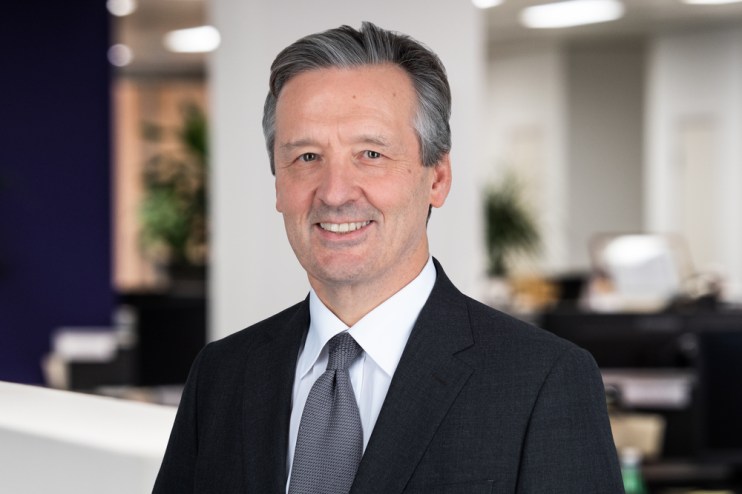
But, as BII chief Nick O’Donohoe tells City A.M., its mission has stayed the same: fuelling private sector growth in developing economies.
“In order to stimulate development in poor countries, the growth of the private sector is fundamental,” O’Donohoe said.
“A growing private sector, whatever industry you’re in, depends on the availability of capital. Our job is to continue to try to make capital available so companies, both big and small, can grow and hopefully increase prosperity in their country,” he said.
Private cash
BII is funded by intermittent government cash but outside of that it has to operate like any other investor: by relying on the success of its bets.
Despite the turbulent environment of the past year, BII has managed to fulfil its mandate of doing good while remaining comfortably in the black. The body made a profit after tax of £167.7m, while its total net assets increased to £8.1bn – up from £7.7bn the year prior, according to its forthcoming accounts seen exclusively by Morning Wire
Outside of its own book, BII is also looking to bring the UK private sector along with it. A central part of O’Donohoe’s role is looking to corral investors and private sector firms to join it in backing projects in the developing world.
Vodafone has for instance struck a partnership with BII in Ethiopia to build out the country’s mobile service beyond its initial single government-owned operator.
“Companies get more comfort partnering with us,” O’Donohoe says. “Partly because we know these markets very well, partly because I think they want the alignment of standards around ESG and business integrity, and partly because we are government owned and that gives us a certain level of access.”
Africa tends to dominate BII’s activity, with some £692m invested in firms across the continent last year out of a total £1.27bn invested through the year, according to its new figures out today. Around £512m was committed to companies in Asia, taking BII’s total portfolio to nearly 1,500 companies in 65 countries.
Its investment into battling climate change in the developing world has also ramped up dramatically. It invested some £591m – around 46 per cent of its total investments for 2022 – in green projects, such as South Africa’s first major battery energy storage project and solar project.
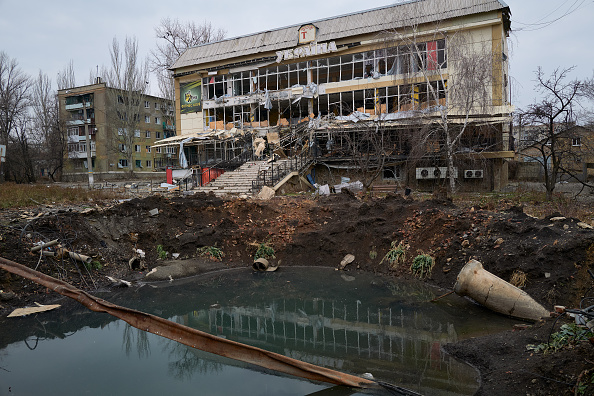
At the top of BII’s priority list now, however, is Ukraine. Government has committed £250m to help finance the rebuilding effort via BII with an on the ground partner in the country – its first foray onto European soil.
“We’ve got lots of experience of investing in fragile and conflict states,” O’Donohoe says. “We’re an investment organisation, so I think it was logical that [the government] would look to BII to get involved.”
Impact investment
Despite BII’s growing portfolio and expanding remit, he argues the public understanding of investing in development is misguided and lags the scale of the market.
‘Impact investing’, in which investors bet on creating both a social or environmental impact as well as a financial return, has swelled in size as an industry and was valued at $2.5tn in 2021. The market is projected to reach $6tn globally by 2031, growing at an annual rate of 9.5 per cent according to Allied Market Research.
Around 15 years ago, O’Donohoe, then an investor at his own firm Big Society Capital, was in the room at the Rockefeller Centre when the term ‘impact investing’ was first coined and says it has ballooned well beyond what anyone expected.
But, he adds, that has come in spite of the public’s indifference.
“I think the public at large tend to have a very narrow view of what [development support] means and it’s often focused on short term humanitarian relief,” he adds.
“Vitally important though that is, it doesn’t provide an answer to the long term, to how you build long term prosperity in countries.”
Aid Profits
Indeed the ideas of profit and development can at times jar in the minds of the public. BII predecessor, Commonwealth Development Corporation, may have played its own small part in fuelling that scepticism 13 years ago, before O’Donohoe’s time in charge, when a series of media investigations revealed a shift towards profits over impact.
O’Donohoe too says the extreme growth of the impact investing space has also given rise to “window dressing” from some investors looking to cash in on a boom in interest in impact and Environmental, Social and Governance investing.
“Particularly when you talk about ESG funds – I think the way they were measured, [the way] they rank their ESG criteria and measure that criteria was a little bit… I mean there was clearly some window dressing going on,” he adds.
There are also threats to BII closer to home. The government slashed its aid budget to 0.5 per cent of gross national income which has choked off some of its available funds, and like every private sector investor it has been rocked by the historic volatility of the past year.
The ripples of war in Ukraine have sent fuel and food prices rocketing across Africa and have crystallised the inherent risk of betting on firms across the developing world.
But, O’Donohoe says, that turbulence has made the need for BII’s role more pronounced more than ever.
“There’s no doubt that the overall risk of our portfolio is significantly higher than any normal commercial [investor],” he adds.
“That’s why we exist: to do those things that other people won’t do.”