Great British Railways: an eerie reminder of state ownership detested by free marketeers and socialists alike

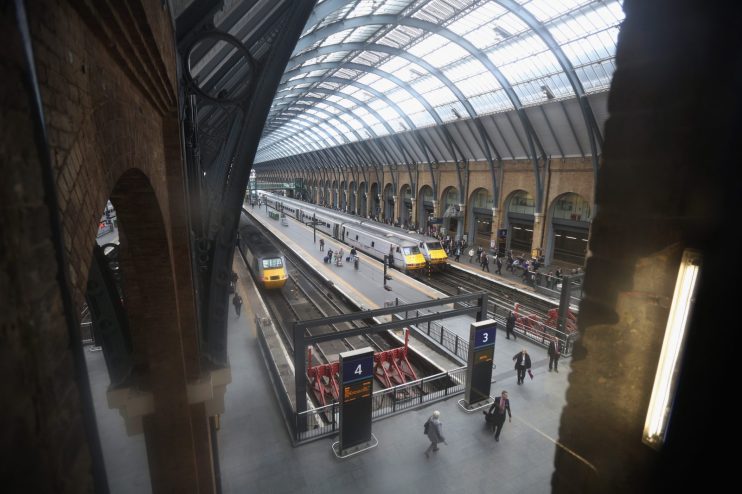
The current amount of taxpayers’ money being paid to operate and maintain the railways is unsustainable, the authors of the Williams-Shapps Plan for Rail report wrote in the opening pages. The railways lack a guiding focus on customers, are too fragmented, too complicated, and too expensive to run. Instead, the authors herald a new age, with a new state body with united, accountable leadership. With simpler, modern fares, and new contracts focused on punctuality and improved efficiency.
At the very least, the report has diagnosed the problem correctly. But how did we manage to arrive at the current state-private hybrid ownership structure – detested by both market liberals and big-state socialists?
In the 1800s, soon after the inspiring tale of innovation and ingenuity that delivered Stephenson’s Rocket and a way before the well-documented commuter misery of the 21st century, private firms both operated the trains and owned the tracks and stations. But it was felt that too much competition was harming profitability – and therein began the decline. Mergers were accelerated by the Lloyd George government, leading to the creation of the “Big Four” rail companies and paving the way for nationalisation.
Increased competition from road transport in the run up to the mid-1900s played its part, but the Second World War was the final catalyst. Battered by this period, and suffering from a chronic lack of investment, the railways were taken under state ownership.
In the 1990s, yet more yoyoing. The railways were returned to the private sector by the Major government, a move that attracted near-unanimous scorn. To give a semblance of competition, the government created Railtrack. The company, which owned the infrastructure but did not run the actual trains, was loathed by socialists, who opposed any form of privatisation. But it was also unpopular among free marketeers, who opposed the artificial fragmentation. By 2001, the company had ceased to be a viable independent entity and the state seized control.
And now, amid our war on coronavirus, the government is seeking once again to centralise control over the railways. The Williams report recommends the creation of an arm’s-length public body, the Great British Railways (GBR), which will set rail fares, timetables, manage the rail network and sell tickets in England.
The Secretary of State for Transport believes this will create “one guiding mind” to manage the rail network. To many this sounds suspiciously like a return to the days of the state-owned monolith British Rail – an era spanning nearly half a century, from the 1940s to 1990s, and one characterised by chronic decline and feeble sandwich jokes. Its advertising slogan, “This is the age of the train,” could quite as easily have been taken as literal reference to its out-of-date rolling stock and not the bright new future its creators intended.
Even Lew Adams, the former boss of the Associated Society of Locomotive Engineers and Firemen (ASLEF) union has claimed that under state ownership “all we got were cuts, cuts, cuts,” while private ownership had led to “more members in the trade union, more train drivers, and more trains running. The reality is that it worked, we’ve protected jobs, and we got more jobs.”
Despite steam locomotives taking their first puff here in Britain, over the last two centuries there has been little to make us feel misty-eyed or nostalgic. It is unlikely the Williams Report will set us on the right track. The new structure proposed today may retain the current complexity and artificial fragmentation, keeping costs high for taxpayers, while at the same time undermining the benefits of competition.
Rather than re-imposing this model, the government should leave it to the market discovery process to improve the railways’ efficiency, with train operators and other private firms free to take over the infrastructure and decide service levels.
Critics will claim history teaches us that privatisation is doomed to fail. But despite the constraints placed on private operators in the past and despite the imposed fragmentation to give the impression of market competition in the 1990s, some of the more enterprising private companies were still able to bring innovation to the sector.
Competition between different operators, allowing vertical integration (companies to own track and operate trains) via the market discovery process and phasing out the vast subsidies to the sector, could truly deliver the improved customer service, additional direct trains and lower ticket prices commuters yearn for.
While the current system is flawed, one merit of the 1990s privatisation programme was that it gave train companies the freedom to modernise and innovate, which partially led to a revival in passenger numbers. It would be a shame if – at a time when railways face unprecedented challenges – we were to return to a situation where civil servants and politicians were constantly interfering, and this progress was lost.