Like it or not, but we won’t get to net zero without oil and gas

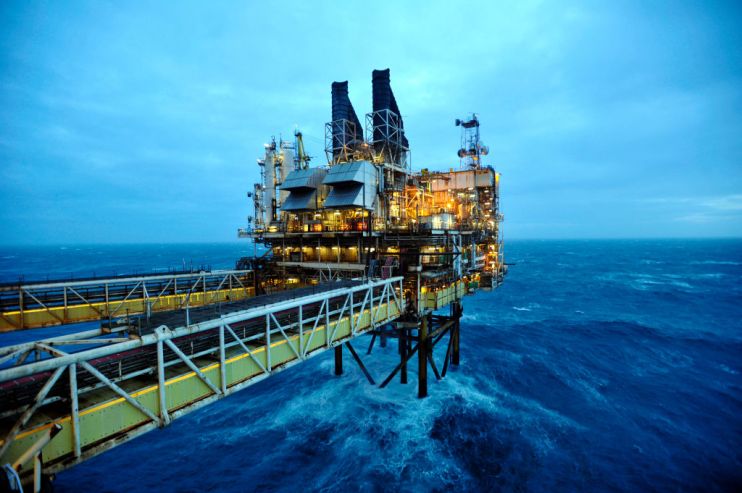
We must move towards a fully green energy system, but we can’t get there without oil and gas, writes Stuart Payne
We were just days into December when scientists declared that 2023 was going to be officially the hottest year on record. Climate change is here, a rare certainty in uncertain times.
And, yet, I can also tell you that we gave production consent for seven oil and gas projects this year – and that it was the right thing to do. When we approved these fields, we did so with a net zero assessment, knowing that while we all want to transition to a point where our country is entirely powered by renewables, it is not there yet. While that remains the case, producing as much of the oil and gas we need as possible domestically is the right thing to do, for security and the economy.
It’s clear that we are still some years away from switching fully to a green energy system. The UK’s gas-fired power stations had to do much of the heavy lifting during the subzero snap at the start of December, when there was barely a breath of wind to spin the turbines across much of the UK. Natural gas, much of which came from the North Sea, once again stood out as a vital part of powering and heating the UK.
Cracking this conundrum is a huge challenge, but also an opportunity worth hundreds of billions of pounds.
World leaders agreeing to transition away from fossil fuels at Cop28 was hugely encouraging – historic, even. But as Cop28 President Sultan Al Jaber said himself, an agreement is only as good as its implementation. At the North Sea Transition Authority (NSTA), we are not just talking a good game on the transition, we’re actually delivering it.
As part of accelerating the transition, we awarded 21 new licences as part of the UK’s first ever carbon storage licensing round, on top of the six already in existence. The successful companies who were awarded these licences are champing at the bit to get going on projects which will capture millions of tonnes of emissions annually. Our teams are now busy looking at the actions needed to approve and support up to 100 carbon stores required to meet the government’s ambitions for 2050.
Hydrogen has the potential to play a transformative role in the transition by reducing emissions from hard-to-decarbonise industries. As with carbon storage, the NSTA is in action mode. In September 2023, we became the regulator for offshore hydrogen transportation and storage. A lot of work has gone on behind the scenes to ensure that we are ready to award the first UK offshore hydrogen licence – and we will be ready as soon as we receive a suitable application. This has every chance of happening in 2024.
Turning to energy security, as the UK relies on oil and gas for about three quarters of its energy demand, the NSTA continues to work with industry to safeguard production. We issued 27 licences as part of the 33rd licensing round, with more likely to come early next year. In addition, over the course of 2023 we consented to seven new projects. Those projects will require capital investment of around £4bn into the UK – a fantastic vote of confidence in the North Sea.
Importantly, upcoming North Sea projects will be some of the cleanest we have ever seen in the UK. To its credit, the sector has taken up the emissions reduction challenge in recent years. Flaring was nearly halved between 2018 and 2022, while overall emissions from production operations fell 23 per cent.
We will drive the North Sea’s transition to net zero – a transition which makes the most of the basin’s potential by integrating its energy systems. To help us get there, I see a place for a “hub” approach. Our oil and gas would come from a select group of top-performing North Sea hubs with the cleanest production, possibly powered by wind. The transition is a mammoth task that requires strategic thinking. That’s what we bring and that’s what we will continue to do in 2024.