Growing Brexit headache for UK businesses as strict new import rules lay bare British traders lack the skills

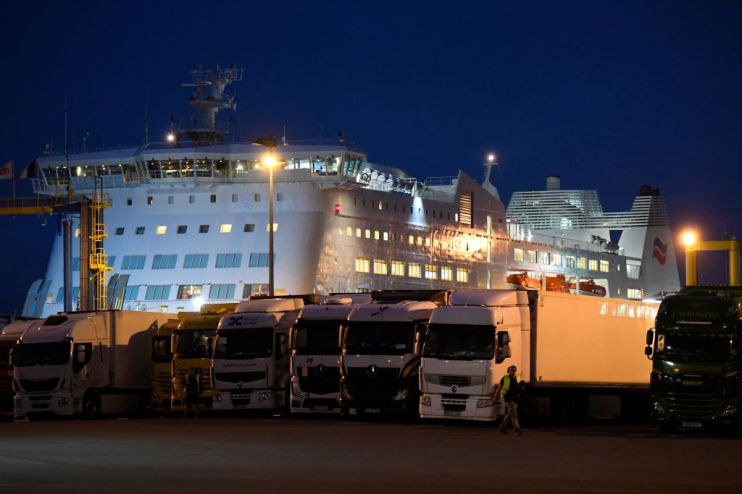
With Britain’s businesses having to declare imports of all EU goods as of 1 January, experts have told City A.M. UK firms lack the skills and expertise to handle the increase in declarations.
Their warning is underpinned by the Institute of Export & International Trade, saying it reported a 379% increase in enquiries to its technical helpline last week.
The changes are predicted to increase custom declarations by a factor of five – a worrying rise from 55m to 270m, according to trade consortium Digital Trader Service.
This is already having a serious impact on UK businesses, which are being forced to urgently train and reskill workers, the consortium said.
Custom changes
The changes mean that Britain’s businesses must now declare imports of all EU goods. With such a sudden influx of declarations, there is growing concern about how Britain’s customs expertise will cope.
Just under two-thirds (64 per cent) of businesses surveyed by the DTS said that they had undertaken additional training to adjust to the new post-Brexit trade rules and processes, while nearly three-quarters (74 per cent) of businesses have made Brexit related changes to their import and export arrangements.
Many businesses have also had to hire additional staff to deal with the new trade rules and processes, with nearly half (47 per cent) saying they had sought support from a customs consultant, or a freight forwarded. A further 21 per cent have hired additional staff to deal with the new rules.
DTS reported that although organisations were able to grow their customs teams many have struggled to hire the right people – and cost is often a barrier as specialist recruitment agencies demand high fees for skilled workers.
Many businesses are also reporting a difficulty retaining skilled staff due to the high demand for them in an incredibly saturated market.
This all signals the increasing worry among businesses about their preparedness for the new rules; and nearly half of UK businesses have already admitted to a lack of knowledge around the new customs requirements for all EU trade.
To alleviate the customs burden currently facing the UK, businesses must look to alternative solutions. Technology provides the means to automate processes that were once handled by now scarce customs agents.
Using automated technology to navigate the lengthy processes associated with the latest declaration procedures will help to avoid the long delays which have been seen UK borders, especially as clearance can already take up to two days.
“While true that there is a huge gap between the skills we have and the expertise we need to thriv, both when it comes to personnel at the border and regarding businesses that conduct trade, this does offer opportunity,” said Shanker Singham, CEO of Competere and Consortium.
“Current processes bring a laborious labyrinth of paperwork, which can result in heavy fines for businesses when completed incorrectly, but now the UK has left the EU, we have a chance to establish better approaches to this.”
“We haven’t had full autonomy of our borders for almost half a century so there are bound to be teething problems as the nation settles into new procedures. But that doesn’t mean that we must fall behind.”
Shanker Singham, CEO of Competere and Consortium.
He stressed that “by moving to digital first platforms, the UK can use automated technology to reduce overall customs complexities – cutting admin time by as much to 75 per cent – presenting businesses with ample time to focus on key business priorities.”
Skills shortage
The skills shortage in Logistics is “quite a challenge at the moment,” in particular, the recruiting and upskilling of Customs Agents, explained Nick McCullough, managing director of MANFREIGHT Limited, a logistics, supply chain and transport business.
“This is a highly skilled role with multiple procedures to follow and many variables to consider. For example – the types of products, country of destination and methods of transportation,” McCullough explained.
“When we tried to recruit for these roles, we really struggled as there is simply not the experience in the market to meet the current demand and the salaries for such roles are currently highly inflated.”
“The current systems only allow a small amount of automation, and the accuracy of data input needs to be 100 per cent. Otherwise, we can face significant delays aor fines in the movement of goods,” McCullough concluded.