Japan recession: Has Abenomics failed? not quite

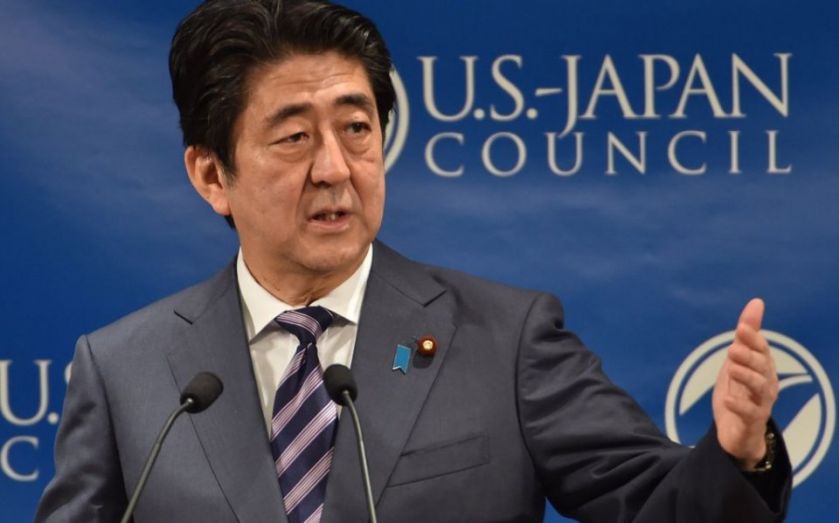
The latest data from Japan revealed that the world’s third largest economy slipped back into recession in the past quarter, at least technically. Has Prime Minister Shinzo Abe’s “three arrows” plan to revive the Japanese economy – Abenomics – failed in spectacular fashion? Well, yes and no.
MIXED PICTURE
Let’s start with the economy. GDP data is notoriously unreliable as a first-guess measure of the economy’s performance, so we shouldn’t place too much reliance on this early estimate. Nevertheless, like most other developed economies, the industrial sector in Japan is suffering, and a run-down of stocks of finished products was the main cause of the fall in GDP.
But other indicators suggest that the Japanese economy is not doing too badly at all, after decades of malaise. Unemployment is at an 18-year low, Tokyo house prices are up 16 per cent since the start of 2013, and confidence among small and-medium sized businesses is at a record high.
Yet some of the key objectives of Abenomics are still nowhere in sight – wages are only edging up (rising 0.6 per cent over the last year) and the inflation rate remains stubbornly low. Outside of declining food and energy costs, consumer prices are rising by less than 1 per cent, half the Bank of Japan’s key objective.
ROCKY RIDE FOR STOCKS
But there’s more. On the positive side, the Japanese stock market has been one of this year’s best performing markets, returning over 13 per cent.
It has, however, been a rocky ride – the Topix index lost 15 per cent over August and September as international investors panicked over a sudden change in China’s exchange rate policy. Foreign investors sold a net ¥4.8 trillion (£26bn) of Japanese equities over those two months, even more than they did in the worst of the global financial crisis.
Furthermore, even though investor confidence collapsed over the summer, we believe there is more to come from the Japanese stock market. Company earnings are expected to rise by more than 10 per cent over the next 12 months and around 8 per cent per year after that.
Still, at 14 times forecast earnings, Japanese stocks are cheaper than even the UK market, which has been battered by high exposure to the energy and mining sectors. On pure valuation grounds, investors appear to be giving Abe little chance of success.
WORK IN PROGRESS
All in all, we view Abenomics as still very much work in progress. The Bank of Japan has room to add more stimulus to the economy, perhaps this week, while the government is considering an extra boost to state spending. Commitments to reforming corporate behaviour and adopting more investor-friendly policies, however, are only likely to pay off in the very long term.
Arguably the biggest success of the Abe administration so far has been in the stock market, where the government has prompted both institutions and the general public to hold more of their savings in equities.
The £734bn Government Pension Fund scheme has raised its targeted share of assets in local equities from 12 per cent to 25 per cent, with the current share standing at a healthy 23 per cent.
Other Japanese pension schemes are likely to follow suit in raising their holdings of equities, albeit gradually. Overseas pension schemes still seem quite lowly-weighted in Japanese shares, despite recent performance.
And after decades of political wrangling, this month the government has managed to start the privatisation of Japan Post, the country’s largest deposit-holder and seller of insurance products. Admittedly the IPO was very under-priced, but a 35 per cent rise in Japan Post Holding’s stock price in the past two weeks is an impressive result. A reported 30 per cent of the public buying Japan Post shares were new to stock investing.
Should Abe’s policies revive Japan’s economic growth – and we believe they will – equity market outperformance is likely to continue for several years yet.