Skip to content
Monday 14 September 2026London --:--Frankfurt --:--Zurich --:--
NewslettersSearchEN · DE · FR
MorningWire

European business, markets and politics

FTSE 100
10,650.44
+0.39%
DAX
25,568.56
+0.82%
CAC 40
8,179.77
+0.78%
STOXX 50
6,325.13
+0.90%
  • Europe
  • Markets
  • Business
  • Economy
  • Regulation
  • Politics
  • Opinion
More
GermanyFranceEU InstitutionsCompetitionPublic AffairsBankingTechnologyEnergy
  • Germany
  • France
  • Europe
  • Markets
  • Business
  • Economy
  • Regulation
  • Politics
  • Opinion
  • DE
Wednesday 17 June 2020 10:23 am  |  Updated:  Wednesday 17 June 2020 10:26 am

History shows us that slavery is an economic catastrophe as well as a moral one

By: Paul Ormerod

Add as a preferred source on Google
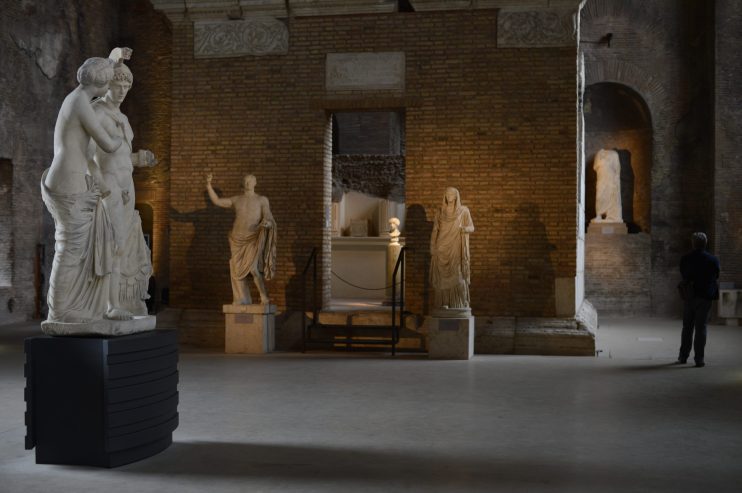
ITALY-ART-SCULPTURE-BERLUSCONI-VENUS-MARS
The Roman economy, prosperous though it was, remained at the living standard of purely agrarian societies

Slavery has certainly been in the headlines in the past couple of weeks. 

Given this sudden interest in this area of history, it is worth considering the economic lessons it can teach us, as well as the moral ones.

Slavery was abolished in England itself in the twelfth century. Then in 1772, Lord Mansfield gave his famous judgment that as soon as any slave set foot on British soil, he or she was automatically freed.

Clearly, some people became rich by trading or owning slaves abroad. There is nothing new or unusual about this. Taking a broad sweep of human history, the societies in which slavery does not feature form a very distinct minority. 

It was Karl Marx who coined the phrase the “ancient mode of production” to describe the economies of both Ancient Greece and Rome. Greece, of course, gave us the concept of democracy itself. Yet, ironically, its economy was built on slavery.

Rome developed the concept even further. With a plentiful supply of labour from its military conquests, the aristocracy owned vast tracts of land, maintained by slaves.

Yet although individuals became rich through slavery, Rome as a society did not.

When the Empire was at its maximum extent in the second century AD, the living standard of the average Roman citizen was the highest the world had yet seen. Indeed, it was probably not surpassed until the early modern era.

Yet the Roman economy, prosperous though it was, remained at the living standard of purely agrarian societies. It never got “lift off”, as Europe did in the eighteenth and nineteenth centuries.

Read more

Net zero and DEI targets cut from procurement rules as firms pressed to raise pay and hire NEETs

Louise Haigh, Andy Burnham, and another man smiling in front of a dark door with 10 visible.

The fundamental problem was that an economy based on slavery has little incentive to adopt new, more efficient ways of working. Indeed, for the individual slave there is virtually no incentive at all. If a particular task can be done better and more quickly, there is always another one which he or she will be given. Innovations, when they did happen, spread only very slowly.

The inherent inefficiency of slavery as a method of production is clear from the experience of Stalin’s Soviet Union and Mao Tse Tung’s Communist China — the two great slave societies of the twentieth century.

The labour camps, filled with the so-called enemies of socialism, represented a huge drain on their economies. Output was low, and large amounts of resources were needed to run and maintain the system.

Slavery is of course morally repugnant, a stain on the histories of civilised societies. But it is also economically detrimental to the societies it ostensibly appears to benefit. The fact is that no society based on slavery has ever come anywhere near to delivering decent living standards for the average person.

The only system which has is capitalism. Britain and other areas of north west Europe started to become rich through a system based on the rule of law, the ability of individuals to profit from innovation and not be expropriated, and the freedom of labour to negotiate contracts.

Morality undoubtedly played a part in Britain’s leading role in abolishing slavery. But by the early nineteenth century, it had become an anachronism. Resources employed in slavery could be put to much more productive use under capitalism.

Perhaps, then, we should remove not just statues of British slave owners, but erase the whole corpus of Greek and Roman art, financed as it was by Marx’s slave-based ancient mode of production.

Main image credit: Getty

Read more

‘Social value’ procurement rules are an absurd waste of time and money

Tunnelling for the Euston link finally kicks off this week.

Share this article

  • Facebook
  • X
  • LinkedIn
  • WhatsApp
  • Email

Similarly tagged content:

Sections

  • Markets & Economics
  • News
  • Opinion

Categories

  • Business
  • Economics
  • Opinion

Trending Articles

  • Wetherspoon boss: ‘Not up to Burnham’ to choose who is on the high street 

  • Badger Beer maker Hall & Woodhouse doubles profit ahead of tie-up with James May

  • Four interest rate hikes loom despite surprise economic growth

  • Primark sales slip as owner dresses up retailer for demerger

  • Lotus, Porsche and Corvette: the best sports cars to buy in 2026

More from Morning Wire

  • Net zero and DEI targets cut from procurement rules as firms pressed to raise pay and hire NEETs

    Politics
    Louise Haigh, Andy Burnham, and another man smiling in front of a dark door with 10 visible.
  • ‘Social value’ procurement rules are an absurd waste of time and money

    Economics
    Tunnelling for the Euston link finally kicks off this week.
  • Serco chief hits back at New Statesman’s outsourcing jibes

    Politics
    New Statesman magazine cover, How Britain Lost Control, with a crowned lion held by a hand, over a city skyline.
  • Burnham forgets, the Labour Party is a moral crusade or it is nothing

    Opinion
    Andy Burnham, in a dark suit, speaks at a podium outside 10 Downing Street, with onlookers behind him
  • The St Paul’s Cathedral Fabric outrage is a ridiculous moral panic

    Life&Style
    St Pauls Cathedral interior with an audience, grand architecture, chandeliers, and decorative fabric details
  • BXB Estates Completes AED 110 Million Record-Breaking Sale, the Highest Residential Transaction in Jumeirah Golf Estates History

    Business Wire
  • INEOS boss: North Sea decommissioning is ideological and destructive

    Opinion
    Offshore oil rig platform with illuminated facilities and a long gangway over choppy North Sea waters.
  • Bayer Leverkusen and RB Leipzig face ownership shake-up after 50+1 ruling

    Sport Business
    Two male soccer players, one in blue and one in white/red, vie for the ball on a green field.
MorningWire

Independent European business, markets and political news for decision-makers.

Morning Briefing

Europe

  • Germany
  • France
  • EU Institutions
  • Europe

Business

  • Markets
  • Business
  • Economy
  • Regulation
  • Competition
  • Public Affairs

Editorial

  • Opinion
  • Editorial Policy
  • Corrections
  • Contact

Company

  • About Morning Wire
  • Privacy Policy
  • Terms of Use
  • Cookie Policy
© 2026 Morning Wire Ltd · Published by Morning Wire Media, Bahnhofstrasse 65, 8001 Zürich, Switzerland
Privacy · Terms · Cookies · Facebook