Horse racing came together to fight tax hikes. Now it must unite again

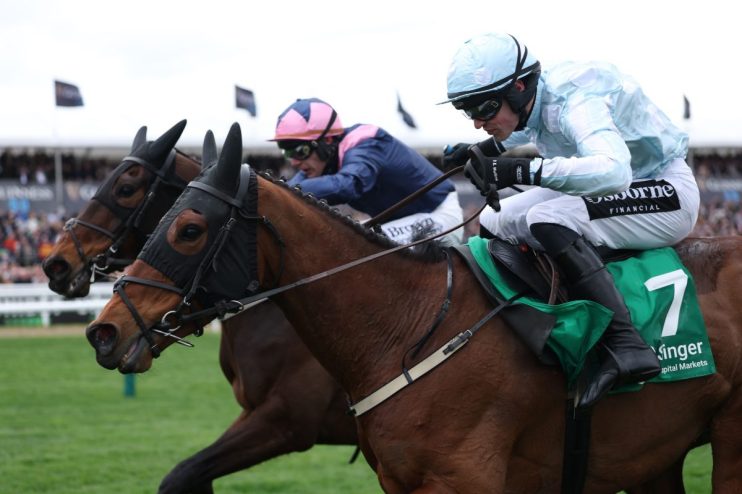
The Jockey Club’s chief executive’s recent rallying cry to British horse racing was bang on, writes Ed Warner.
All successful sports have tentpole events, the occasions that attract attention well beyond hardcore fanbases and which drive profits that may (although not always) provide financial scaffolding for its lesser players and promoters.
The Cheltenham Festival is one such event for horse racing, as is football’s Championship play-off final for the EFL. Tinkering by the owners of both highlights their financial significance, but courts controversy in the process.
A year ago here I surfed the seemingly irreconcilable media criticism of the Cheltenham tentpole. Some bemoaning its overcrowding, high prices and Irish domination of the runners and winners; others carping about falling attendances which were five per cent down on the previous year and 22 per cent from their peak.
I applauded newly arrived CEO Guy Lavender’s simple, honest assessment of his challenge: “We will define success this week and beyond by whether we are delivering unforgettable days out for our customers and improving the experience for everyone in attendance and watching on at home.”
Modest reductions in both capacity and beer prices at this week’s Festival will doubtless provide marginal experiential gains for racegoers to help offset Thursday’s forecast rain. What is clear, however, is that any success Lavender and team have in stabilising and reinvigorating Cheltenham will do little to address the deep-seated problems besetting British horse racing as a whole.
Overall attendances across the sport are up, but commercial revenues are falling as betting companies focus their promotions on other gambling products. Against the backdrop of the resultant financial squeeze, a notoriously divided sport is once again mired in conflict.
After writing about the plummeting interest in The Derby last June, a leadership figure in the sport invited me to meet and suggested a follow-up with Lord Allen, then announced as the British Horseracing Authority chair but not yet in post. That introduction was never effected.
Charles Allen – very much a political appointment with both a small and a capital P – clearly had far more pressing matters to attend to as he strove and failed to ensure the appointment of a fully independent board at racing’s governing body. Six months after belatedly taking the reins, last week Allen resigned.
Cheltenham racecourse is owned by the Jockey Club. Its chief executive, Jim Mullen, penned a newspaper article last weekend that was clearly aimed at horse racing’s warring factions in the wake of Allen’s abrupt departure.
“Having tasked them [the BHA] to help us navigate the crossroads, racing opted to stay on the pavement and maintain its ‘stick to what we have and hope it pays off’ approach. However, hope – like nostalgia – is not a viable strategy.”
Jockey Club chief executive Jim Mullen
Too often sports look inward when they should be scanning the horizon for existential threats, its participants each scrapping for their share of its cake without facing up to the reality of its shrinking size.
Having proven it can unite effectively to see off the most extreme of the possible changes by the Treasury to industry taxation last autumn, horse racing has swiftly reverted to type, unable to coalesce around a strategy for a successful future.
Rather than looking jealously at Cheltenham, Aintree or Ascot, the sport needs to ask itself what – acting together – it can harness from their success.
Remember too that, given the industrial infrastructure they require, these race meet tentpoles can only themselves stand upright if they have the guy-ropes of the rest of the sport to support them. Mullen is bang on in his appeal.
Championship play-offs: The last shall be first
The EFL’s Championship comprises 552 regular season matches and five play-off games, the last of which is annually billed as the one with the biggest prize in English football.
The victor’s reward inflates with the estimated growth in the value of a place in the Premier League. Last season that was widely touted as at least £200m.
Reducing a nine-month slog for 24 teams to a five-game spin of fortune’s wheel is a test for ideals of sporting purity. Finish a distant sixth in the league and you may succeed at the expense of teams with a far superior record over the whole campaign.
But fans have long swallowed any collective appetite for fairness in favour of the thrill of jeopardy and opportunity further down the league at the sharp end of the season as teams scramble for play-off places.
Now EFL clubs have voted to extend the Championship play-offs to include the seventh and eighth placed sides from next season.
If that system were in place this campaign, with 10 rounds of matches still to play, perhaps as many as 18 teams might still believe they had a shot at promotion – however outlandish for a couple who would have a greater fear of relegation to League One than dreams of the Premier League.
Scan through the Championship tables over the past decade and you’ll see that one or two teams finished within three points of the side securing eighth place each season. One season, three came that close. Mid-table mediocrity is banished.
It is easy to see why the clubs have voted for an expanded play-off opportunity. Unless negotiations between the Premier League and EFL – hurried along by the Independent Football Regulator – result in a substantial reduction in parachute payments, newly relegated clubs will always start each Championship season with a clear financial advantage.
Extending the play-offs nibbles away at that, increasing the chances of a challenger club elbowing their way past one of the bigger teams that yo-yos in and out of the top flight.
The change does, though, take us fans for collective fools. Sure, when your own team benefits you might suppress your scruples, but overall I reckon that supporters will see through this cynical move and focus instead on the weakened integrity of the long-form saga that they engage in week-in, week-out from summer to spring. There is indeed too much of a good thing.
Ed Warner is chair of GB Wheelchair Rugby and writes his sport column at sportinc.substack.com