How Britain can tackle its stubborn trade deficit

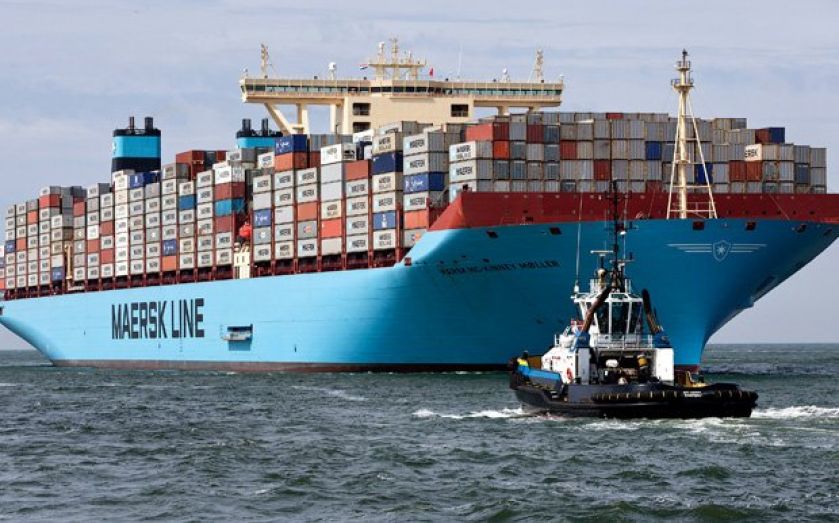
AS WE take a moment to look back on 2014, there is one aspect of the economy that has underperformed – UK exports. Recent forecasts predict that British exports will be down on last year, having a tangible impact on overall economic growth. In fact, net trade knocked 0.5 percentage points off GDP growth in the third quarter.
Unfortunately, the UK’s weak export performance is not confined to a single year. A persistent trade deficit has shackled British growth for several decades, leading to a steady fall in our share of global exports.
However, this does not have to remain the case. The UK is famous for its ingenuity, entrepreneurialism and creativity. When we set our minds to something, we are world beaters, so there is no reason to think that we cannot find solutions to boost British exports and rebalance the economy. We must bring about a step change in the support available for existing and potential exporters. The evidence is clear that, when businesses do export, they grow, on average, 20 per cent more than businesses that don’t export.
Chambers of Commerce across Britain regularly speak to businesses that have almost full order books here in the UK and don’t see why they would need to take their goods and services overseas. They argue: “If I can make my next pound more cheaply and easily here in the UK than I can overseas, then I’ll do it in the UK. I’ll only begin to export when it makes more financial sense than selling at home.”
Historically, businesses have found it easier to service the domestic market, but we must make it just as attractive to explore international markets. Embedding a culture of export into business DNA will go a long way to addressing this lack of international entrepreneurialism.
To help address the UK’s stubborn trade deficit, and to develop practical ways to boost exports, we have convened an International Advisory Council. The council brings together a group of senior business leaders representing British companies from across the UK, and a wide range of sectors and sizes, to advise the British Chambers of Commerce on international trade issues. The 15 council members will also act as advocates in promoting British business in key export markets.
The Prime Minister recognised the importance of exports when he set an ambitious target to double British exports to £1 trillion by 2020. Part of our strategy to achieve this demanding target must be to improve the awareness of growth opportunities overseas, helping to break down the fear of exporting and providing easy access to practical support on the ground.
The British Chambers of Commerce is working with partners to build a global network of Chambers of Commerce and overseas business groups. This is exactly the type of practical support that can really help firms enter new untapped markets by making real, face to face connections. Businesses need to be confident that, as they step off the plane, they are being connected with the right people to make their visit worthwhile.
Even as economies across the Eurozone stagnate, businesses should be encouraged to target emerging markets, which are experiencing rapid growth. China is a case in point; it will have a larger middle class by 2020 than the whole of the EU. This offers British businesses, particularly service providers, with a wealth of opportunities that can be explored.
While global conditions have affected the UK’s exports in the short term, our poor global track record is also the result of home-grown issues that must be addressed. For example, we need to ensure adequate financial support is available to young, high-growth businesses, which are the exporters of the future.
Seeking out and growing in markets overseas involves upfront costs and managing additional risks. There are already export finance support mechanisms in place, but some firms are not aware of their existence. Efforts are being made to advertise these finance schemes but we can do more to increase their visibility, signposting the support available to businesses on their journey to exporting.
By building international networks and removing barriers to trade, we will encourage more British businesses to look beyond our shores. As a nation, we can and must do more if we are to meet the export ambitions the Prime Minister has set for 2020. The world is alive with business opportunities, so let’s get behind our British exporters and help them to shine on the global stage.