Skip to content
Sunday 9 August 2026London --:--Frankfurt --:--Zurich --:--
NewslettersSearchEN · DE
MorningWire

European business, markets and politics

FTSE 100
10,901.09
+0.31%
DAX
26,319.45
+0.69%
CAC 40
8,714.93
+0.17%
STOXX 50
6,523.86
+0.33%
  • Europe
  • Markets
  • Business
  • Economy
  • Technology
  • Politics
  • Opinion
More
GermanyFranceBankingAIEnergyFintechPropertyCapital Markets
  • Germany
  • France
  • Europe
  • Markets
  • Business
  • Economy
  • Technology
  • Politics
  • Opinion
  • DE
What is City Talk? City Talk allows marketers to connect directly with our audience by publishing content on morningwire.eu
Tuesday 27 April 2021 12:04 pm  |  Updated:  Wednesday 28 April 2021 11:40 am

How curing cataracts offers a 1,500% socio-economic return

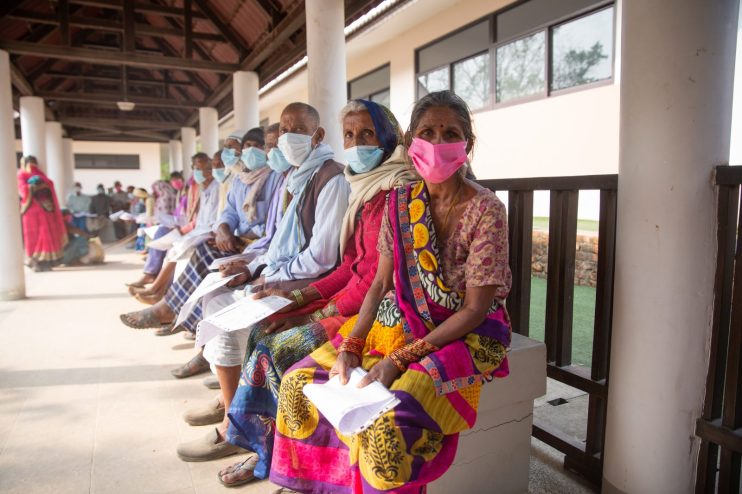
By: Tej Kohli

Add as a preferred source on Google
Patients aware screening and surgery at a Tej Kohli & Ruit Foundation micro surgical outreach camp to cure cataract blindness in Nepal.

According to the World Health Organisation, 95 million people worldwide are affected by blindness or severe visual impairment due to cataracts.  Cataracts are disproportionately prevalent in low-and-middle-income countries, where they account for 50% of blindness, compared to just 5% of blindness within developed countries.

The socioeconomic effect of cataract surgery is substantial. It allows people to increase their economic productivity by up to 1,500% of the cost of the surgery during the first postoperative year, not least because if left untreated, cataracts often result in an individual being removed from work.  Studies have proven this ‘investment’ return again and again.

Making grassroots interventions to treat cataracts also comes with an ‘invisible’ return.  There is traditionally a gender inequality in cataract surgical coverage in poorer countries, where men are more likely to have cataract surgery than women.  When projects such as my Tej Kohli & Ruit Foundation conduct micro-surgical outreach camps that select patients for free surgery based on need rather than gender, women in poor communities get empowered.
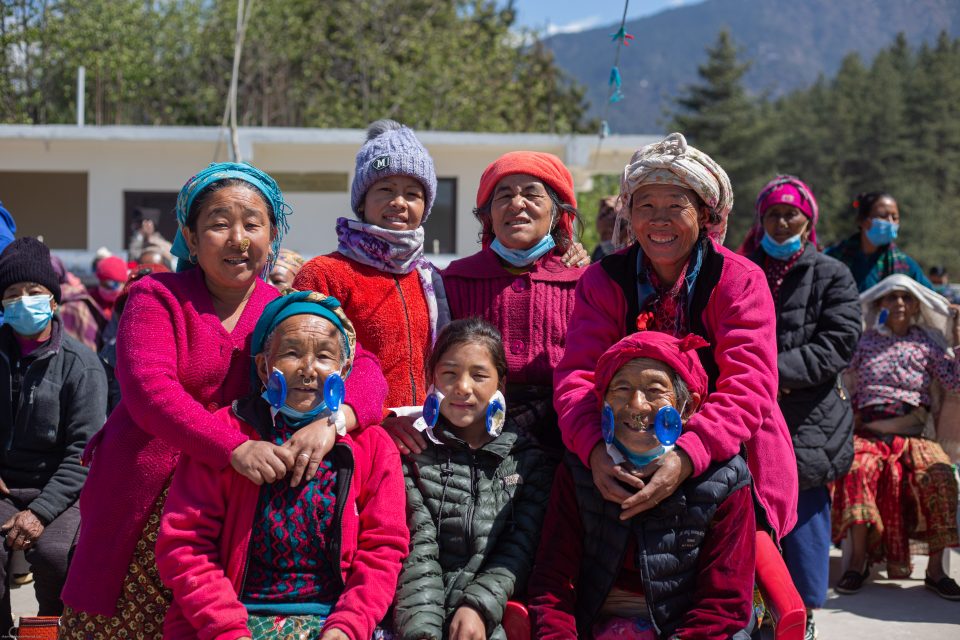
Patients and their relatives pose for a photograph after having their cataract blindness cured at a micro-surgical outreach camp of the Tej Kohli & Ruit Foundation in Solukhumbu, Nepal, April 2021.

The responsibility for caring for family members who are blind typically falls onto girls, often disenfranchising them from education and condemning them into the same cycle of poverty that too often causes needless blindness.  Curing one person of cataract therefore also has a socioeconomic ‘ripple effect’ that positively impacts whole families in poor communities.

Cataracts are also one of the most common causes of treatable childhood blindness, with an estimated prevalence ranging from one to six per 10000 live births.  Worldwide 5% to 20% of childhood blindness is due to cataract, but in developing countries cataracts account for a greater proportion of childhood blindness, approximately 22% to 30%.
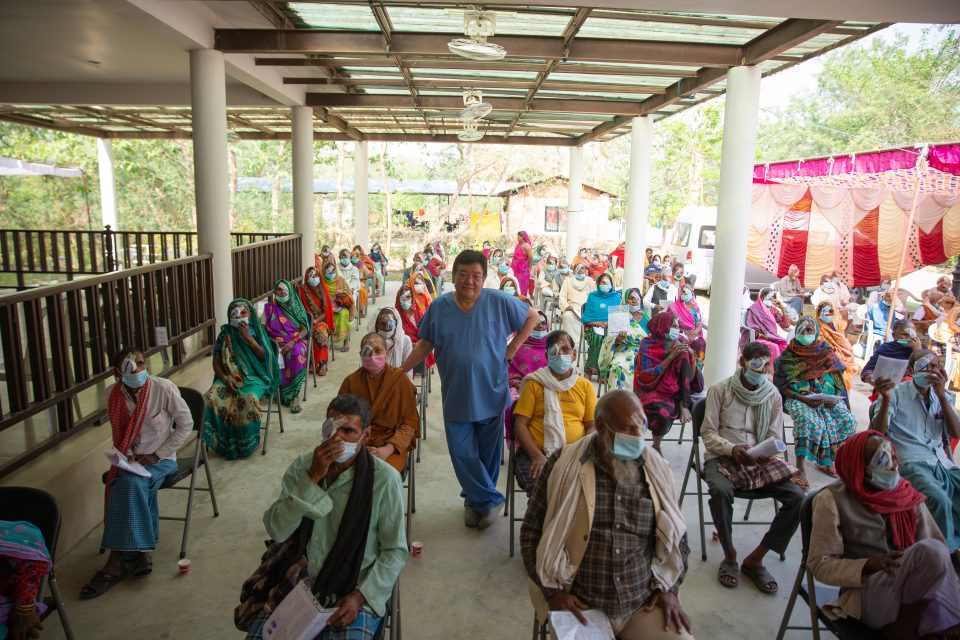
Dr Sanduk Ruit pictured with patients recovering from cataract surgery at a Tej Kohli & Ruit Foundation micro-surgical outreach camp at a temple in Lumbini, Nepal, the birthplace of Buddha.

The numbers of annual cataract surgeries vary among low-and-middle income countries because of differences in accessibility for diagnosis and surgery, referral, and health-care systems.  Thankfully with the advancement of surgical technology and techniques and the development of advanced technology in intra-ocular lenses, notably led by Dr Sanduk Ruit, cataract surgery has evolved to a simple surgery with rapid visual recovery.

Since most cataract patients are now able to have their surgery as a day-case procedure, for the past two decades, the prevalence of cataracts has been declining worldwide as rates of cataract surgery have increased because of the improved techniques and active surgical initiatives like those of the Tej Kohli & Ruit Foundation. 

But population growth and increased longevity means that even as the incidence of cataracts has fallen, the total number of people with cataracts has grown, especially in low-and-middle-income countries.  It is imperative therefore that global health authorities implement a set of strategies to improve the access of effective ophthalmic service and screening, and the quality of treatment delivered in these developing countries.

The 1,500% one-year ‘investment’ return in terms of economic productivity versus the cost of cataract surgery is too often overlooked by policy makers.  In the future they need to focus on efforts on promoting the delivery of low-cost and high-quality cataract surgery in developing countries through initiatives, programmes, or mass campaigns to develop infrastructure, personnel, and strategies to provide sustainable high-quality facility.


Tej Kohli is an investor in Rewired

Read more

Dompé Doses First Patient in Phase 3 Study of Cenegermin-bkbj in NAION

Share this article

  • Facebook
  • X
  • LinkedIn
  • WhatsApp
  • Email

Similarly tagged content:

Sections

  • News

Categories

  • Tech

Related Topics

  • Charity
  • Rewired

Trending Articles

  • How Britain can stay clear of rivals as home of overseas sport club owners

  • Why the Loire Valley is about so much more than fairytale castles

  • Why HMRC is huge Premier League transfer window tax headache

  • Thames Water faces fresh threat to survival after pensions regulation breach

  • Back to basics: Sainsbury’s gradual retreat from the British high street

More from Morning Wire

  • Dompé Doses First Patient in Phase 3 Study of Cenegermin-bkbj in NAION

    Business Wire
  • Oil prices return to crisis levels

    Markets
    Close-up of a petrol pump nozzle dispensing fuel at a gas station, highlighting rising fuel costs and economic impact.
  • Ten Finalists Announced for the Reply AI Film Festival, the International Competition Bringing Together Cinema and Artificial Intelligence

    Business Wire
  • Carta Rearchitects Private Capital Operations with Plugins for Claude

    Business Wire
  • Mortgage approvals inch up yet gains to be ‘retracted’

    Property
    Bank of England headquarters in 2025, showcasing modern architecture and iconic London skyline in the background.
  • Industry backs mooted Burnham plans for return of alcohol on football terraces

    Sport Business
    Hand holding a blue FIFA World Cup 2026 sponsored cup, with an England football jersey visible.
  • Here’s an idea for you Gary Stevenson: a 0 per cent wealth tax

    Opinion
    Gary Stevenson debates economist Dr Kristian Niemietz on wealth tax issues during a live event.
  • Could an England World Cup win boost the markets?

    Opinion
    Getty Images logo on a smartphone screen, representing a focus on digital media and stock photography industry trends
MorningWire

Independent European business, markets and political news for decision-makers.

Morning Briefing

Europe

  • Germany
  • France
  • Europe
  • UK & Ireland

Business

  • Markets
  • Banking
  • Technology
  • Energy
  • Property
  • Fintech

Editorial

  • Opinion
  • Editorial Policy
  • Corrections
  • Contact

Company

  • About Morning Wire
  • Privacy Policy
  • Terms of Use
  • Cookie Policy
© 2026 Morning Wire Ltd · Published by Morning Wire Media, Bahnhofstrasse 65, 8001 Zürich, Switzerland
Privacy · Terms · Cookies · Facebook