Skip to content
Sunday 30 August 2026London --:--Frankfurt --:--Zurich --:--
NewslettersSearchEN · DE · FR
MorningWire

European business, markets and politics

FTSE 100
10,824.26
+0.29%
DAX
26,569.99
+0.77%
CAC 40
8,401.18
+0.98%
STOXX 50
6,485.67
+0.95%
  • Europe
  • Markets
  • Business
  • Economy
  • Regulation
  • Politics
  • Opinion
More
GermanyFranceEU InstitutionsCompetitionPublic AffairsBankingTechnologyEnergy
  • Germany
  • France
  • Europe
  • Markets
  • Business
  • Economy
  • Regulation
  • Politics
  • Opinion
  • DE
Wednesday 04 November 2015 5:32 pm

How do fireworks work? The science behind why they explode, how they make shapes and get their colours

By: Sarah Spickernell

Add as a preferred source on Google

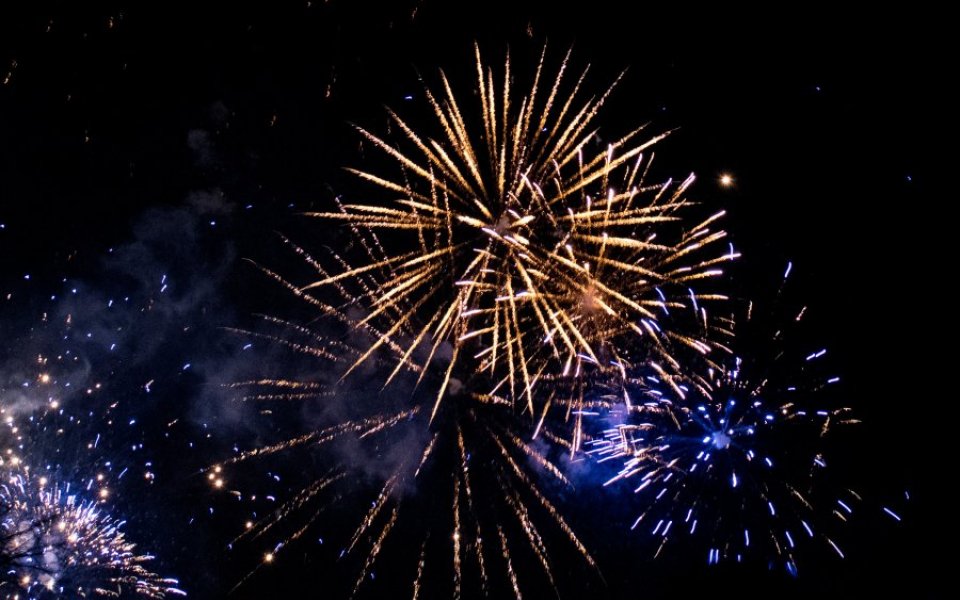
Remember remember the fifth of November… that's today, and once again people will gather across the capital to watch fireworks displays in celebration of Bonfire Night.

But while we stand around and enjoy the event, the inquisitive among us might take a step back and wonder how on earth a mini, hand-sized rocket can turn into an explosion of light and colour way above us in the sky.

The science of fireworks all centres around little “stars” – tiny pellets within fireworks that are made of metal powders and create a coloured spark when ignited.

But to get these stars to the stage where they can explode into jets of colour, a two-stage explosion must happen, and the first part involves getting the firework off the ground.

The firework is loaded into a mortar, which is acts as a cannon, and the fuse at the bottom is lit. This ignites the first of two pouches of gunpowder, and the resulting explosion causes the firework to rocket into the sky.

Once it has travelled high enough into the air, a delay fuse is ignited inside the firework, and this runs into another gunpowder pouch called the bursting charge. This second explosion sets the “stars” on fire and creates the final spectacle.

Not all fireworks look the same – they erupt in a variety of shapes and shades, and this is made possible by the composition and alignment of the stars.

Each one turns into a jet of light, and the pattern contained within the firework translates into the pattern in the sky. So a spiral pattern of stars will turn into a spiral firework when they are set on fire.

In terms of colour, this is determined by the metal salt contained in the coating of each star. Sodium compounds turn into yellow flames, strontium into red, barium into green and copper into blue. For a multi-coloured firework, each star is coated in a different metal salt.

So when you enjoy watching a firework display tomorrow, you'll have the added pleasure of knowing exactly what's going on.

Share this article

  • Facebook
  • X
  • LinkedIn
  • WhatsApp
  • Email

Similarly tagged content:

Sections

  • News

Categories

  • Tech

Trending Articles

  • Pensioners to hand over bank statements in government benefits crackdown

  • Jamie Carragher: HMRC petitions for Sky Sports star to be declared bankrupt

  • Brewdog founder James Watt hits out at ‘total silence’ over new venture

  • Jamie Vardy bags Bundesliga rights as he steps up streaming war with Neville and Lineker

  • Lloyds Bank and Halifax users unable to use app in latest outage

More from Morning Wire

  • Not enough bums in Brum: Why so many empty seats at European Athletics Championships?

    Sport Business
    Runners from Great Britain, France, Netherlands, Germany, and Italy competing in a track event.
  • Battery Ventures Promotes Brandon Gleklen to Partner

    Business Wire
  • Jonathan Reynolds’ industrial strategy is straight out of the 60s

    Opinion
    Labour's Jonathan Reynolds unveiled the industrial strategy in June.
  • Venture heavyweights denounce government’s £1bn scale-up fund plans

    Investing
    Andy Burnham, John Healey, and Louise Haigh by a doorway, discussing tax policy for a news article.
  • Bayern Munich old boys in takeover of Portuguese top-flight club

    Sport Business
    Thomas Müller in a white MLS jersey looking forward with fans in the background at a stadium event.
  • Josh Kerr took the mile record. But how much further can we go?

    Opinion
    Josh Kerr celebrates new mile record 3:42.66 on Omega scoreboard, Union Jack visible, track stadium background.
  • London Gatwick hotel owner plans swanky 18,000-capacity sport arena

    Sport Business
    Aerial night rendering of a glowing Dallas Stars NHL arena surrounded by mixed-use buildings, roads, and homes.
  • UK debt ‘hits £3 trillion’ milestone

    Economics
    Houses of Parliament in Westminster showcasing historic architecture under a clear sky, central to UK government and politics
MorningWire

Independent European business, markets and political news for decision-makers.

Morning Briefing

Europe

  • Germany
  • France
  • EU Institutions
  • Europe

Business

  • Markets
  • Business
  • Economy
  • Regulation
  • Competition
  • Public Affairs

Editorial

  • Opinion
  • Editorial Policy
  • Corrections
  • Contact

Company

  • About Morning Wire
  • Privacy Policy
  • Terms of Use
  • Cookie Policy
© 2026 Morning Wire Ltd · Published by Morning Wire Media, Bahnhofstrasse 65, 8001 Zürich, Switzerland
Privacy · Terms · Cookies · Facebook