How Moral is ESG?

ESG is immoral. So argued Milton Friedman, an economist, back in 1970. Customers, employees and stockholders, he said, did not need company executives to spend their money for them. If an executive, operating in a competitive market, took an action that reduced her company’s profits in the name of “‘social responsibility’”, she then had to compensate for this by either putting up prices for customers, or crimping employees’ wages, or reducing stockholders’ returns, or some combination of all three. This, he continued, was to turn CEOs into unelected politicians who decided “whom to tax by how much and for what purpose”. Hence his conclusion, which was also the title of his New York Times essay: “The Social Responsibility Of Business Is To Increase Its Profits.”
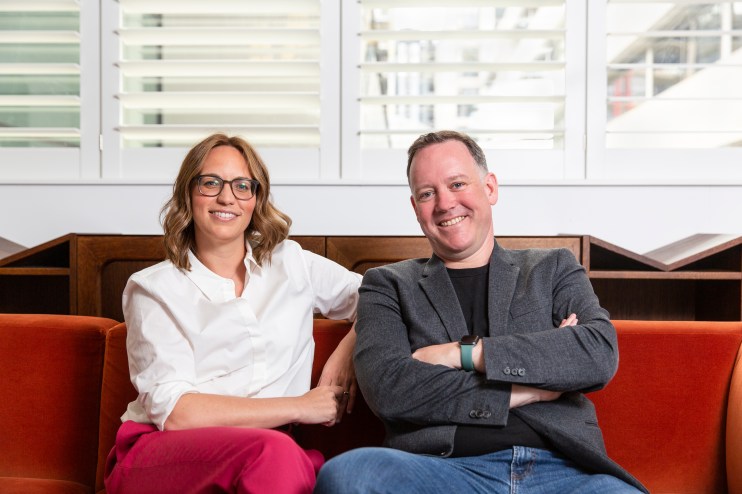
Alex Smith and Mike Penrose, Co-Founders of The Sustainability Group, a consultancy, disagree. Ten years ago, says Mike, there was “the sudden realisation that Milton Friedman was wrong”. In his telling, Friedman concentrated “on a small number of socio-economically advantaged people – shareholders”, neglecting stakeholders across society at large.
Alex says The Sustainability Group tries to make a firm “consider how it could be a better corporate citizen”. The mission is moral. Friedman would be alarmed. But the pair are undeterred: the social and environmental challenges we face mean moving on from free market orthodoxy.
The Sustainability Group is willing to work with almost anyone. At the moment, says Mike, some gambling firms and all tobacco companies are off-limits because such organisations have “no material benefit to society”. Alex says they make such decisions “on a case by case basis … there are companies we would choose not to work with, if we felt that they did not want to improve their sustainability, or that they were causing such damage that it wouldn’t be useful for us to work with them.”
Everybody else is fair game, and this is important. Previously CEO of Unicef, Mike says he is used to seeing “the same small group of very self-congratulatory companies go between Davos and the UN General Assembly and tell each other how ace they are”. ESG, he says, should not be exclusive to big business. “If every company in the UK improved by 5 per cent we would have a greater aggregate value than 100 companies improving by 80 per cent and telling each other they’re brilliant.” The point of The Sustainability Group, say Alex and Mike, is to democratise sustainability strategy and reporting.
Their product, Future+, distils the alphabet soup of ESG metrics into an overall score out of 500, broken down into how they perform across the categories of Climate, Environment, Diversity and Inclusion, Economic Impact and Social Impact. Importantly, says Mike, the tool tracks not just what companies have done but also what they are doing. “None of us are good”, he says, and so there is no point in rating past achievements and stopping there. Future+ also scores a client’s ambitions for the future, keeping this separate from the actual score to ensure that lofty ambitions cannot mask actual poor performance. A client’s ambition score also goes “down as long as you don’t achieve your ambitions.” The Sustainability Group has in the past stopped working with clients who did not take their commitments seriously, he says.
Are the pair engaged in art or science? “I’d say science”, says Mike, confidently, clarifying that he sees an “80/20 split” between the two in his work. Alex thinks that art is a bigger part of the mix, pointing to the “human” element involved in trying to change a company’s culture. And in any case, she says, “there’s always a human eye” someone who ends up trawling through the numbers. Mike has to agree: “There is absolutely no way of quantitatively valuing the life of a penguin with a diversity policy.”
And Future+ does not try. The five categories that make up the overall score are there for holistic comparison. A company could be great at, say, Diversity and Inclusion but terrible at Climate. “We do not ever purport to tell you that a company is good”, says Mike. “We just tell you where they are and where they want to be. And then you can analyse that.” Future+, if clients make the data available, makes it easier for consumers to make informed decisions. That is the kind of ESG that even Friedman could support.