Skip to content
Tuesday 18 August 2026London --:--Frankfurt --:--Zurich --:--
NewslettersSearchEN · DE · FR
MorningWire

European business, markets and politics

FTSE 100
10,722.78
+0.02%
DAX
26,266.69
-0.27%
CAC 40
8,548.16
-0.37%
STOXX 50
6,499.38
-0.48%
  • Europe
  • Markets
  • Business
  • Economy
  • Regulation
  • Politics
  • Opinion
More
GermanyFranceEU InstitutionsCompetitionPublic AffairsBankingTechnologyEnergy
  • Germany
  • France
  • Europe
  • Markets
  • Business
  • Economy
  • Regulation
  • Politics
  • Opinion
  • DE
Thursday 16 January 2025 5:57 am  |  Updated:  Wednesday 15 January 2025 1:15 pm

How to control the cost of our over promoted civil service

By: Henry Hill

Add as a preferred source on Google
Dominic Cummings claims China has stolen vast amounts of secret UK material
The former Virgin Money boss is set to be named chair

Civil service pay has been frozen yet the wage bill remains the same as it was 10 years ago. Time to clear out the dead wood and boost the pay of top talent, says Henry Hill

It’s all so predictable. The previous government froze civil service pay to try and control costs as headcount ballooned.

Result? According to new analysis from the Institute for Government, over the past decade the number of middle-managers has doubled, as bosses use early promotion as a carrot to try and prevent staff from quitting.

Thus, the pay bill is pretty much the same as it was a decade ago and almost £2bn more than it would have been had the grade structure remained the same as it was then. Well played, Sir Humphrey.

‘Grade inflation’ also means that each department now effectively has its own hierarchy hiding beneath the superficially-uniform civil service rank system, as “a certain grade in one is informally equivalent to a totally different grade in another department”.

All this is storing up trouble, even beyond the unreformed wage bill. People fast-tracked up the pyramid end up with nowhere to go, whilst it cannot be good for morale for a civil servant in one department to see someone younger and less experienced enjoying a more senior grade – not because of any special ability, but merely as a result of more expeditious promotion.

The state can’t compete with the private sector

Managers are also, to an extent, reacting to a very real problem. When it comes to top talent and technical skills, the state has long failed to pay anything like enough to compete with the rewards available in the private sector. It wouldn’t be a huge surprise if that problem were spreading to the wider civil service.

Read more

Burnham is wrong. Devolution will only grow Whitehall

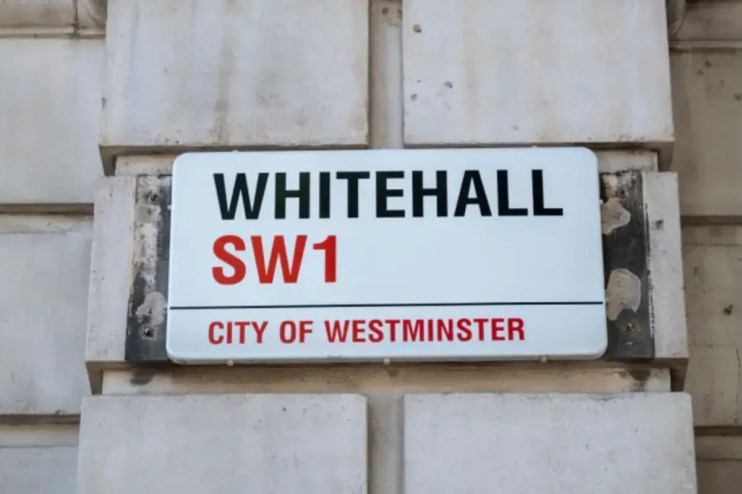
Whitehall SW1 street sign in the City of Westminster, London, mounted on a white stone wall with decorative trim.

But what can ministers do? Rachel Reeves can hardly turn on the taps on pay; it’s not 2024 anymore, and the Chancellor is gearing up to ask departments to make a fresh tranche of cuts if, as seems increasingly likely, economic circumstances threaten to push the government outside its fiscal rules.

Nor should she neglect that this problem is the result of a successful attempt to do an end-run around a government objective. Ministers need to be able to control the cost of the civil service if that is their will – and voters will have little reason to think a government that can’t has any chance of getting a grip on the economy.

Ministers need to be able to control the cost of the civil service if that is their will – and voters will have little reason to think a government that can’t has any chance of getting a grip on the economy

(It is not a new tactic, either. Even in 2014, after a successful four-year effort to shrink the civil service, the National Audit Office noted that “departments’ workforces have become more senior in grade, which can reflect new ways of working but increases the average cost per head”.)

Instead, the government should use the problem of civil service pay as a carrot to get senior mandarins to cooperate with the other big cost-cutting avenue: reducing its bloated headcount back to where it stood even just a few years ago.

Were ministers to mandate redundancies up to a certain share of the workforce over this parliament (and resist the temptation to claw back 100 per cent of the cost savings via budget reductions) senior civil servants would be able to use the money saved from clearing out the dead wood to boost the pay of their best staff.

It might also go some way to remedying the ‘grade inflation’ too, for there are no better-value targets for redundancy than the over-promoted. But most importantly, it would be operating inside the civil service’s current budget, and spare Reeves the need to further test her colleagues’ waning patience with even more cuts to their own.

Henry Hill is deputy editor of Conservativehome

Read more

UK debt ‘hits £3 trillion’ milestone

Houses of Parliament in Westminster showcasing historic architecture under a clear sky, central to UK government and politics

Share this article

  • Facebook
  • X
  • LinkedIn
  • WhatsApp
  • Email

Similarly tagged content:

Sections

  • Opinion

Categories

  • Opinion

People & Organisations

  • civil service
  • UK economy
  • UK Government
  • Whitehall

Related Topics

  • UK Government

Trending Articles

  • As it happened: FTSE 100 drops as oil prices rise after Trump makes Hormuz threat

  • US bond market jitters spark UK economy recession warning

  • Aldi boss wades into supermarket ‘price-gouging’ row

  • Monzo chair makes early exit after boardroom rift

  • New Premier League rules could see £11bn invested into new stadiums

More from Morning Wire

  • Burnham is wrong. Devolution will only grow Whitehall

    Opinion
    Whitehall SW1 street sign in the City of Westminster, London, mounted on a white stone wall with decorative trim.
  • UK debt ‘hits £3 trillion’ milestone

    Economics
    Houses of Parliament in Westminster showcasing historic architecture under a clear sky, central to UK government and politics
  • Healey challenges Cabinet to find cuts 

    Politics
    John Healey, an MP, speaks at a formal business meeting with other politicians and executives around a green table.
  • A £3bn reckoning that will reshape buy now, pay later

    Regulation
    Klarna IPO trading buzz with stock charts and investors analyzing market trends in a professional setting
  • Passengers to foot bill for Heathrow third runway bidding process

    Aviation
    Heathrow airport terminal with Gate closed flight information display and modern ceiling design, highlighting infrastructure.
  • A pragmatic plan for Thames Water

    Opinion
    Thames Water infrastructure with pipes and maintenance workers, highlighting water management efforts in London
  • Ask the expert: Will paying for my daughter’s wedding reduce my IHT bill?

    Personal Finance
    Marianna Hunt discussing financial strategies at a business conference, wearing a professional suit, engaging with the aud...
  • Starmer’s final act will expose firms to more bogus equality claims

    Opinion
    Business conference attendees networking at a corporate event with banners and presentation screens in the background
MorningWire

Independent European business, markets and political news for decision-makers.

Morning Briefing

Europe

  • Germany
  • France
  • EU Institutions
  • Europe

Business

  • Markets
  • Business
  • Economy
  • Regulation
  • Competition
  • Public Affairs

Editorial

  • Opinion
  • Editorial Policy
  • Corrections
  • Contact

Company

  • About Morning Wire
  • Privacy Policy
  • Terms of Use
  • Cookie Policy
© 2026 Morning Wire Ltd · Published by Morning Wire Media, Bahnhofstrasse 65, 8001 Zürich, Switzerland
Privacy · Terms · Cookies · Facebook