If he can’t cut taxes, the Chancellor must give Brits a stake in the economy

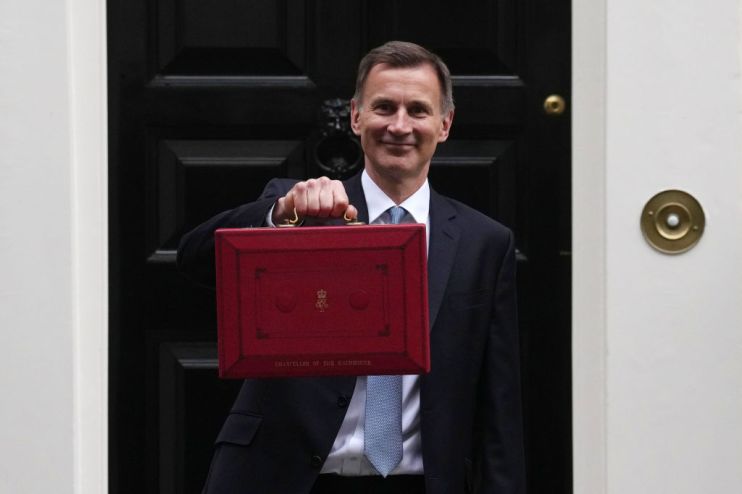
The Budget is the government’s last chance to set out a vision for the economy before the next election – it should be one that supports hard work, investing and helps people be less dependent on the state, argues James Vitali
A Budget speech is an exercise in storytelling: about where the economy is coming from, what it looks like at a particular moment in time, and where it ought to go in the future.
Of course, it needs to do the basics right; to offer a credible plan for funding public expenditure. But to have an impact, it must do more than that. Politically, it needs to create dividing lines – to present an economic vision that is appreciably different from that of the opposition. And the very best are thematic: they fit specific, and sometimes quite technical, fiscal policies into a broader vision for society.
What, then, might the theme of today’s Spring Budget be?
It is becoming increasingly clear that this will not be a tax-slashing budget. The Chancellor’s scope for tax cuts next week will be limited, given the increased cost of borrowing and the lost revenue from both the national insurance cut and the capital allowance changes introduced in the Autumn. The overall burden of taxation is still forecast to reach a postwar record in 2027-28.
Might it be a tax-reforming budget? Possibly. But some of the tax reforms being championed by commentators and policy wonks alike – scrapping stamp duty or unfreezing tax thresholds – are themselves expensive.
There remains another powerful theme that the Chancellor can push, however – and that is making capitalism popular again.
Younger people are becoming increasingly disaffected with the economic status quo. This is true in the literal sense. As Policy Exchange set out in a new report last week, 2.8m people are out of work because of long-term mental health issues. But it is also the case that the legitimacy of capitalism itself is eroding, as it is increasingly seen as the cause of our socio-economic problems, rather than the best framework for solving them.
In the long run, achieving higher rates of growth will only be possible if we address this cynicism. That requires us to enable more people to participate meaningfully in the economy again.
What would a popular capitalism agenda look like in practice? It would have three prongs. Firstly, it would involve a concerted effort to make sure that it pays to work hard. Secondly, it would promote a tax system that supports people to thrift and save. And thirdly, it would incentivise people to translate those savings into both the high-quality investment required to boost economic growth, and a genuine stake in the economy.
The Chancellor has already acted to support this agenda. The cut to national insurance in November directly supported working people, and the Office for Budget Responsibility predicts that the measure will also see 28,000 more people in paid employment by 2028-29. His Mansion House reforms announced last year will help deliver better returns for savers, and get pension capital to parts of the economy where it is most needed.
In his speech today, he should double down on all three of these areas. On making work pay, he should deliver an additional boost for workers, and the most direct way he can do this is through a national insurance cut. He could also address some of the egregious cliff edges in the tax system, like the Higher Income Child Benefit Charge, which means a couple with three children where one parent earns between £50,000 and £60,000 face a marginal tax rate of 71 per cent.
As Policy Exchange has argued, the Chancellor should also announce tax breaks for companies offering physio sessions and mental health counselling to get more people back into work, and break the vicious cycle of poor health and state dependency.
To support savers, he should introduce auto-enrolment for the Help to Save programme, which supports those at the poorest to put cash aside each month. Funding for this cheap scheme should also be doubled. Auto-enrolment has been transformative in the pensions market. It could also help low-income households become less financially dependent on the state.
And finally, the Chancellor should offer a package of reforms to unlock retail investment in UK capital markets. A public awareness campaign, regulatory reforms to make financial advice more accessible, an increase in ISA allowances and a trim to stamp duty on shares could all increase the incentives for wider share ownership. So too could a corporate tax deduction for companies offering employee share schemes.
One final word. A home of one’s own will undoubtedly continue to be a person’s most important life investment. But the Chancellor should be extremely cautious about tempting calls to support higher loan-to-value mortgages. If he is to intervene in the housing market, it should be to increase the £450,000 Help to Buy property value limit – which has not risen in line with inflation or property values – or better still, to deliver supply side reforms.
Hunt’s room for manoeuvre is limited. But the Budget represents one of the last opportunities before the General Election to communicate a vision of the country the Conservatives would seek to build if given another term. It should be one that supports hard work, high investment, and gives the workforce a stake in the nation’s prosperity. That’s not just right for the economy – it might even remind voters of the basic differences between the Conservatives and the Labour Party as they prepare to go to the ballot box.
James Vitali is head of political economy at Policy Exchange