Skip to content
Tuesday 8 September 2026London --:--Frankfurt --:--Zurich --:--
NewslettersSearchEN · DE · FR
MorningWire

European business, markets and politics

FTSE 100
10,822.13
-0.08%
DAX
26,006.53
-0.15%
CAC 40
8,306.15
0.00%
STOXX 50
6,403.99
+0.17%
  • Europe
  • Markets
  • Business
  • Economy
  • Regulation
  • Politics
  • Opinion
More
GermanyFranceEU InstitutionsCompetitionPublic AffairsBankingTechnologyEnergy
  • Germany
  • France
  • Europe
  • Markets
  • Business
  • Economy
  • Regulation
  • Politics
  • Opinion
  • DE
Wednesday 05 July 2023 5:15 am  |  Updated:  Tuesday 04 July 2023 5:20 pm

If politicians keep ignoring economists, our strategies will never be cost-effective

By: Paul Ormerod

Add as a preferred source on Google
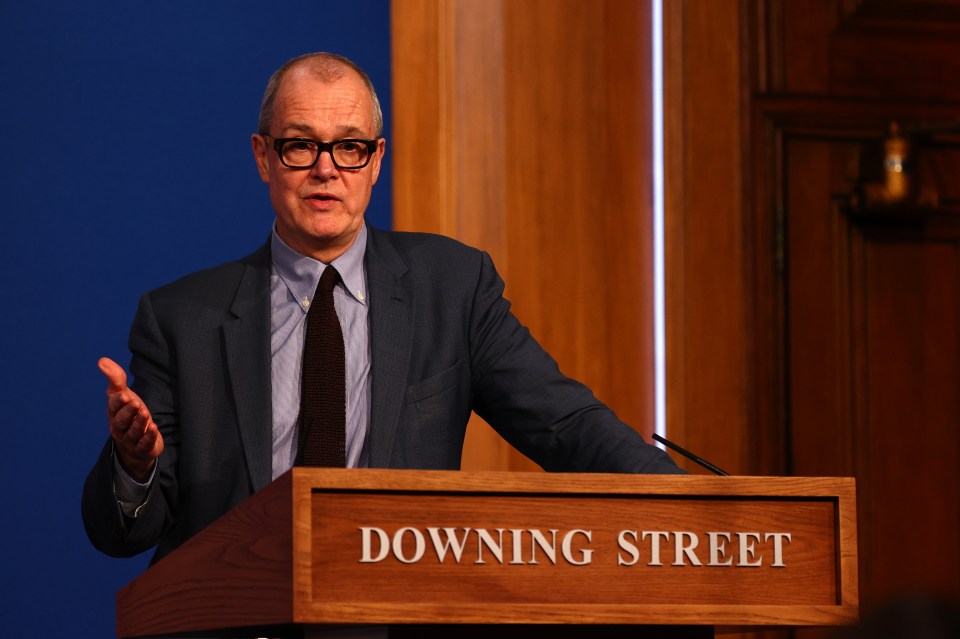
Sir Patrick Vallance has recognised the importance of economists in policy-making advisory groups. (Photo by Adrian Dennis-WPA Pool/Getty Images)

Politicians need to learn from some of the mistakes made during the pandemic and start to include economists in the policy-making process, writes Paul Ormerod

Economists have been getting bad press because of the antics of the Bank of England and its Monetary Policy Committee. We are suffering from what we, as economists, describe as a “negative externality”. It might be convenient for you to drive your car, for example, but the emissions which this creates have a negative impact on others. In the same way, the errors of the Committee are giving rise to a bad impression of economists as a whole.

There has recently been one notable and important exception to this. In his evidence to the Covid-19 Inquiry, the government’s former Chief Scientific Adviser Sir Patrick Vallance seems to have undergone a dramatic conversion.

He called for a strong representation of economists in any group which is set up to advise the government of the day on how to deal with future pandemics. Vallance argued that economists could help assess the “difficult trade-offs that occur” during a pandemic emergency. In other words, economists should assess the costs and benefits of  following any particular policy.

During the pandemic, SAGE, the Scientific Advisory Group for Emergencies, was of course dominated by epidemiological models. The errors in their forecasts made the Bank of England look like a paradigm of scientific accuracy.

Economists were far from silent during the pandemic. Several assessments were made during the summer of 2020 of the costs and benefits of lockdown by distinguished authors.

In a paper published in the Oxford Review of Economic Policy in August 2020, for example, Bob Rowthorn, a former head of the department of economics at Cambridge, argued that lockdowns lasting 10 weeks could only be justified if the value of each individual life of those who died of Covid-19 was more than £10m.

Read more

Top economists shun Burnham over wealth taxes

Andy Burnham speaking at a press conference, expressing confidence despite challenges, highlighting leadership and resilie...

Of course, each single death was a tragedy both for the person concerned and for their close friends and relatives. But given that many of the victims of Covid-19 were aged 85 or more, normal NHS criteria for resourcing would have applied but weren’t.

David Miles, now of the Office for Budget Responsibility and based at Imperial, published an assessment at the end of June 2020. He argued that it was essential to normalise how we viewed Covid-19. Its costs and risks are comparable to other health problems, such as cancer, heart problems and diabetes, where governments have made resource decisions for decades.

The lockdown is a public health policy and Miles and his medical collaborators valued its impact using the standard tools developed by the National Institute for Health and Care Excellence to guide health care decisions in the UK public health system. In the authors’ own words, “we find that having extended the lockdown for as long as three months consistently generates costs that are greater – and often dramatically greater – than likely benefits”.

Economics can be of great value in the policy making process as these examples show. It was the choice of the government of the day to follow another route.

Patrick Vallance’s change of mind on the role of economists is to be applauded unreservedly. It takes courage to do this in the context of public policy.

But open mindedness and a willingness to carry out a fundamental reappraisal of previous policies are essential if we want to get better, as a country, in the way we value the costs and benefits of our strategies.

Read more

Lord O’Neill declines job in Burnham government

Jim ONeill, economist and former Goldman Sachs chairman, sitting on a yellow sofa in front of large windows.

Share this article

  • Facebook
  • X
  • LinkedIn
  • WhatsApp
  • Email

Similarly tagged content:

Sections

  • Opinion

Categories

  • Opinion

Trending Articles

  • Iceland boss Richard Walker vows to set up shop on Falkland Islands

  • Britain ‘taxing itself to death,’ Burnham warned

  • Hedge fund billionaire Chris Rokos joins UK wealth exodus 

  • £74m for branded condoms? UK must stop spaffing cash on foreign aid

  • Don’t underestimate the free trade agreement Britain just joined

More from Morning Wire

  • Top economists shun Burnham over wealth taxes

    Politics
    Andy Burnham speaking at a press conference, expressing confidence despite challenges, highlighting leadership and resilie...
  • Lord O’Neill declines job in Burnham government

    Economics
    Jim ONeill, economist and former Goldman Sachs chairman, sitting on a yellow sofa in front of large windows.
  • Government debt repayment ‘could rise to half’ of total taxes

    Economics
    OBR chiefs told the Treasury Select Committee that a higher tax burden could stifle growth.
  • Healey facing £6bn hit as UK borrowing costs reach highest point since financial crisis 

    Markets
    A smiling man in a dark suit and red tie looking slightly upwards, against a plain background.
  • Inflation expectations softer than predicted ahead of interest rate decision

    Economics
    The Bank of England is expected to hold interest rates at four per cent due to stubbornly high inflation.
  • UK economy to ‘reverse gains’ as construction drags growth

    Economics
    Retail sales slowed in September
  • Where are Andy Burnham’s economic advisers?

    Politics
    Andy Burnham and John Healey at Number 10 North, both wearing suits and ties, with a microphone in the foreground.
  • Budget 2026: Which taxes will Burnham and Healey hike?

    Tax
    Andy Burnham, John Healey, and Louise Haigh by a doorway, discussing tax policy for a news article.
MorningWire

Independent European business, markets and political news for decision-makers.

Morning Briefing

Europe

  • Germany
  • France
  • EU Institutions
  • Europe

Business

  • Markets
  • Business
  • Economy
  • Regulation
  • Competition
  • Public Affairs

Editorial

  • Opinion
  • Editorial Policy
  • Corrections
  • Contact

Company

  • About Morning Wire
  • Privacy Policy
  • Terms of Use
  • Cookie Policy
© 2026 Morning Wire Ltd · Published by Morning Wire Media, Bahnhofstrasse 65, 8001 Zürich, Switzerland
Privacy · Terms · Cookies · Facebook