In defence of hereditary peers

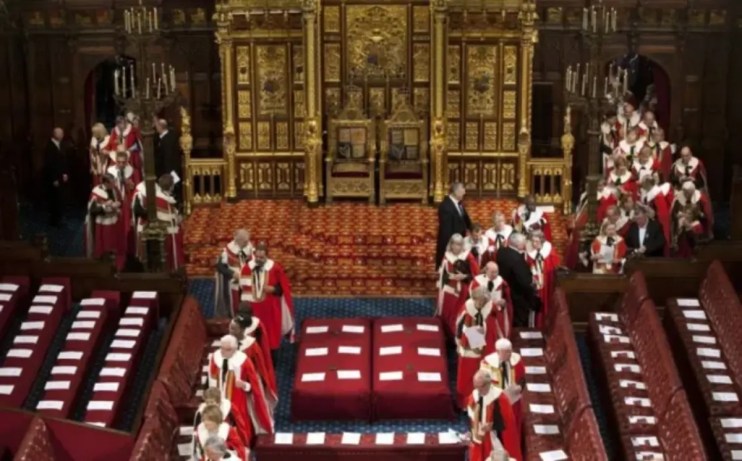
Like the Bene Gesserit in the Dune franchise, hereditary peers measure their plans in centuries, leading to a class of legislators invested in social and political continuity, in the preservation of a nation and its identity, argues Andrew Lomas
De Tocqueville wrote of democracy that “it makes each man forget his forefathers… conceals him from his descendants and separates him from his contemporaries.” In a slightly more colourful fashion, J.D. Vance – Trump’s pick for vice president – recently lamented the fact that the US was “effectively run… by a bunch of childless cat ladies” with the result that the country had been handed over to “people who don’t really have a direct stake in it.” But what does any of this have to do with hereditary peers – a species that Keir Starmer’s first King’s Speech seeks to make extinct?
The essential argument against hereditary peers being able to sit and vote in Parliament seems to be that they owe their seats in the legislature solely to some fluke of history – a genetic lottery as to who their ancestors were. As a result – per the Labour Party manifesto – their position is said to be “indefensible”. But is this true? What if the inter-generational nature of the hereditary peerage, rather than being an aberration, is in fact the best argument in favour of hereditary peers having a continuing role in Parliament?
Hereditary peers provide the constitution with a vital and living link to our history and customs (which, believe it or not, actually pre-date the D-Day landings, the foundation of the NHS, or the arrival of Windrush generation). For a country with a political constitution like the UK, such traditions provide our governing institutions – and the public at large – with a sense of stability and identity. They offer a guide to the norms and rules relating to how politicians should wield and exercise power. Moreover, the past informs how hereditary peers approach the future. They are not solely interested in their own short-term self interest, but are instead looking to protect the long-term interests of their family. Much like the Bene Gesserit in the Dune franchise, aristocratic clans measure their plans in centuries (and not electoral cycles). This in turn leads to a class of legislators who are invested in social and political continuity, in the preservation of a nation and its identity. This is in distinction to a political class who often see their only route to power as being through the promotion of agitation and discord, fomenting dissent and dissatisfaction that is toxic to political discourse. Seen through this lens, hereditary peers are an essential counterbalance to a governing class populated by J.D. Vance’s childless cat ladies, people with no life outside of or before politics
Further, even if one believes that the hereditaries are indefensible, they should nevertheless be defended for now as a block on an upper house that is entirely a creature of the Prime Minister. In this regard, the reason that 92 hereditary peers remain in Parliament at all is because they were seen as a ‘hedge’ against a wholly appointed house (look up the Weatherill Amendment if you don’t believe me). In short, despite an initial attempt to purge all of the hereditaries from public life, the compromise that emerged as part of the House of Lords Act 1999 was that some should remain – as “unfinished business” – in order to keep meaningful House of Lords reform on the table.
And that is the essential question: not whether we should purge the hereditary peers, but what Labour is proposing to replace them with. Do we want an upper house stuffed to the brim with political appointees? A senate of beige bureaucrats and failed MPs? I know where I stand on this: aristocracy, not cat-mom-ocracy.
Andrew Lomas is a barrister at One Essex Court