In defence of landlords, by the Bank of England
Few people in Britain draw as much scorn than landlords.
It’s easy to understand why. Young people shackled to renting see landlords as a barrier to their homeownership dreams.
Particularly in London, renters hate handing over a huge share of their monthly wage to property investors. Doing so stops them from using their cash in more productive ways.
In economics, rent has a high opportunity cost. It is a monthly payment that could be saved up to eventually form a home deposit.
Wasted resources, essentially, for that group.
It isn’t all landlords’ fault. A more than decade-long wage slowdown and ultra-loose monetary policy from the Bank of England pushing up house prices has made it extremely hard for young people to secure their first home.
And now, friction between the wealthy (landlords) and the asset poor (renters) is going to amplify.
Interest rate rises are wreaking havoc in the mortgage market, yes. But it is the rental system that is ripe for a big shake up – and not a pretty one.
Landlords who don’t own their properties outright are either going to have to absorb higher repayments on their buy-to-let mortgages or raise rents to shield profits.
It doesn’t take a genius to work out which move they will choose.
The rental market was not always like this. Amid ultra-low interest rates, being a landlord was a more attractive prospect (if you were happy to be a public pariah).
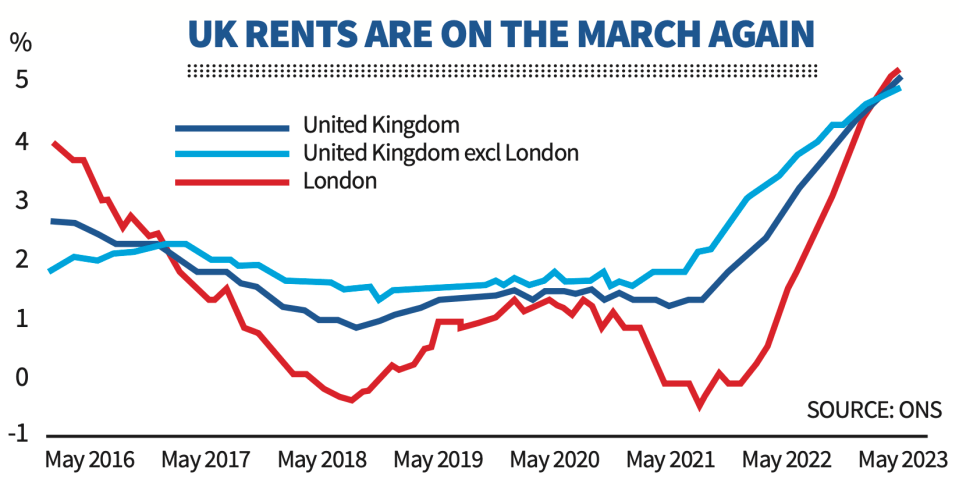
Lower monthly buy-to-let mortgage repayments kept a lid on rent increases. In fact, in London, rent growth was negative in the summer of 2018 and pretty low before that.
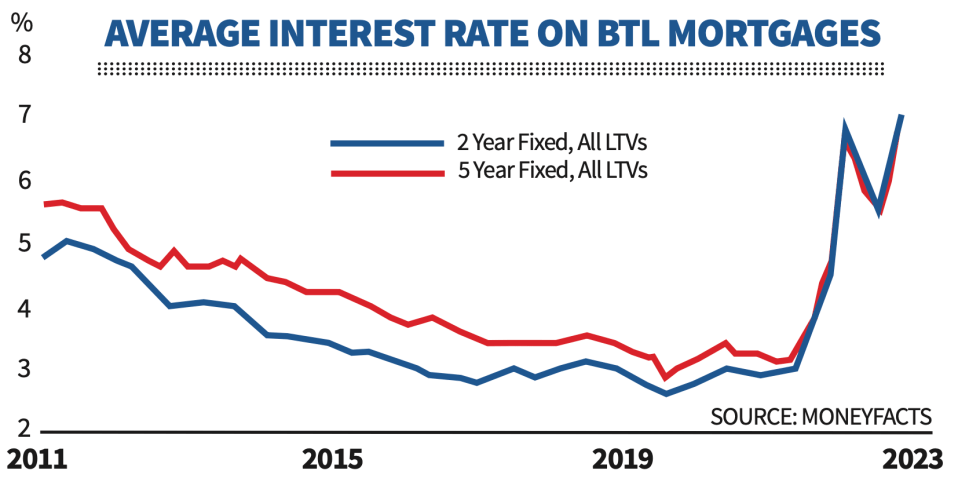
Those conditions compelled people to pour into the buy-to-let market, lifting rental supply. There is a point to be noted here that landlords snapping up properties has made it harder for people to get onto the property ladder by pushing up prices.
We shouldn’t be aiming to create a housing market that extracts profits for landlords at the expense of potential homeowners.
Underlying factors that shape the rental market are shifting due to higher mortgage rates. The Bank estimates that the share of landlords whose rental income covers their interest payments by a maximum of 125 per cent will rise from three per cent to 40 per cent.
“Many landlords are likely to seek to raise rents to offset their higher costs,” the central bank said in its bi-annual financial stability report last week. Rents have already risen five per cent over the year to May, among the fastest increases on record.
Don’t leap to judgements just yet. The Bank is alive to renters’ plight.
“Renter households tend to have lower incomes than homeowners (including relative to housing costs) and they are likely to have low savings,” it said last week.
“Higher costs relative to incomes may lead to an increased reliance on consumer credit, or difficulties paying off existing consumer credit or other types of debt. It may also increase their vulnerability to future adverse shocks,” it added.
That is very alarming.
Most of the recent policy debate has centred on whether the government should step in to help homeowners with the impending mortgage crunch.
Spending (probably tens of) billions of pounds to offset an income hit for what is mostly a relatively wealthy group does not seem like a great way to stretch already tight public finances.
If Chancellor Jeremy Hunt and Prime Minister Rishi Sunak are once again going to support households, then cushioning the blow to renters’ finances seems more appropriate. Any additional spending does bring with it inflation risks.
All this pain though is basically music to the Bank’s ears. Governor Andrew Bailey and co have stressed that the full impact of its prior interest rate increases have yet to spread through the UK.
Its financial stability report laid bare that hardship is definitely on the way, and fast. Monetary policy is a stiff elixir to treat inflation.
Higher rates over the long-term could bring the house price to earnings ratio down to its lowest level in 20 years.
Perhaps renters can take those homeownership ambitions off the mantelpiece.
WHAT I’M READING
Workers can have a pay rise after all, so says the Organisation for Economic Cooperation and Development, the rich country club. The 38-member group came to that conclusion in research published last week that found that compared to before the Covid-19 crisis, profits have risen much faster than wages across the bloc. Britain has experienced the second largest profit rise in the G7 over the period, behind only Germany. “There is room for profits to absorb some further increases in wages to mitigate the loss of purchasing power at least for the low paid without generating significant additional price pressures,” the report read. There were just five countries where labour costs rose faster than profits: Portugal, Lithuania, Finland, France and the US. More on this later this week…