Skip to content
Wednesday 2 September 2026London --:--Frankfurt --:--Zurich --:--
NewslettersSearchEN · DE · FR
MorningWire

European business, markets and politics

FTSE 100
10,759.09
-0.28%
DAX
25,878.54
-0.35%
CAC 40
8,299.82
-0.02%
STOXX 50
6,371.76
+0.04%
  • Europe
  • Markets
  • Business
  • Economy
  • Regulation
  • Politics
  • Opinion
More
GermanyFranceEU InstitutionsCompetitionPublic AffairsBankingTechnologyEnergy
  • Germany
  • France
  • Europe
  • Markets
  • Business
  • Economy
  • Regulation
  • Politics
  • Opinion
  • DE
Tuesday 12 September 2023 6:21 pm  |  Updated:  Wednesday 13 September 2023 9:51 am

Inflation forces firms to ditch ESG initiatives

By: Jennifer Sieg

SME Correspondent

Add as a preferred source on Google
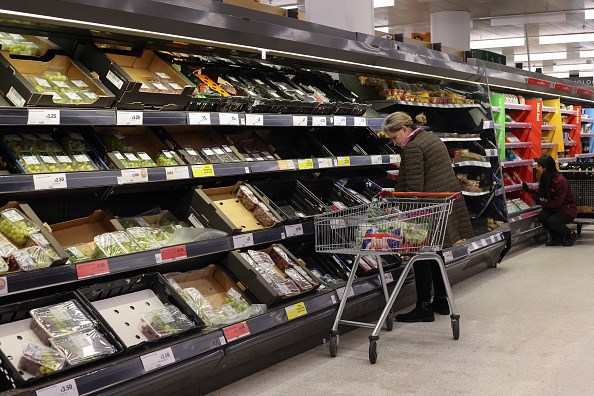
Empty Shelves Amid Supply Chain Disruptions Across UK
Although experts expect the rate of price rises to remain broadly unchanged, investors are likely to gulp at inflation remaining at historically high levels (Photo by Hollie Adams/Getty Images)

Inflation and rising costs are forcing firms to leave behind ESG initiatives in an effort to “keep their heads above water,” per a new survey.

Firms are being forced into supply chain changes due to rising costs as well as disruption.

Some 90 per cent of supply chains have experienced disruption in the past year, an Ivalua-commissioned study conducted by Sapio Research shows.

While many businesses have seen efforts to improve sustainability standards “hampered” (64 per cent), research also found over half now work with “cheaper rather than greener suppliers” and more than a third have shifted operations to be more local to deal with the uncertainty of rising costs.

Alex Saric, smart procurement expert at Ivalua, said “inflation has taken its toll on ESG progress,” and as businesses attempt to manage inflation, “environmental and modern slavery protections have fallen by the wayside.”

The pressures of inflation are only “adding to the mix” when it comes to supply chain changes, James Watkins, head of policy and public impact at London Chamber of Commerce and Industry, said.

“One of the key supply chain costs is energy,” Watkins added. “The cost of energy for businesses since Putin’s invasion of Ukraine is now very high and the government is not helping all businesses who use energy intensively – from restaurants to dry cleaners. This must change.”

“Many organisations are also onshoring supply chain operations to reduce risk from geopolitical disruptions,” Alex Saric, smart procurement expert at Ivalua, said. “But those opting to onshore must keep some diversity in the risk profiles of their supply chains to reduce the impact of local disruption.”

Alex Veitch at the British Chamber of Commerce said “there is no doubt the cost-of-living crisis means many smaller firms have been focussed on keeping their heads above water. So, it is perhaps no surprise that many SMEs lack the ability to properly research and plan for Net Zero.”

Read more

Bunzl: Inflation spike lifts FTSE 100 outsourcing firm’s revenue

Bunzl lorry with dynamic route planning systems on a highway at sunset

Share this article

  • Facebook
  • X
  • LinkedIn
  • WhatsApp
  • Email

Similarly tagged content:

Sections

  • News

Categories

  • Morning Wire Content
  • Business

Trending Articles

  • Vodafone and Deliveroo look to patch up Reform ties after Yusuf prison threats

  • Trio of firms poised to quit London Stock Exchange as exodus gathers pace

  • Jaguar reveals the Type 01’s screen-free interior

  • Easyjet’s over-60s recruitment push is economically necessary

  • FCA ‘worked backwards’ to justify motor finance redress, say lenders

More from Morning Wire

  • Bunzl: Inflation spike lifts FTSE 100 outsourcing firm’s revenue

    Retail
    Bunzl lorry with dynamic route planning systems on a highway at sunset
  • UK economy’s rebound fails to stem two years of mass job losses 

    Economics
    LONDON, UNITED KINGDOM - JANUARY 31: The Shard is seen on the horizon as commuters cross London Bridge during the morning rush hour on January 31, 2023 in London, United Kingdom. The IMF reports that the UK economy will contract by 0.6% in 2023, as opposed to the previous prediction it might grow, and will perform worse than many other advanced economies, including Russia.The cost of living continues to hit households with grocery inflation for the first four weeks of 2023 rising to 16.7% which would add a further £788 per year to family food bills. (Photo by Leon Neal/Getty Images)
  • Tui hit by Middle East travel chaos and rising fuel costs

    Transport & Infrastructure
    TUI airline crew, pilots and flight attendants, smiling on aircraft stairs with the TUI tail logo in the background
  • Shop price inflation hits two-year high as rising energy costs hit consumers

    Economics
    Retail sales slumped in May as tax hikes and economic uncertainty hit shoppers' spending
  • Manufacturers overcome gloomy economy as output surge continues

    Industrials
    Manufacturing sector faces mounting tribunal pressures amid economic uncertainty
  • Supermarkets ‘actively shielding’ shoppers as food inflation falls again

    Retail
    Shopper in a supermarket produce aisle browsing various packaged vegetables and fruits.
  • Brits think supermarkets are profiteering – despite slowing food inflation

    Retail
    Shopper with red backpack and blue basket walking through a supermarket aisle filled with groceries
  • Iran war could ‘halt growth’ across UK economy 

    Economics
    Andy Burnham, Mayor of Greater Manchester, in a dark suit and glasses, listening intently at a wooden table.
MorningWire

Independent European business, markets and political news for decision-makers.

Morning Briefing

Europe

  • Germany
  • France
  • EU Institutions
  • Europe

Business

  • Markets
  • Business
  • Economy
  • Regulation
  • Competition
  • Public Affairs

Editorial

  • Opinion
  • Editorial Policy
  • Corrections
  • Contact

Company

  • About Morning Wire
  • Privacy Policy
  • Terms of Use
  • Cookie Policy
© 2026 Morning Wire Ltd · Published by Morning Wire Media, Bahnhofstrasse 65, 8001 Zürich, Switzerland
Privacy · Terms · Cookies · Facebook