Insulating homes could cut gas imports more than North Sea drilling, says green body

Insulating the UK’s entire housing stock to a basic level of loft and wall insulation could reduce gas demand by 20 per cent, three times more gas than the potential provided by new North Sea drilling, according to new research from the Energy and Climate Intelligence Unit (ECIU).
It has calculated that ramping up insulation in line with energy performance certificate grades of C or higher this decade could save up to 384TWh (terawatt hours) of gas between 2030 and 2035.
This is equivalent to a fifth (20 per cent) of current total annual household gas demand and 11 per cent of overall gas imports.
It is also vastly above Rystad Energy’s forecasts of 118TWh of gas which could be produced by new ‘already approved’ North Sea fields over the same period.
This could save households vast sums of money, with ECIU forecasting that lowering the average household from band D to band C could lower bills paid for gas by £1,944 by the start of 2030.
ECIU expects this to rise to £2,469 by the start of 2030 if gas prices stay high for the rest of the decade..
For homes with a poorer EPC rating of band F, total savings could reach £4,486 in a central scenario and £5,697 if gas prices stay high.
Households are currently suffering record energy bills, despite the Government unveiling historic support packages to ease soaring wholesale costs.
Jess Ralston, senior analyst at ECIU, said: “Earlier this year the Treasury, under the now Prime Minister’s direction, blocked an increase in funding for insulating homes. Making more efficient use and wasting less energy in the past has driven a quarter of the UK’s growth. It also leaves homes less vulnerable to international gas price shocks, something that new North Sea gas fields won’t.”
However, it warns the Government is set to fall short of its target of all homes reaching band C by 2035.
It expects just 150,000 homes will benefit from energy efficiency installations this year.
At that rate, just 1.2m homes in the UK will have had insulation installed by the end of 2030, far below what is needed.
There are also concerns delivery of insulation under the Government’s flagship Energy Company Obligation scheme has stalled after internal government delays, resulting in 18,750 low income households potentially missing out on the measures that could save them £300 each.
The potential of North Sea oil and gas to meet the UK’s energy needs is disputed.
In contrast to Rystad Energy, industry body Offshore Energies UK recently published its economic report on the sector, which has calculated around £26bn of capital investment opportunities at various stages by 2030.
If all are progressed, this could deliver more than 4bn barrels of oil and gas (37 per cent gas and 63 per cent oil) by the end of the decade.
Government struggles to ramp up insulation
Earlier this year, EDF published a study in partnership with Swift revealing the average insulation age of UK homes was 46 years.
The energy giant surveyed 2,000 UK homeowners, revealing more than than half (58 per cent) the country’s households only meet the insulation standards of 1976 or older.
Less than a tenth of homes scrutinised by the firm have an insulation age of 20 years or younger.
The Government has invested £6.6bn since 2019 to improve energy efficiency across the country.
Last year, it unveiled the Heat and Buildings Strategy, setting out a decarbonisation plan for households alongside commercial, industrial and public sector buildings.
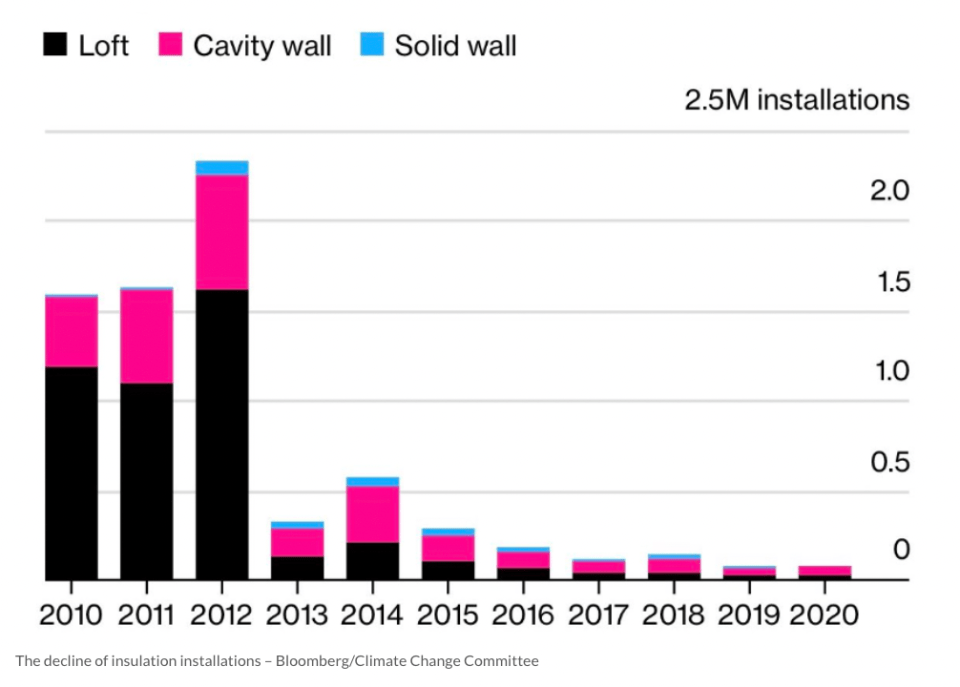
However, installation rates have dropped sharply in the past decade from over two million homes per year to just tens of thousands after former Prime Minister David Cameron slashed previous efficiency schemes – according to the Climate Change Committee.
It is unclear whether further efficiency schemes will be announced at the fiscal event later this week, with the Government scrambling to fill a £50bn fiscal black hole.
Ralston said: “With the autumn statement looming, there are concerns that other efficiency funds could be raided leaving hospitals and schools facing higher electricity bills and the UK as a whole no better off. It remains to be seen if the Government will kick the can down the road, rob Peter to pay Paul or genuinely increase investment.”