Skip to content
Tuesday 18 August 2026London --:--Frankfurt --:--Zurich --:--
NewslettersSearchEN · DE · FR
MorningWire

European business, markets and politics

FTSE 100
10,720.30
-0.28%
DAX
26,338.61
0.00%
CAC 40
8,579.60
0.00%
STOXX 50
6,530.45
0.00%
  • Europe
  • Markets
  • Business
  • Economy
  • Regulation
  • Politics
  • Opinion
More
GermanyFranceEU InstitutionsCompetitionPublic AffairsBankingTechnologyEnergy
  • Germany
  • France
  • Europe
  • Markets
  • Business
  • Economy
  • Regulation
  • Politics
  • Opinion
  • DE
Thursday 11 May 2023 12:25 pm  |  Updated:  Thursday 11 May 2023 12:26 pm

Interest rate boon for UK banks coming to an end despite BoE’s 25 basis point hike

By: Chris Dorrell

Add as a preferred source on Google
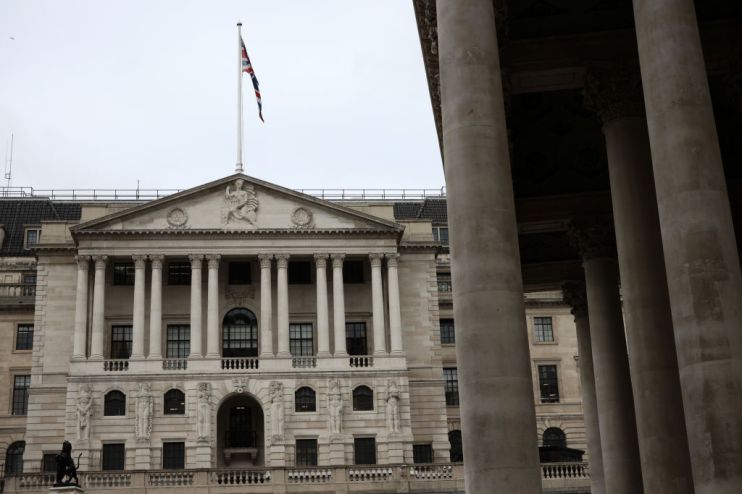
Bank Of England Monetary Policy Report Press Conference
Increasing competition and regulatory pressure means banks will likely have to pass on more of the rate hike - and any subsequent rate hikes - to consumers.

Banks have been revelling in the BoE’s sharp rate hikes, but today’s 25 basis point hike – which brings interest rates to 4.5 per cent – is unlikely to improve banks’ bottom line significantly, analysts said.

Increasing competition and regulatory pressure means banks will likely have to pass on more of the rate hike – and any subsequent rate hikes – to consumers. 

This means that while 2022 and 2023 have been bumper years for UK banks thanks to rising rates, many analysts argue that the interest rate boon is slowly coming to an end. 

S&P Global’s Richard Barnes told City A.M. that today’s “rate hike is a positive for bank earnings but certainly much less of a positive than the rate hikes at the beginning of this tightening phase.”

Barnes explained that in the earliest phases of the hiking cycle, the pass through to consumers was “extremely low”. 

Over time, the pass through has increased due to competition between banks and regulatory pressures. Just yesterday a series of banks came under fire from MPs for offering “measly” rates on their savings accounts. 

On top of this, the higher rates on offer for other investments have seen customers move more money into higher-yielding products like National Savings & Insurance accounts. 

“That’s what you’re seeing now and with the rate hike again today, the pass through is going to be higher than it was previously as well,” Barnes said. 

While rising rates have been beneficial for banks, there are also risks as borrowers face ever higher costs potentially tipping more into default.

Investec’s Roger Lee told Morning Wire “the market is very concerned that higher interest rates are going to lead to increasing credit default, that is a logical progression.”

Read more

‘Door is open’ to interest rate hike as inflation fears return

Bank of England headquarters in 2025, showcasing modern architecture and iconic London skyline in the background.

In order to cope with possible higher rates of default, banks have boosted their provisions for bad loans. This has been a drag on profitability. 

However, so far banks have seen very low levels of default. Lee argued this was because “the primary driver of credit default is unemployment.”

“You’ll get much higher defaults if you get higher unemployment, but we’re not really seeing a significant rise in unemployment at the moment,” Lee said. 

Barnes said although he expects some “normalisation…we’re not expecting anything more severe”.

The collapse of Silicon Valley Bank (SVB) also demonstrated another risk from rising rates: duration risk. 

When rates rise, the value of a bank’s bond portfolio decreases. This meant SVB, like many smaller banks in the US, was sitting on huge ‘unrealised losses’ on fixed bonds. These losses were crystallised when depositors pulled their cash and SVB had to sell its bonds to meet withdrawal requests. 

This is much less of a concern for UK banks however, with Barnes arguing “unrealised losses on government bonds is not really a material issue for UK banks”.  

In the UK, banks have to convert bonds from having a fixed rate to a variable rate, meaning their value fluctuates as rates change. This prevents them from racking up unrealised losses. 

“UK banks are very tightly regulated to ensure that there isn’t this duration risk that we’ve seen within the smaller US banks,” Lee argued. 

Read more

Hold interest rates but ‘sound hawkish’, Morning Wire Shadow MPC tells Bank of England

Andrew Bailey, Governor of the Bank of England, with the Bank of England building and Union Jack flag in the background

Share this article

  • Facebook
  • X
  • LinkedIn
  • WhatsApp
  • Email

Similarly tagged content:

Sections

  • News

Categories

  • Banking

Related Topics

  • Bank of England

Trending Articles

  • As it happened: FTSE 100 drops as oil prices rise after Trump makes Hormuz threat

  • US bond market jitters spark UK economy recession warning

  • Aldi boss wades into supermarket ‘price-gouging’ row

  • Monzo chair makes early exit after boardroom rift

  • New Premier League rules could see £11bn invested into new stadiums

More from Morning Wire

  • ‘Door is open’ to interest rate hike as inflation fears return

    Economics
    Bank of England headquarters in 2025, showcasing modern architecture and iconic London skyline in the background.
  • Hold interest rates but ‘sound hawkish’, Morning Wire Shadow MPC tells Bank of England

    Economics
    Andrew Bailey, Governor of the Bank of England, with the Bank of England building and Union Jack flag in the background
  • Bank of England may set the stage for interest rate hikes this year

    Economics
    Bank of England recession warning
  • Bank of England holds interest rates but warns of rises to come

    Economics
    Bank of England headquarters in 2025, showcasing modern architecture and iconic London skyline in the background.
  • UK borrowing costs soar as Iran ceasefire collapses

    Markets
    Rising borrowing costs depicted amid escalating tensions following the Iran war, illustrating economic impact on global ma...
  • Bank of England to hold interest rates as oil price surge threatens UK economy

    Economics
    Bank of England building on Threadneedle Street, London, showcasing its historic architecture and financial significance
  • Healey faces £24bn spending squeeze as inflation puts tax rises in play

    Economics
    Bank of England headquarters in 2025, showcasing modern architecture and iconic London skyline in the background.
  • Soaring energy bills set to fuel inflation spike

    Economics
    Smartphone displaying an energy bill notification with British coins and a banknote nearby.
MorningWire

Independent European business, markets and political news for decision-makers.

Morning Briefing

Europe

  • Germany
  • France
  • EU Institutions
  • Europe

Business

  • Markets
  • Business
  • Economy
  • Regulation
  • Competition
  • Public Affairs

Editorial

  • Opinion
  • Editorial Policy
  • Corrections
  • Contact

Company

  • About Morning Wire
  • Privacy Policy
  • Terms of Use
  • Cookie Policy
© 2026 Morning Wire Ltd · Published by Morning Wire Media, Bahnhofstrasse 65, 8001 Zürich, Switzerland
Privacy · Terms · Cookies · Facebook