We have weakened the very systems of international law we need to restore peace in Ukraine

In the global and regional corridors of power, Russia’s place – as the successor to the Soviet Union – has made international diplomacy appear impotent. There has been continued human rights abuses abroad and on its own soil, and under Vladimir Putin’s leadership, there has been an almost total disregard for national sovereignty over the past decade.
Now, the minds of world leaders have been forced to focus on the importance of public international law to keep each other in check as we watch the very tangible threat to global peace unfold. The images of breaches of humanitarian norms, human rights and international criminal law have flooded news feeds around the world as we are forced to grapple with what happens when international law fails.
Last week, the Chief Prosecutor of the International Criminal Court (ICC), Karim Khan QC, launched an investigation into the events unfolding in Ukraine. Neither Russia nor Ukraine are currently signatories to the Rome Statute 1998 which establishes the jurisdiction of the ICC. But declarations made by Ukraine in 2014 and 2015, at the time of the first Russian incursions into their territory, recognised the jurisdiction of the Court. German prosecutors have also started to gather evidence of possible war crimes in Ukraine. In other words, even though Russia is not a party to the Rome Statute, the ICC could eventually prosecute Russians, including President Putin, for international crimes committed in Ukraine.
The legal avenues for challenging the Russian invasion are not limited to the ICC. This week the International Court of Justice (ICJ) in The Hague heard arguments from Ukraine for interim measures, under the Genocide Convention 1948, challenging the assertions made by Putin and Lavrov that the military invasion of Ukraine is justified to protect people from genocide.
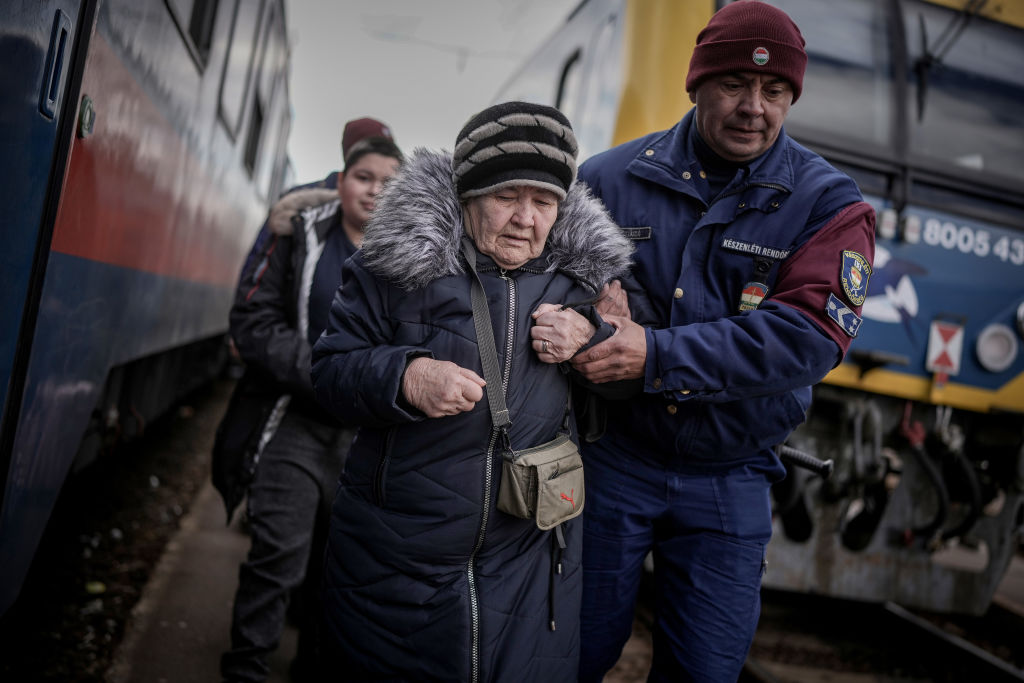
And last week, the European Court of Human Rights (ECHR) granted interim measures against Russia ordering it to refrain from attacks on civilians. It demanded Russia ensure the safety of medical personnel within the territory under attack or siege by the Russian military. Instead, there have been reports that the only viable routes out of Ukraine lead directly to Russia, and of sporadic shelling of civilians fleeing violence. No doubt, in the coming days and months, legal routes in regional, international and domestic courts will add to the pressure on Russia to restore peace.
Britain played a key role in establishing the international rules-based order in the aftermath of the Second World War. Founded on respect for human rights, this has been the framework that has given many of us unprecedented peace and stability for three quarters of a century despite seismic geopolitical shifts. But in recent years, the UK’s approach to human rights and international law, at home and abroad, has served to weaken it.
The UK has ignored an ICJ Advisory Opinion on sovereignty of the Chagos Islands and failed to change the law following an ECHR ruling on prisoner voting. Politicians and journalists have repeatedly questioned the legitimacy of international human rights law in recent years. These may seem like trivial people-pleasing vote-winners in times of peace when it is the home audience that matters, but as we stare at the very real threat of global conflict, the risk of chipping away at the integrity of international legal frameworks comes into terrifyingly sharp focus.
Russia’s invasion of Ukraine is a threat to the integrity of the international rules-based order. Russia’s position as a permanent member of the UN Security Council, with powers of veto, has undermined the ability of the Security Council to act to defend the UN Charter.
But, even if, thus far, the systems available to us have not been able to face down or halt Russian aggression, the continued importance we place on international law is important. At an emergency session of the General Assembly last week, an overwhelming majority of States voted for a resolution demanding an immediate end to the invasion of Ukraine. And the flood of legal action in domestic, international and regional courts will, potentially, ensure future accountability for crimes committed in Ukraine. The world has not given up on international law as a guarantor of peace.
International law can provide the bedrock for global peace and security. But it can only do that if we give it the respect it deserves, at home and abroad, every day, not just when we really need it.