Is Brexit really to blame for the Chancellor’s growth headache?
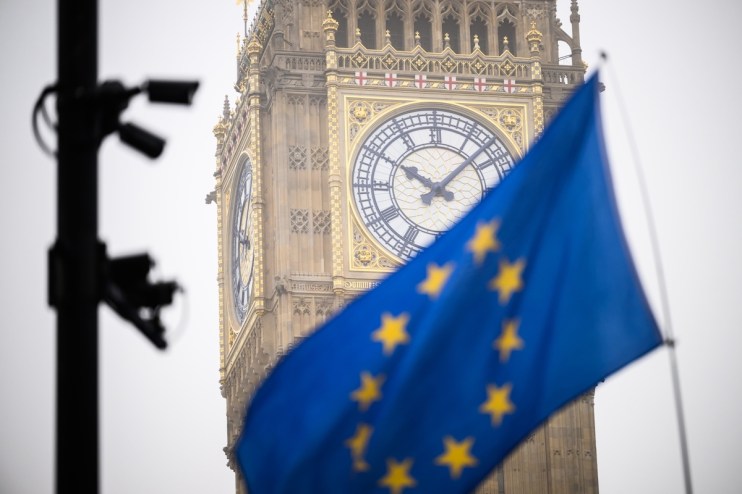
As the government prepares the public psyche for substantial tax hikes at next month’s Budget, the Chancellor has taken a Brexit-shaped risk.
Keir Starmer’s government has largely opted for caution over talking about relations with the European Union. The Prime Minister has insisted that re-opening the Brexit debate would bring only “turmoil” but he also struck a deal earlier this year without inciting much of a revolt.
Rachel Reeves has avoided making full-throated attacks on Brexit. But her claims that the Office for Budget Responsibility (OBR) are set to downgrade productivity forecasts – wiping at least £12bn off her headroom, per ING estimates – could yet backfire.
“Things like austerity, the cuts to capital spending and Brexit have had a bigger impact on our economy than was even projected back then,” she said.
Despite reports that the Treasury were ready to bring Brexit up again, Reeves seemingly took her cue from the Bank of England Governor Andrew Bailey. He said on the weekend that he “has to” answer questions about the “negative” impact of Brexit on growth, adding that the UK economy was still re-adjusting.
It’s tempting and understandable for ministers to put Budget difficulties down to some untimely decision beyond their control, namely the OBR’s decision to review its supply side forecasting. Ministers are also prone to point the finger at some inherited problem, in this case how Brexit is influencing the OBR’s review.
But, in an emphatic statement before parliament at Prime Minister’s Questions, Liberal Democrat leader, and staunch Remainer, Ed Davey accused the government of using Brexit as a “political ruse” to attack Nigel Farage and make excuses ahead of the Budget.
“[Given] we have the highest inflation in the G7, it mustn’t be a smokescreen to raise taxes on ordinary people,” Davey said.
Bailey too was called out for complaining about Brexit. At a House of Lords committee hearing on Tuesday, Thatcher-era business secretary Peter Lilley grilled the Bank Governor as he said the trade effects had been “very small”, adding that the central bank had been “absolutely wrong” when forecasting the effects of Brexit.
Multiple economists and analysts have also told Morning Wire that while Brexit has done some measurable damage to productivity, it is often overstated and must be seen alongside other structural issues.
Has Brexit harmed UK productivity?
Several analysts and think tanks believe that Brexit has materially damaged the UK’s productivity, while the scale of this impact is unclear.
The OBR previously estimated the country’s long-term productivity to be 4 per cent lower than if it had stayed in the EU.
Independent economist Julian Jessop has taken issue with the OBR’s figure. He has criticised studies which the OBR have based its figures on, given they were published before the trade agreement in 2020 was confirmed and most were more optimistic than the fiscal watchdog’s own conclusions.
He has also said the OBR has failed to take into account recovering business confidence following an initial Brexit shock, the offering of greater control over regulations in areas such as AI and financial services, and potential lower trade barriers with countries outside of the EU.
Others have also taken aim at Reeves for blaming Brexit when the evidence is quite unclear, given the UK’s departure preceded the pandemic and a global energy shock following the full-scale invasion of Ukraine.
‘Clearly not just a UK thing’
Jonathan Portes, a professor of economics and public policy at King’s College London, said that although Brexit had damaged the UK’s productivity, this picture is muddled by productivity slow-downs in similar countries.
He told Morning Wire: “We also observe a significant productivity slowdown in other European countries. There are clearly broader common factors to do with the translation of innovation into growth, and it’s clearly not just a UK thing.”
According to some economists, the impacts of Brexit on trade are more easily measurable. The Centre for Economic Performance said there was an “immediate, sharp drop in both exports and imports with the EU for the average firm”.
Their report estimates a 6.4 per cent drop-off in UK exports and a 3.1 per cent fall in imports, though the OBR claims that both exports and imports will suffer by 15 per cent in the long term.
This drop-off in trade can help to explain the productivity picture, according to David Hennig, a director at the European Centre for International Political Economy.
“Raising barriers to trade will slow economic growth and productivity gains according to all reputable economics, and that is what we have seen,” Henning said.
“Many firms have stopped exporting, [and] we know that exporting firms tend to be more productive.”
Thomas Sampson, an associate professor of economics at LSE, also agrees with Reeves’ assessment on Brexit hitting productivity, telling Morning Wire: “Most research finds that Brexit has reduced UK GDP growth, partly through less business investment, which in turn means lower productivity growth.”
Brexit not the only piece in ‘productivity puzzle’
The Institute for Fiscal Studies (IFS) explains that the so-called “productivity puzzle” is a complicated one. The UK’s productivity stagnated at a similar rate to other developed nations after 2008, but has remained sluggish since 2019 while other countries have seen some recovery.
The think tank says that low productivity is caused by a lack of investment and the Covid-19 pandemic, while economist Simon French points as far back as the 2008 crash.
Energy, housing, and pension policy deserve “equal billing” to Brexit as enemies to productivity, the chief economist at Panmure Liberum said.
Portes believes that Reeves’ assessment allowed for a more complex picture, claiming that the Chancellor’s comments did not frame Brexit as the sole culprit of the country’s economic woes.
“She never claimed it was all Brexit, and indeed that would have been a stupid thing to say, but she didn’t say it. Everybody agrees Brexit has had a negative impact. Everybody agrees that there are other things going on as well,” he said.
Can the economy ‘counterbalance’?
Bailey, speaking in Washington, DC, offered the caveat that the damage done by Brexit to the economy will be met with a “positive, albeit partial, counterbalance”.
Last night, top City regulator Sam Woods said the UK was now able to “admire the view from our position outside the EU and focus more on seizing the opportunities Brexit provides to make our regime a better fit for our market”.
Portes agrees that, whatever the effects of Brexit on the economy, they will ease in time.
“You would think that eventually we would come to a new equilibrium. So in theory that’s right. In practice, it’s hard to figure out when we get there and exactly what that looks like.”
But the government must not wait idly for this “counterbalance” to arrive, Portes said.
“Ultimately it doesn’t really matter, what really matters politically is where the government delivers genuine improvements.”