Skip to content
Tuesday 8 September 2026London --:--Frankfurt --:--Zurich --:--
NewslettersSearchEN · DE · FR
MorningWire

European business, markets and politics

FTSE 100
10,822.13
-0.08%
DAX
26,006.53
0.00%
CAC 40
8,306.15
0.00%
STOXX 50
6,403.99
0.00%
  • Europe
  • Markets
  • Business
  • Economy
  • Regulation
  • Politics
  • Opinion
More
GermanyFranceEU InstitutionsCompetitionPublic AffairsBankingTechnologyEnergy
  • Germany
  • France
  • Europe
  • Markets
  • Business
  • Economy
  • Regulation
  • Politics
  • Opinion
  • DE
Wednesday 07 June 2023 5:15 am  |  Updated:  Tuesday 06 June 2023 4:43 pm

It’s time the Bank of England rethinks monetary policy – and its own methods

By: Paul Ormerod

Add as a preferred source on Google
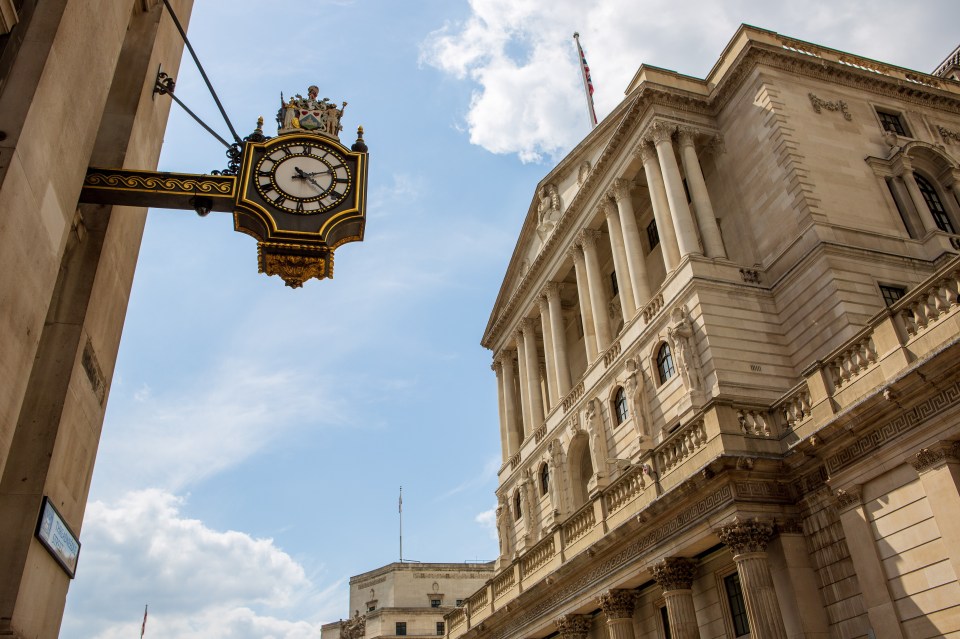
The Bank of England has been criticised in the past months over its forecasting methods. (Photo by Pietro Recchia/SOPA Images/LightRocket via Getty Images)

The Bank of England bases its forecasts on conventional models. But when it comes to monetary policy, there are many approaches it should explore instead – particularly the narrative one, writes Paul Ormerod

The Bank of England’s handling of inflation has been met with increasing levels of criticism.  Despite its suite of academically fashionable mathematical and econometric models, the Bank seems to be acting in a daze, unable to comprehend what is going on.

A paper just published in the American Economic Review advocates an alternative way of understanding monetary policy and its impacts on the economy. The article in question has more standing than most. It is the Presidential address to the American Economic Association at their annual conference held earlier in the year.  

Christina Romer of the University of California at Berkeley gave the address as President, and the paper is written with her husband David.

The paper is unusual for a top economics journal because it mainly consists of words. There are a few charts and statistical relationships, but the essence of the paper is in the title: “Does Monetary Policy Matter? The Narrative Approach after 35 Years”.

The question is very pertinent because the Federal Reserve doesn’t appear to attach much importance to the quantity of money – like both the Bank of England and the European Central Bank.

The 35 years refers to a paper the two economists published in the late 1980s advocating an approach to macroeconomic analysis based on a thoughtful reading of text rather than using abstruse maths.

In the Presidential address, they offer a post-war monetary history of the United States to identify significant contractionary and expansionary changes in monetary policy.

Read more

How patient can the Bank of England be?

Historic Royal Exchange building in London with modern skyscrapers behind, clear blue sky.

The narrative approach is an empirical technique which gathers systematic evidence from contemporaneous qualitative sources such as newspapers, government reports, and policy meeting transcripts, and incorporates it into statistical analysis.

The Romers conclude that monetary policy is indeed important. Monetary shocks have large effects on unemployment, output, and inflation.

Intriguingly, they argue that an analysis of available policy records suggests a contractionary monetary shock likely occurred in the United States in 2022. Based on the empirical estimates of the effect of previous shocks, they expect substantial negative impacts on real GDP and inflation as we move through 2023 and into 2024.

This is exactly what  prominent monetary economists such as Tim Congdon here have been arguing. A sharp monetary contraction has been experienced in the US, the UK and the EU, and a recession is therefore expected.

The narrative approach is one which should be investigated more thoroughly. With UCL colleagues David Tuckett and Rickard Nyman, I published a paper in 2018 entitled “News and narratives in financial systems: exploiting big data for systemic risk assessment”. The piece actually appeared as a Bank of England Working Paper, Nyman having spent some time at the Bank on secondment when Andy Haldane was Chief Economist.

Haldane appreciated that a wide range of approaches should be explored to get a better understanding of how the economy as a whole behaves. In addition to narratives, he encouraged work on, for example, networks and agent based models.

None of these will prove to be a panacea. Indeed, the Romers stress that this applies to their own narrative methodology. But the Bank has hardly been so successful that it can afford to ignore alternatives to their own conventional models which have proved to be so inadequate.

Read more

Economists urge Bank of England to halt bond sales as borrowing costs climb

Bank of England headquarters with financial charts overlay, illustrating private credit stress test analysis

Share this article

  • Facebook
  • X
  • LinkedIn
  • WhatsApp
  • Email

Similarly tagged content:

Sections

  • Opinion

Categories

  • Opinion

Trending Articles

  • How the NHS backlog fuelled a private equity gold rush in UK health market

  • Healey wants to focus on the future but business is haunted by past mistakes

  • UK at risk of £290bn finance industry ‘being governed overseas’

  • Labour takes narrow lead over Reform as donation row wounds Farage

  • The City may not be woke, but is it waking up to wellness?

More from Morning Wire

  • How patient can the Bank of England be?

    AD
    Historic Royal Exchange building in London with modern skyscrapers behind, clear blue sky.
  • Economists urge Bank of England to halt bond sales as borrowing costs climb

    Economics
    Bank of England headquarters with financial charts overlay, illustrating private credit stress test analysis
  • Bank of England’s Pill warns against ‘wait and see’ interest rates approach

    Economics
    Huw Pill, Bank of England Chief Economist, smiling in a suit and tie against a blue NABE banner.
  • Andrew Bailey: Populism a threat to global economy

    Economics
    Andrew Bailey, Bank of England governor, discusses economic policy during a press conference at the central bank headquart...
  • Inflation expectations softer than predicted ahead of interest rate decision

    Economics
    The Bank of England is expected to hold interest rates at four per cent due to stubbornly high inflation.
  • IMF sounds alarm on borrowing costs surge as bond rout deepens

    Economics
    Chancellor John Healey smiling, wearing a navy suit, white shirt, and red tie.
  • Mortgage nightmare as investors price in three interest rate hikes 

    Economics
    Bank of England building on Threadneedle Street, London, showcasing its historic architecture and financial significance
  • Healey facing £6bn hit as UK borrowing costs reach highest point since financial crisis 

    Markets
    A smiling man in a dark suit and red tie looking slightly upwards, against a plain background.
MorningWire

Independent European business, markets and political news for decision-makers.

Morning Briefing

Europe

  • Germany
  • France
  • EU Institutions
  • Europe

Business

  • Markets
  • Business
  • Economy
  • Regulation
  • Competition
  • Public Affairs

Editorial

  • Opinion
  • Editorial Policy
  • Corrections
  • Contact

Company

  • About Morning Wire
  • Privacy Policy
  • Terms of Use
  • Cookie Policy
© 2026 Morning Wire Ltd · Published by Morning Wire Media, Bahnhofstrasse 65, 8001 Zürich, Switzerland
Privacy · Terms · Cookies · Facebook