Joining the Pacific trade bloc will free us from our reliance on the European Union and China

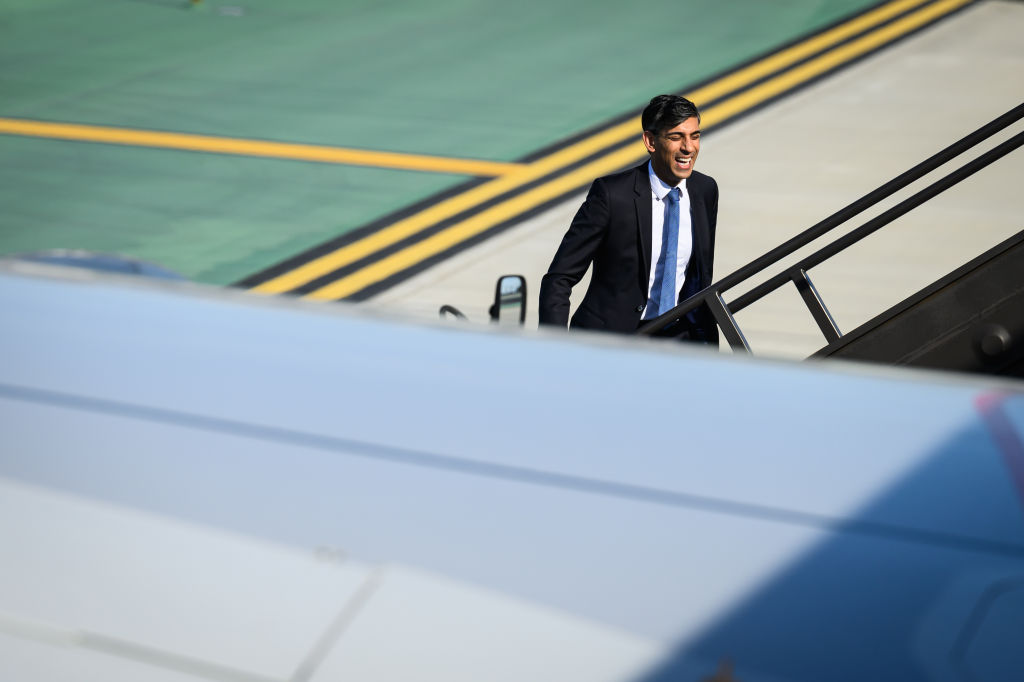
Rishi Sunak is pursuing a deal with Pacific countries to allow the UK to join the CPTPP, and reduce its reliance on trading with the EU and China, writes Jason Reed.
For five years, Britain has been vying to join the Comprehensive and Progressive Agreement for Trans-Pacific Partnership (CPTPP). Three years ago, Liz Truss announced the UK was the first non-founding country to formally apply for membership. Now, we might finally be on the cusp of admission to the collection of countries, a long-promised prize of Brexit.
The CPTPP is a growing community of countries who want to trade freely and escape a continued dependence on China and Russia, both economically and politically. Current members include Japan, Australia, Canada, New Zealand, and Malaysia. Joining represents a big step forward in crafting Britain’s post-Brexit free trade policy, not to mention the benefits of being seen to step up to the plate in offering leadership the free world in the wake of Russia’s war-waging and China’s genocide in Xinjiang, authoritarianism in Hong Kong and threats to Taiwan.
Our accession to the CPTPP will be a significant advantage decoupling our economy from Russia and China and, crucially, distancing ourselves from them politically. The energy crisis, as well as supply chain issues throughout the pandemic, shone a light on the importance of access to a vibrant, diverse community of trading partners around the world, rather than relying disproportionately on a small number of autocratic countries and being held to the whims of despotic leaders like Xi and Putin. Never again should we have to worry about Moscow “switching the lights off” in Britain.
The White House’s impotence on the world stage has left a space for Britain to fill, and joining a coalition free, democratic nations who have no desire to deepen ties with Russia or China, would enable us to be a leader in our stance on Beijing. For all his faults, Boris Johnson’s response to the invasion of Ukraine showed how Britain can move to fill the void of strong Western leadership when the US falls short.
It’s not just Britain’s geopolitical standing which stands to benefit from our being a CPTPP member. It is in our economic interests to lower trade barriers like tariffs and create a friendlier trading environment with non-EU allies, like CPTPP members. Joining is a significant milestone in solidifying Britain’s place in the modern world and carving out our post-Brexit trade policy in a small-state, free-market way. For instance, one of Britain’s first acts as a CPTPP member will be to eradicate tariffs on palm oil imported from Malaysia – at the same time as the EU imposes a new law attacking those same imports for causing deforestation.
The EU’s stance flies in the face of the evidence, which makes clear that palm oil is the most land-efficient vegetable oil. Compelling manufacturers to switch to different products will accelerate, not reduce, deforestation. (Suspiciously, those rival oils like sunflower and rapeseed, which stand to benefit from the new rule, are made in the EU.) Rather than outsourcing our policymaking to Brussels, Britain can now make more sensible decisions in our own interest, choosing the CPTPP free-market path rather than the EU mercantilist one.
Making concessions like this is about having more freedom to decide trade policy, not selling out. (You might even say it’s about “taking back control” of trade.) Now that we are free of the EU Customs Union, we can edge towards realising the much-lauded vision for a ‘Global Britain’. That won’t happen overnight, but we’re making noteworthy steps towards it. Similarly, Liz Truss’s free trade deal with Australia seems to have made an impression on the Canadian government, which now wants similar opportunities to open its agricultural markets to Britain via the CPTPP.
Joining the CPTPP epitomises the logic of free-market economics at its most fundamental – reduce state interruptions to free enterprise and let the market do its thing. Money will flow, which benefits everyone. British businesses will have access to new markets, and other countries like Canada will be able to compete for the attention of British consumers, meaning more choice and lower prices. Whisper it, but that post-Brexit vision for a Global Britain isn’t looking so bad after all.