Just-in-time supply chains have left us dependent and with just-not-enough

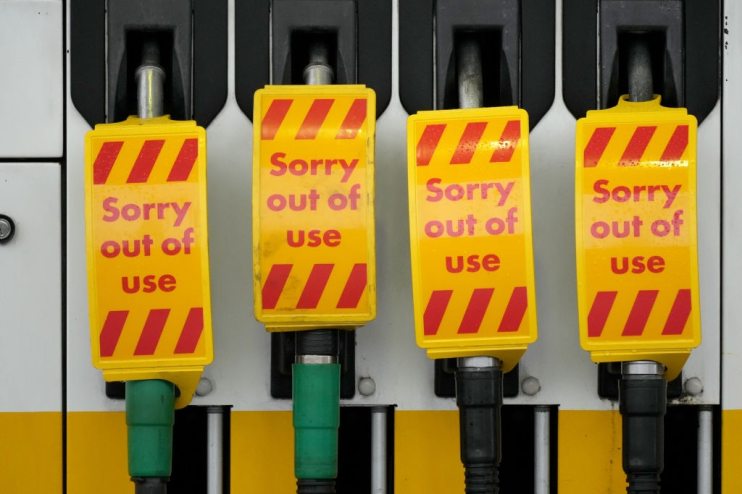
In the peak of the pandemic, songwriter Justin Vernon, known as the haunting voice of Bon Iver sang a searing lyric: “You at the corner store, you were stocking up before the storm.” As we watched hours of queues at petrol stations, we were reminded once again it was those who had filled up their tanks before the shortages were the lucky ones. Those who didn’t fill up – the ones who trusted the system – were left hunting for fuel.
This is a story of dependence, and it’s not just about petrol.
The biggest story of this winter is going to be energy. European gas prices are ten times higher than last summer as a result of the continent’s precarious reliance on Russian gas. The regime in Moscow wants to put pressure on us all.
President Putin can choose not to turn the taps on. He can leave gas stockpiles dangerously low, ignore the requests to increase the supply of gas and watch the West struggle and the vulnerable freeze. Russia Today will gleefully broadcast the fallout.
But those who bear the true cost will be us. Britons across the countries face skyrocketing energy bills and shrinking household budgets. As factories too start to face soaring prices, more and more will be passed on when the cost of food and other essentials creeps up. The things we took for granted in modern Britain have been put in peril.
Already we’re seeing inflation rise and the cost of power has only added to the challenge. Once unleashed, higher prices are hard to rein in. The petrol crisis may have been triggered by a lack of drivers but the problem of dependence has been decades in the making.
Just-in-time production, offshoring costs and reducing frictions rely on an unshakeable faith in free trade. Today, we’re seeing where the costs really lie – and who will pay them.
When the pandemic hit, patterns of demand were rewritten overnight. Planes were grounded and ships stranded. Nearly two years later, the effects are still playing out across the globe. German car factories are shutting down until Christmas because of chip shortages. The average cost of a shipping container is roughly four times higher than it was a year ago. Even China, with all the power of its authoritarian regime, has been unable to stop 20 of its provinces suffering from a loss of power from coal shortages.
In real time, we have seen the threads of global trade stretched thin.
The lesson we should learn is one of the importance of resilience. We need to begin to reduce the dependencies that have driven this crisis – and will drive crises of the future.
Pressures on global supply chains aren’t getting easier. In the next decade, countries trying to reach net zero are planning a new industrial revolution. Switching from carbon to electric will put demand for lithium and aluminium through the roof. Like any transition, there will be bumps.
Nothing happens in a vacuum, least of all trade. Heightened geopolitical competition is seeing more countries experiment with sanctions and trade tariffs, in turn causing more supply shocks.
While those in Teslas may drive smuggling past the backed-up petrol stations, imagine the ramifications of a lithium supply crisis a few years down the road. China is home to two of the five largest battery manufacturers and controls about half of lithium production. It’s hard to imagine the West being the first in line from China in a global supply crunch.
We can’t onshore everything and we shouldn’t need to. But we can’t just have faith in the systems to work, because they’ve always worked before. For the fabric of our economy – energy, critical minerals, technology and more – we need resilience in our systems. Many of us have been faced with a question this week: whether to take a short detour and fill up on Friday or spend two hours in a queue for half a tank the following Wednesday. The answer should now be clear.