Keeping loss-making giants like WeWork flush with VC cash is killing competition

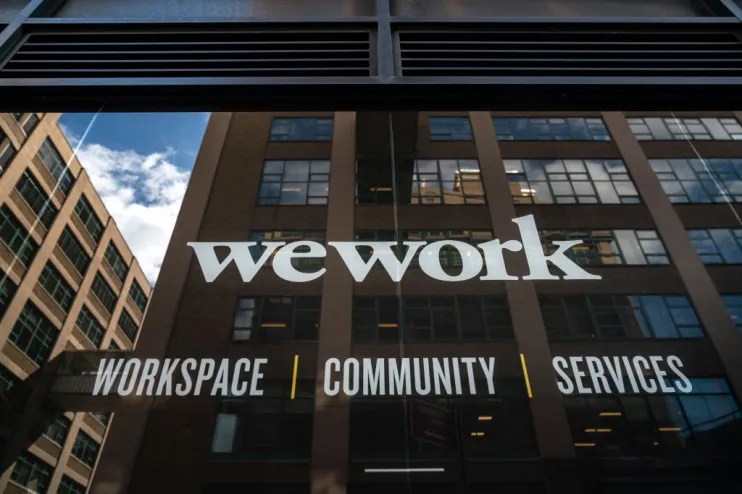
WeWork hasn’t had to turn a profit because an endless amount of venture capital cash has allowed them to challenge the other office firms who have to meet bottom lines, writes Jordan Greenaway.
I am certain I’m about to make some enemies in the venture capital community. But, here it goes: it is time to clamp down on start-ups raising billions, just so they can undercut competitors – and push them out of business.
WeWork is the latest example of this tragedy in action. The co-working giant is on the brink of bankruptcy, capping off a catastrophic yet, at times, amusing roller coaster ride: valued at $47bn at its peak, the business might soon be worth $0.
A lot has been written about its founder, Adam Neumann, who minted billions off this car crash. Much less attention has been focused on how the underlying VC system enabled this destruction of value – and likely deprived the workplace sector of genuine innovation from other start-ups.
WeWork raised $22bn from VCs and other investors, and yet never turned a profit. Awash with cash, WeWork seems to have pursued a business model of predatory pricing, offering tenants discounted rents and introductory deals that were never sustainable.
According to an investigation by Property Week in 2019, WeWork discounted their rents by as much as 50 per cent on 12-month contracts whilst also paying agents high fees to fill empty offices. At its height, WeWork was hemorrhaging money as a core business model. Between 2019 and 2021, WeWork lost more than $9.4bn. More than the GDP of Monaco.
It’s inconceivable to me that this behaviour did not undermine competition in the workspace sector. If you operated an office business, how could you possibly have competed with this rate of burning money? If you were an ambitious entrepreneur, why would you choose to compete against such a well-funded, absurd competitor?
WeWork’s deep pockets put it in a position to undermine competitors, push them out of business, and deter entrepreneurs from entering the sector. To my eyes, it looks like VCs wanted to capture the office market by weathering heavier losses, so that they could then hike prices once the competition had been decimated.
And this is not just conjecture. Leaks suggest this is exactly the intention of some VCs when they throw billions at high-growth start-ups.
Take the example of Uber. As first highlighted by academics Matthew Wansley and Samuel Weinstein, during Uber’s IPO roadshow, the company reassured potential investors that while it might be losing money hand over fist right now, it estimated profit margins of 25 per cent after “competitive pressures” subsided. This is, quite literally, predatory pricing as a business model.
If this behaviour was being carried out by large corporations, I cannot help but think that regulators would have acted already.
But, historically, WeWork and similar players seem to have been given a free pass because they’re ‘disruptive’ start-ups. That’s understandable. Given these start-ups’ positive associations with disruption, it is more difficult to see what actually may be going on: the bankrolling of unprofitable business models to destroy genuine innovation that could deliver better, cheaper services to customers.
We need to ensure this does not happen again, and the best solution is robust competition enforcement. While the details need to be ironed out, it seems sensible to recommend that if a start-up raises a certain amount of collective funding, say $1bn, the competition regulator needs to take a look at how that money is being used, and ensure it is not being leveraged to undermine the market.
This review should be quick and proportionate. The regulator should rapidly determine what is going on, and whether the funding could create perverse incentives or distort the free market. At the moment, the regulator generally only gets involved if that fundraise gives an established corporation, such as Microsoft or Google, a certain stake in the business.
Taken together, it’s astounding that we have no problem criticising the Chinese government for subsidies and protecting its domestic start-ups to the detriment of western competitors – yet turn a blind eye when large VCs seem to be doing the same for their own portfolio companies.