Labour has faced crises before, but this is uncharted territory

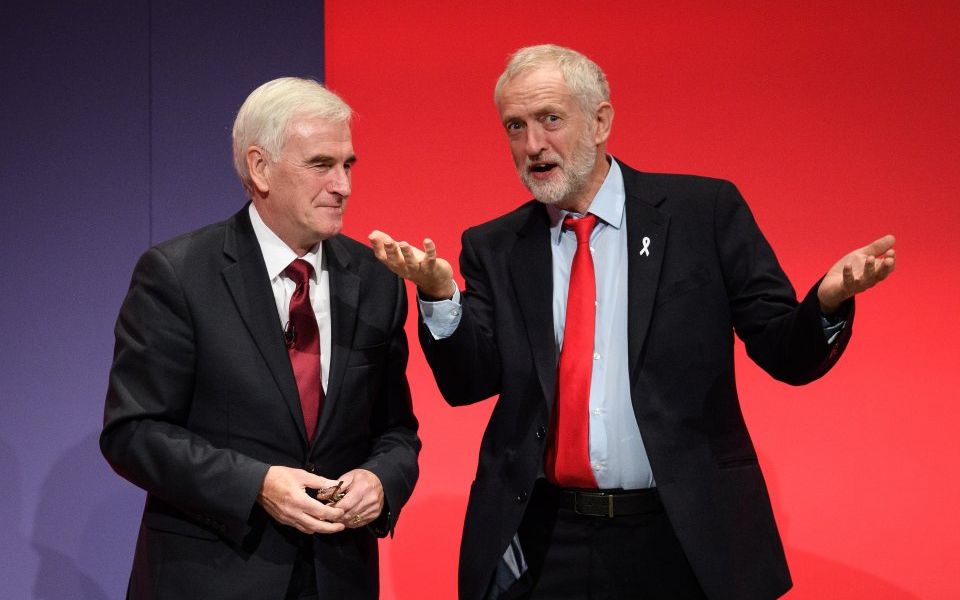
After a summer of turbulence, the Labour party conference will get underway in Liverpool next week.
The stories swirling around the run-up centre on the current maelstrom of fanatical support for Jeremy Corbyn, the increasing despondence of moderate MPs, accusations of antisemitism at the heart of the party, all against a backdrop of online discussion that verges on abuse.
Read more: Tony Blair: Moderates may have lost the Labour party forever
But step away for a moment, and there are valuable lessons to be learnt by looking beyond the crisis facing Labour today, back to the long and rich history of the party.
Labour has been through vicious conflicts in the past. The left and right of the party are regularly in open conflict – possibly one reason why Labour has won so few General Elections. (Remove the Blair era victories and the picture is even worse.)
When the party has been in power, its leaders are criticised for their accommodation with prevailing orthodoxies and for not being radical enough.
Even the great reforming Labour government of 1945-51 under Clement Attlee was not immune. Many on the left accused it of being too passive, of only securing achievements early on, of wrongly imposing charges on the NHS, and of not being radical enough in other areas.
The pattern is straightforward: the party in power betrays the cause and it then spends a period (in opposition) seeking ideological purity, only to return to the mainstream to win again. The path back is to elect a “soft-left” leader who can bring all sides together to make the party electable again – think Harold Wilson after Hugh Gaitskell, and Neil Kinnock after Michael Foot. And so the cycle goes on.
The great cries of “betrayal” have haunted Labour leaders ever since Ramsay MacDonald helped form the National Government in 1931.
In the 1950s, supporters of Gaitskell – the Gaitskellites – were in conflict with those of Aneurin Bevan – the Bevanites.
And when Wilson (leader 1963-76) as Prime Minister tried to challenge the power of the trade unions, he was forced to back down. He was never really forgiven, and the approach taken by the party in government in the 1970s brought open warfare and destroyed the reputation of Labour.
Rowdy and divisive party conferences are nothing new. The great battle for the deputy party leadership between Tony Benn and Denis Healey in 1981 was full of accusations of abuse on both sides – and they didn’t need Twitter. Bevan levelled abuse which, seemingly mild now, was shocking at the time.
Many of the battles have split down left-right lines: the role of state, nationalisation, how to deal with business and the market, foreign affairs, and relations with the US and Europe. And there has always been criticism of the party leadership being run by cliques.
However, during all those battles there was always a clear way forward for both sides to gain an advantage or take back control. While the trade unions have complained against Labour leaders in power, they eventually supported – or at least did not stand against – the new leaders trying to make the party electable again. Control of the party machinery too was part of the path to power for both sides.
This time is different. Without a significant change in the make-up of the membership, the moderates look destined to go silent or leave. And whereas in the debates of the past, both sides had clear common cause, this appears to now be fading.
The left during those times had no truck with more extreme leftist elements. What bound the party together was stronger that the issues that divided it. Corbyn’s left is of a different tradition – the common rules of the party are disappearing.
Labour’s prospects seem now, more than ever, reliant on the future of the Conservative party: how the Tories handle Brexit, and the timing of the next election. The party’s ability to reform, regroup, and evolve is no longer certain.
After a history of cyclical conflict and resolution, now might be the first time that Labour’s future is truly in doubt.
Read more: Labour will vote against Theresa May's Brexit deal, says Emily Thornberry